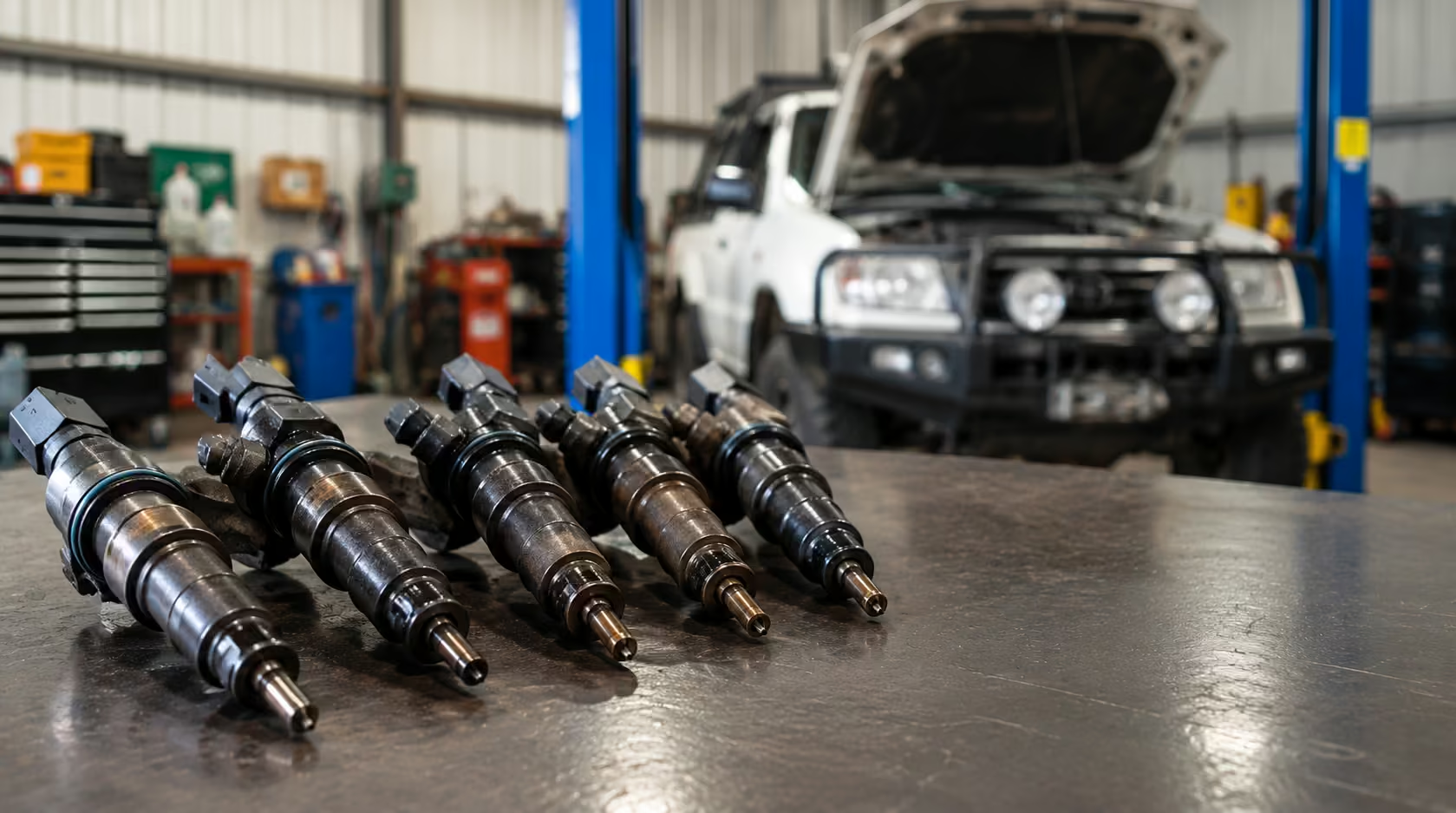
Failing diesel injectors typically cause hard starting, a rough or uneven idle, a distinct knocking or rattling localised to one part of the engine, smoke, poor fuel economy and reduced power. The usual causes are contaminated or water affected fuel, carbon deposits at the nozzle, and wear from age and kilometres.
Injectors are the most precisely engineered components on a diesel engine and the ones most exposed to whatever comes out of a fuel pump. They are also expensive, which makes accurate diagnosis worth considerably more here than on most repairs, because the difference between one faulty injector and a full set is a very large number.
Call Now
What a Diesel Injector Does and Why It Is So Sensitive
A modern common rail injector delivers fuel at pressures that can exceed two thousand bar, through nozzle holes measured in fractions of a millimetre, timed to within fractions of a millisecond, and it does this several times per combustion event rather than once. A single main injection is usually preceded by small pilot injections that soften the pressure rise and quieten the engine, and sometimes followed by post injections that help the exhaust system.
That level of precision explains everything that follows. Tolerances that fine leave no room for contamination, wear or deposits, and the fuel itself is the only lubricant those internal surfaces receive. When something interferes with the spray pattern, the quantity or the timing, the cylinder no longer burns cleanly, and the engine tells you about it in several recognisable ways.
Hard Starting and Extended Cranking
Worn internal seals let an injector return more fuel than it delivers, and overnight that steadily depressurises the system it should be holding. The result is a car that turns over and over before catching after standing all night, then fires instantly if you drove it an hour ago. That signature belongs to injectors specifically rather than to the pre heat system, and it sits among the possibilities behind a diesel that struggles on cold mornings, and separating it from a pre heat problem is straightforward once the leak back figures are measured rather than guessed at.
Rough Idle and the Knock From One Cylinder
A diesel with a failing injector usually idles unevenly, with a beat that rises and falls rather than the steady note it should have, and often shakes noticeably through the cabin at a standstill. What makes this symptom particularly useful is that it is frequently localised, because an injector delivering too much fuel or spraying it poorly creates a harsher, less controlled combustion event in that cylinder alone.
The result is the sharp metallic knock diesel people call nailing, and it tends to be loudest near the cylinder responsible. An owner who can say the noise seems to come from one end of the engine has given a workshop a genuine head start. It is generally worst when cold, because the pilot injections that normally smooth combustion are exactly what a worn injector delivers least accurately.
Smoke Poor Economy and Loss of Power
Injector faults change what leaves the exhaust. Too much fuel or a poor spray pattern produces black smoke as unburnt fuel exits, while an injector dumping fuel that never combusts properly can produce white smoke that smells strongly of diesel rather than sweet, and telling those two apart at the tailpipe narrows things considerably before the car is even on a hoist.
Economy suffers for the same reason, since fuel that does not burn efficiently still gets paid for, and a car that has quietly lost several kilometres per tank without any change in driving is worth investigating. Power loss arrives either because the affected cylinder is contributing less than it should, or because the engine computer has detected the fault and reduced output deliberately to protect things.
Contaminated Fuel and Water Damage Injectors First
The leading cause of injector failure in Australia is not age, it is what has passed through them. Water is the main culprit, arriving through condensation in tanks, poor storage at the supply end, or a water separator that has never been drained. Because diesel fuel is the only lubricant these components get, water breaks that lubrication down and lets metal surfaces wear rapidly, then corrode.
Particulate contamination does similar damage by abrasion, scoring the precision surfaces that control fuel delivery. This is why the humble fuel filter matters far more on a diesel than most owners appreciate, and why running the tank persistently low is a habit worth breaking, since sediment and water collect at the bottom of a tank and get drawn through when the level is down.
Carbon Build Up at the Nozzle Tip
The other common failure is deposits rather than wear. The nozzle tip sits directly in the combustion chamber, and over time carbon accumulates around those tiny spray holes, distorting the spray pattern from a fine, even mist into something coarser and less controlled. The injector may still deliver roughly the right quantity while atomising it poorly, which produces incomplete combustion, smoke and roughness.
Short trip driving encourages this in the same way it encourages deposits elsewhere on a diesel, since combustion temperatures never stay high enough for long enough to keep things clean. Deposit related faults are the ones most likely to respond to professional cleaning, where mechanical wear and internal leakage are not, which is one reason a proper assessment before ordering parts is worth the time it takes.
How Injector Faults Are Measured Rather Than Guessed
Diesel injectors can be tested properly, which is a considerable advantage over guessing. A leak back or spill test measures how much fuel each injector returns rather than delivers, and a unit bleeding back excessively identifies itself immediately against the others. Live data from the engine computer adds a second layer, since most modern diesels calculate a fuel correction value for each cylinder, and the injector being compensated for most is usually the one at fault.
Cylinder contribution testing takes it further by measuring how much each cylinder is actually producing. Between those methods, a workshop can usually name the injector rather than estimate it, and on a repair at this price point that difference is the whole argument for diagnosis before parts.
Why New Injectors Must Be Coded to the Engine
Here is the step that catches out anyone treating injectors as ordinary parts. Each modern injector is manufactured with tiny individual variations, and it leaves the factory with a calibration code printed on it that describes exactly how it behaves. That code has to be programmed into the engine computer against the cylinder the injector is fitted to, so the engine can compensate for the differences between them.
Fit a new injector without entering its code, or enter the codes against the wrong cylinders, and the engine runs badly with brand new parts in it, which sends people chasing faults that were installed rather than developed. It needs diagnostic equipment that can write to the engine computer, not just read from it, and asking about it before booking the work anywhere is entirely reasonable.
Removal Risks on High Kilometre Engines
Worth knowing before the job starts: injectors that have been in a cylinder head for a decade can seize in place, held by carbon and corrosion, and removing one without damage sometimes takes specialist pullers and patience. Occasionally an injector shears, and extracting the remainder becomes a considerably larger job than anyone quoted for.
None of that is a reason to avoid the repair, because a failing injector does not improve, and one that is dumping excess fuel into a cylinder can wash oil off the bore and damage the engine itself in the long run. It is a reason to have the work done somewhere equipped to deal with a seized injector if one appears, rather than somewhere that discovers the problem halfway through and improvises.
How to Give Diesel Injectors a Long Life
The maintenance that protects injectors is unglamorous and cheap. Change the fuel filter on schedule rather than when convenient, drain the water separator if the vehicle has one, avoid habitually running the tank down to the last few litres, and buy fuel from somewhere with enough turnover that it has not been sitting. Servicing on the manufacturer’s schedule covers most of that automatically, which is a large part of why diesels that have been looked after properly tend to keep their injectors so much longer than ones that have not.
Getting Injectors Tested Before They Are Replaced
At the price injectors command, measurement beats assumption every time. A to Z Automotive Services starts with leak back and contribution figures to name the faulty unit, codes any replacement correctly to the cylinder it is fitted to, and will tell you if the answer is one injector rather than four. On a repair this size, being told the smaller number is worth the diagnostic time on its own.
Frequently Asked Questions
Do diesel injectors have to be replaced as a set?
Not necessarily, though there is a fair argument for it on a high kilometre engine where the others have done identical work. On a newer vehicle with one clearly faulty unit, replacing that injector alone is reasonable. The deciding factor is usually what the leak back figures show across all of them rather than a rule.
Are injector cleaning additives worth using?
As maintenance on a healthy system they do little harm and may help keep nozzle deposits down. As a repair for an injector that is already leaking, worn or bleeding back, they achieve nothing, because no additive restores a worn sealing surface. Reaching for a bottle after symptoms appear is usually late.
How long should diesel injectors last?
Many run past two hundred thousand kilometres without trouble, and plenty fail well before that. Fuel quality, water contamination and whether the fuel filter was changed on schedule matter more to injector life than kilometres alone, which is why two identical vehicles can be worlds apart.
Why is my diesel noisier on one side of the engine?
Because a failing injector delivering too much fuel or spraying poorly produces a harsher combustion event in that cylinder alone, and the resulting knock is louder near where it happens. A distinct rattle localised to one part of the engine is one of the more reliable pointers to which injector is at fault.