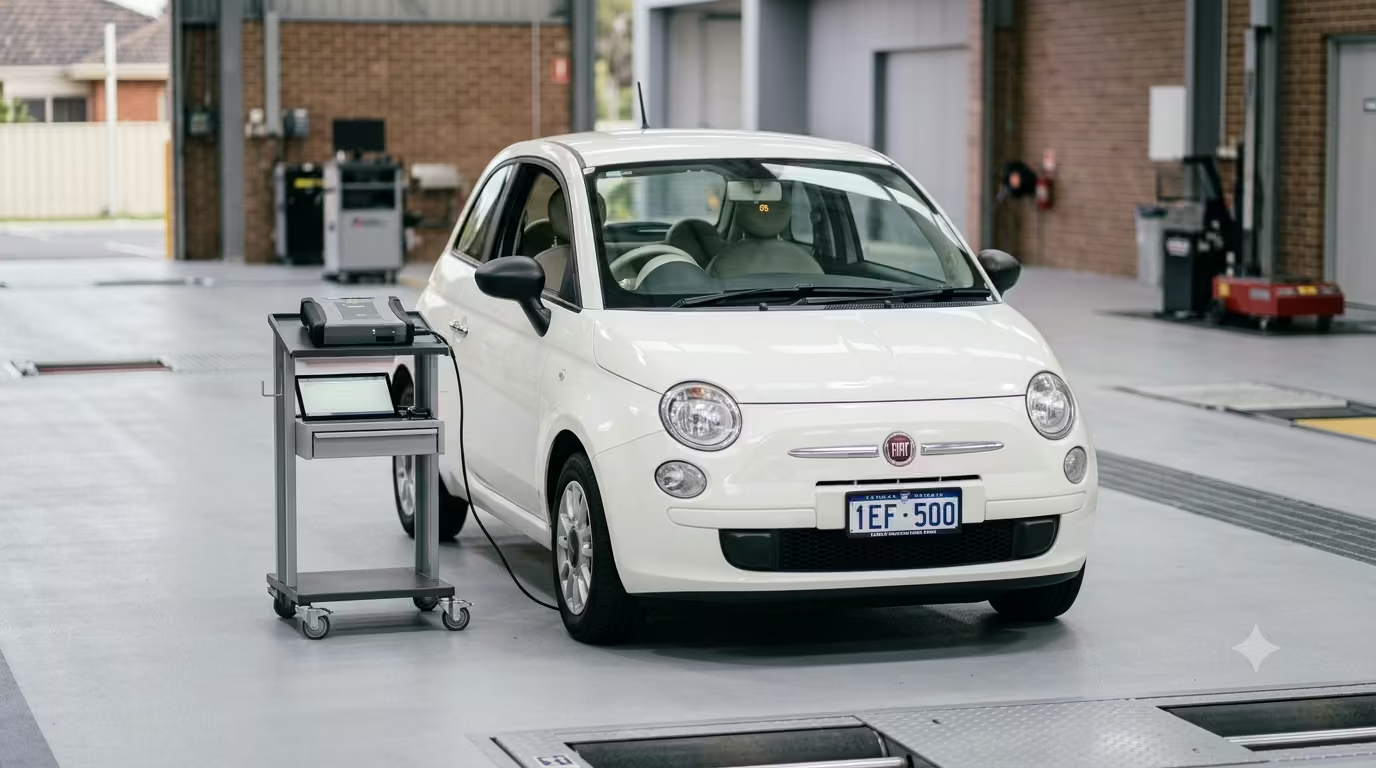
The most common problems with the Fiat Dualogic are jerky or delayed shifts, a gearbox warning light, refusal to engage a gear, or rolling back on hills. It is an automated manual not a true automatic . Most problems are traced to the hydraulic actuator, clutch wear or lost calibration not the gearbox itself.
The Dualogic is fitted to thousands of Fiat 500s and Pandas across the country and could well be the most misunderstood gearbox out there. Owners say it is weird and compare it to regular automatics. In some workshops it is judged the same way and condemned prematurely. So that is where this begins, both mistakes are the result of not knowing what it really is.
Call Now
What the Dualogic Actually Is
Under the floor of a Dualogic car is an ordinary manual gearbox with an ordinary single clutch – the same hardware a three pedal version of the car would have. What is different is who runs it.” It is obedient to commands from its own computer. A clutch work is done and gear selectors are moved by an electro hydraulic unit, a pump, a pressure accumulator and a set of solenoids. In short , it is a manual car with a robot working the clutch and stick .
When you get that picture, the whole character of the transmission makes sense. Because it is a manual, it shifts like a manual. It has a clutch like a manual so it wears one. And if things go wrong the list of suspects is short and specific: the hydraulic robot, the clutch it uses, the calibration between the two, or the sensors telling the computer what is happening. The gearbox itself – the actual gears and shafts is rarely at fault.
The Pause Between Gears Is the Design Not a Fault
Every Dualogic has a gap between the gear changes, a beat of nothing while the clutch opens, the gear changes and the clutch closes again. Passengers nod, the car breathes, and drivers of conventional automatics think something’s wrong. Nothing. You can’t change gears without breaking the drive with a single clutch. No software update in the world can change that physics.
Experienced Dualogic drivers learn to work with it rather than against it, easing off the accelerator slightly as the change arrives, the same lift a manual driver does without thinking, and the change smooths out noticeably. Manual mode helps even more by making timing predictable. This is important for the whole subject. See the Dualogic as a manual with a robot and the normal behaviour does not look like a problem and the real problems below are much easier to spot.
Hydraulic Actuator Faults Sit Behind Most Real Problems
The actuator is the busiest part of the system and the source of most real Dualogic trouble. Age will wear out the pump that builds hydraulic pressure, the accumulator that stores that pressure can fade, seals weep fluid away and solenoids stick or drift. This system is all about pressure and as it decreases the symptoms appear in a recognisable order; shifts become slow and harsh, the pump runs more often, the gearbox warning comes up and finally the system refuses to engage a gear at all.
The actuator has its own dedicated hydraulic fluid, separate from the gearbox oil, with a level and condition which need checking, something generic servicing skips because nobody looks for a second fluid on a small Fiat. One of the first of many reasons these cars get misdiagnoses is that low or degraded actuator fluid produces all symptoms of a dying actuator on hardware that is actually healthy.
Clutch Wear and the Calibration That Follows It
The clutch in a Dualogic wears just like it would under a human foot, and arguably faster in stop start traffic because the computer is constantly slipping it to creep and launch smoothly. A worn clutch shows up as usual, revs climbing before road speed and a judder as drive is taken up, and the cure is the usual cure, a clutch replacement on what is mechanically a manual gear box.
The twist is the dualogic calibration. The computer has learned where the clutch bites and these values must be re-taught using diagnostic equipment after clutch work, after certain repairs, and periodically as the clutch wears. A Dualogic with the correct hardware but stale calibration will lurch, shudder and shift badly, mimicking an expensive fault when all it needs is a relearn. You skip that step after a clutch job and you get a fresh clutch that drives worse than the worn out one it replaced.
A Weak Battery Can Impersonate a Dying Gearbox
Here’s the cheapest fix on the list and one that nobody believes until they see it. The Dualogic’s computer and hydraulics are notoriously sensitive to supply voltage and a battery on its way out or terminals gone green and loose can cause gearbox warnings or refusal to select and shift behaviour rough enough to convince anyone the gearbox is finished. Good gearbox. It is being deprived of clean volts.
Look for the pattern of gearbox drama that tends to cluster around cold mornings, short trips or a battery that is already several years old, and especially any gearbox complaint that occurs immediately after a flat battery or a jump start. Testing the battery and charging system on these cars is not a tick-box step before the real diagnosis. Most often it’s the diagnosis.
The Warning Signs Worth Moving On Quickly
Two symptoms that deserve immediate attention instead of a wait and see. The first is the gearbox going to neutral while driving, normally accompanied by a warning chime. This is the system protecting itself and a sign pressure or control is actually failing. The second is a clear trend of shifts getting slower and harsher week on week, which is the sound of hydraulic pressure fading and the precursor to the car refusing gears altogether, usually at the least convenient moment available.
The reason to act on these matters early is simple: an actuator caught at the fluid or accumulator stage is a repair, one driven to total failure can leave the car stranded and the repair larger. The Dualogic telegraphs its failures further in advance than most gearboxes. Owners just have to know the telegraph when they see it.
Why Dead Gearbox Verdicts on These Cars Are Often Wrong
But put them together and you see a pattern: stale calibration mimics clutch failure, low actuator fluid mimics actuation death, tired battery mimics all of them. A Dualogic with dramatic symptoms often needs one of the cheap fixes, not a gearbox, which is why a condemned gearbox quote on one of these cars deserves a second opinion before anyone pays it. The dual clutch transmissions have their own, quite different failure story, which the VW owners reading this can compare over here, but the dualogic’s reputation for expensive failure is substantially a reputation for wrong diagnosis.
The repair ladder makes sense when hardware actually wears – actuator overhaul or exchange units are a lot cheaper than people fear when properly identified, and clutch replacement is routine manual gearbox work with a calibration step at the end, not exotic gearbox surgery. The expensive outcomes on Dualogics are almost all from cars misdiagnosed first and fixed second.
Getting a Dualogic Diagnosed the Right Way
At A to Z Automotive Services Dualogic cars arrive thinking they have gearbox problems and leave with a relearn, an actuator fluid service or a battery. It’s always the same here, you check the electrics, check the hydraulic pressures and calibration data before you start talking hardware. So before you get a big quote on a little Fiat gearbox, find out what it really needs. Quite often the honest answer is embarrassingly small and that answer costs you far less than the wrong one.
Frequently Asked Questions
Is the Dualogic the same as a DSG or EDC gearbox?
No, and the difference explains a lot. Those are dual clutch designs with two clutches swapping duties. The Dualogic is a single clutch manual gearbox with a robot doing the pedal work, so it shifts with a pause a dual clutch does not have, and its faults live in different places.
Does the Dualogic need a special fluid?
Two of them, in a sense. The gearbox itself holds ordinary gear oil, while the actuator that operates the clutch and shifts runs its own dedicated hydraulic fluid on its own level and condition requirements. That second fluid is the one casual servicing forgets exists.
Why does my Dualogic roll back on hills?
Because between brake and accelerator, the clutch is fully open and nothing is holding the car, exactly like a manual with the clutch pedal down. Many of these cars have no hill hold at all. It feels alarming coming from a conventional automatic, but on its own it is the design, not a defect.
What happens if the actuator fails completely?
The gearbox usually ends up stuck, most often in neutral, occasionally in whatever gear it last held, and the car stops being drivable until the actuator is repaired. The gearbox underneath is generally fine. It is the robot that has stopped, not the transmission it operates.