A rotten egg smell from your car is hydrogen sulphide, and it usually means the catalytic converter is no longer neutralising the sulphur compounds in your fuel, either because the converter has failed or because the engine is running too rich and overwhelming it. An overcharging battery and leaking gear oil are the two other common sources.
Of all the smells a car can produce, this is the one people describe most consistently and understand least. It is unmistakable, it is embarrassing at traffic lights, and the internet will tell you within thirty seconds that you need a catalytic converter, which is a costly thing to be told by a stranger who has not looked at your car. The smell is a genuinely useful clue, but it points at a system rather than a part, and where you smell it decides which system that is.
Call Now
What the Rotten Egg Smell Actually Is
Petrol and diesel both contain trace amounts of sulphur. During combustion those traces become sulphur compounds, and one of the jobs of the catalytic converter, sitting in the exhaust under your car, is to convert them into something odourless before they reach the air behind you. When the system is working, you never smell a thing. When something in that chain stops working, the sulphur leaves as hydrogen sulphide, and hydrogen sulphide smells exactly like rotten eggs.
So the smell is not a fault in itself, it is evidence that the exhaust is no longer finishing its work. That distinction matters because it splits the problem in two immediately. Either the converter has lost the ability to do the job, or it is being handed more than it was built to process. Those are different repairs with very different bills, and the rest of this comes down to telling them apart.
A Failing Catalytic Converter Is the Usual Cause
Converters wear out. Inside is a ceramic honeycomb coated with precious metals, and over years of heat cycling that structure degrades, its coating loses effectiveness, and it eventually stops converting properly. Age and kilometres do it slowly. Contamination does it faster, which is why an engine that has been burning oil or coolant for a while tends to take its converter down with it.
A tired converter announces itself in more ways than the smell. Fuel economy drifts worse, the car can feel flat and reluctant to pull the way it used to as the exhaust struggles to flow, and on a badly blocked one the whole car gets hot underneath and the engine can behave like it is being strangled, because effectively it is. A smell alone points at a converter losing chemistry. A smell with a power loss points at one losing its passageway too.
Why a Rich Running Engine Overwhelms the Converter
Here is the half that gets missed. A perfectly healthy converter can only process what arrives, and an engine dumping extra fuel into the exhaust sends far more sulphur down the pipe than the design ever anticipated. The result is the same smell from an entirely different cause. Oxygen sensors that have aged and now report inaccurately are the classic offender, since the engine computer fuels according to what they tell it, and a lazy sensor produces a permanently rich mixture. Leaking injectors, a regulator holding fuel pressure too high, and airflow sensor faults all end in the same place, and if the mixture is rich enough you will usually see it too, because excess fuel shows up as darker exhaust alongside the smell.
Why Replacing the Converter Alone Often Fails
This is the expensive mistake this whole subject is built around, and it happens constantly. A car smells of sulphur, someone fits a new catalytic converter, the smell goes away for a few weeks, and then it returns exactly as before. Nothing was done incorrectly. The new converter simply inherited the same over rich exhaust that destroyed the last one, and it is now being consumed at the same speed.
Which is why the sensible order is fuelling first, converter second. Establish whether the mixture is correct, whether the oxygen sensors are reporting honestly, whether an injector is leaking, and only then decide whether the converter needs replacing at all. Get that order right and a proportion of these jobs finish at the sensor, with the converter surviving. Get it backwards and you can buy two converters in a year and still have the smell.
An Overcharging Battery Smells of Sulphur Too
Now the cause that has nothing to do with the exhaust, and the one worth taking most seriously. A lead acid battery contains sulphuric acid, and a battery being overcharged, usually because the charging system is pushing too much voltage at it, gets hot and vents gas that carries the same rotten egg signature. Older batteries near the end of their life can do it as they fail internally as well.
Everything about this version is different, starting with location. The smell is strongest with the bonnet up rather than behind the car, it tends to be worst after a long drive, and the battery itself may look swollen at the sides or feel hot to the touch. It matters more than the exhaust version because a venting battery is releasing flammable gas and acid vapour in an enclosed engine bay, so this one is not a wait until the weekend situation.
The charging system is what needs investigating here rather than the battery alone, because a replacement battery fitted to a system that is overcharging simply cooks the new one too. It is the same logic as the converter, applied to the other end of the car, and it is worth knowing that charging faults have a warning light of their own that may or may not have appeared before the smell did.
Leaking Gear Oil and Differential Fluid
The third source surprises almost everyone. The oil used in manual gearboxes and differentials contains sulphur based additives designed to protect gear teeth under extreme pressure, and that oil has a strong, sulphurous smell of its own. A leaking gearbox seal, a weeping differential, or oil dropping onto hot exhaust components produces a rotten egg note that has nothing to do with combustion at all.
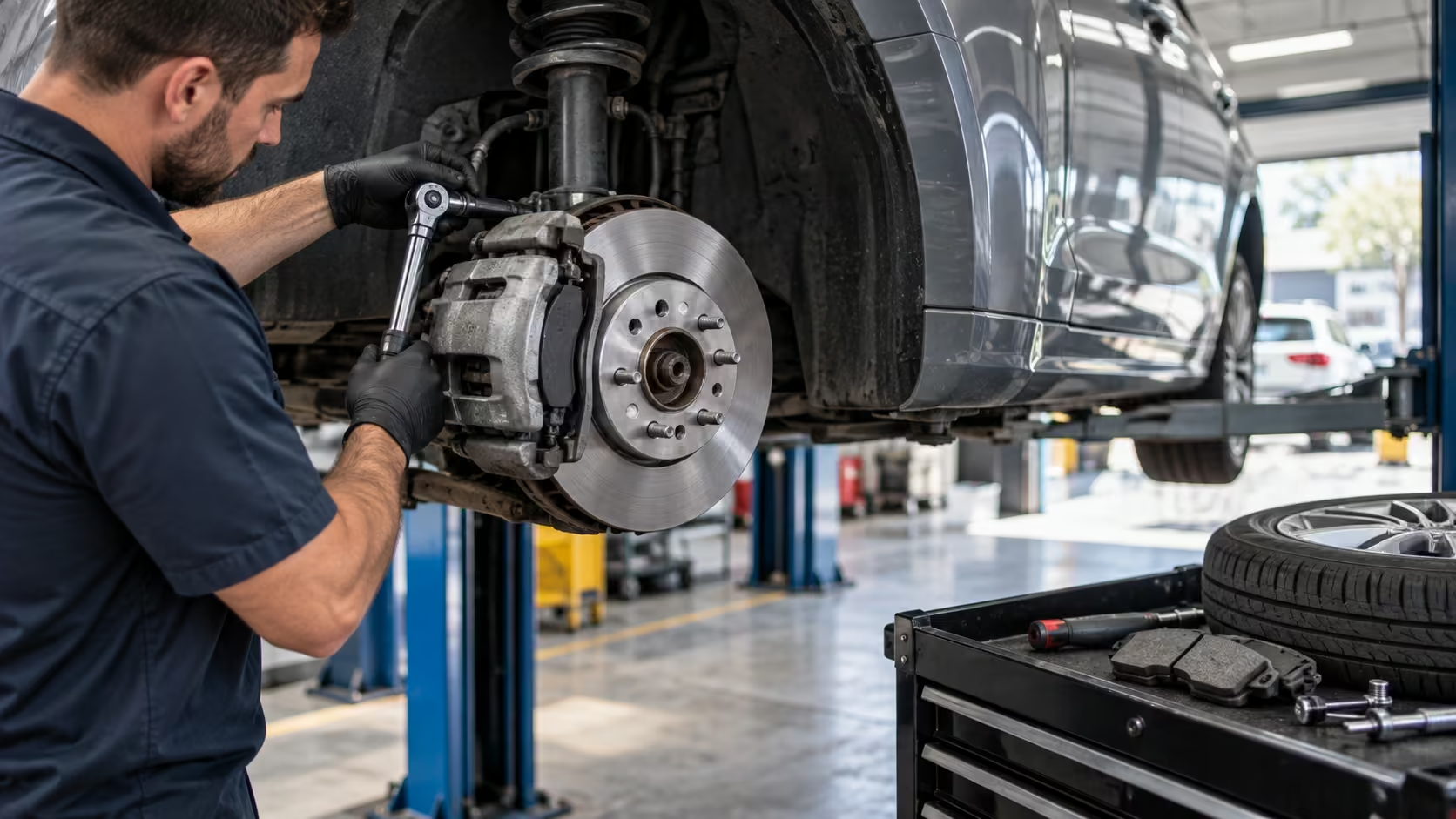
The way to separate it is by what comes with it. Gear oil smell arrives with an oily edge rather than a purely chemical one, it is often strongest underneath the car or around the wheels rather than at the tailpipe, and there is usually something to see: fresh oil on the underside of the gearbox or diff, or a patch appearing on the driveway. Any car that smells of sulphur and is also marking its parking spot deserves a look underneath before anyone starts pricing exhaust parts.
Where the Smell Is Strongest Narrows the Cause
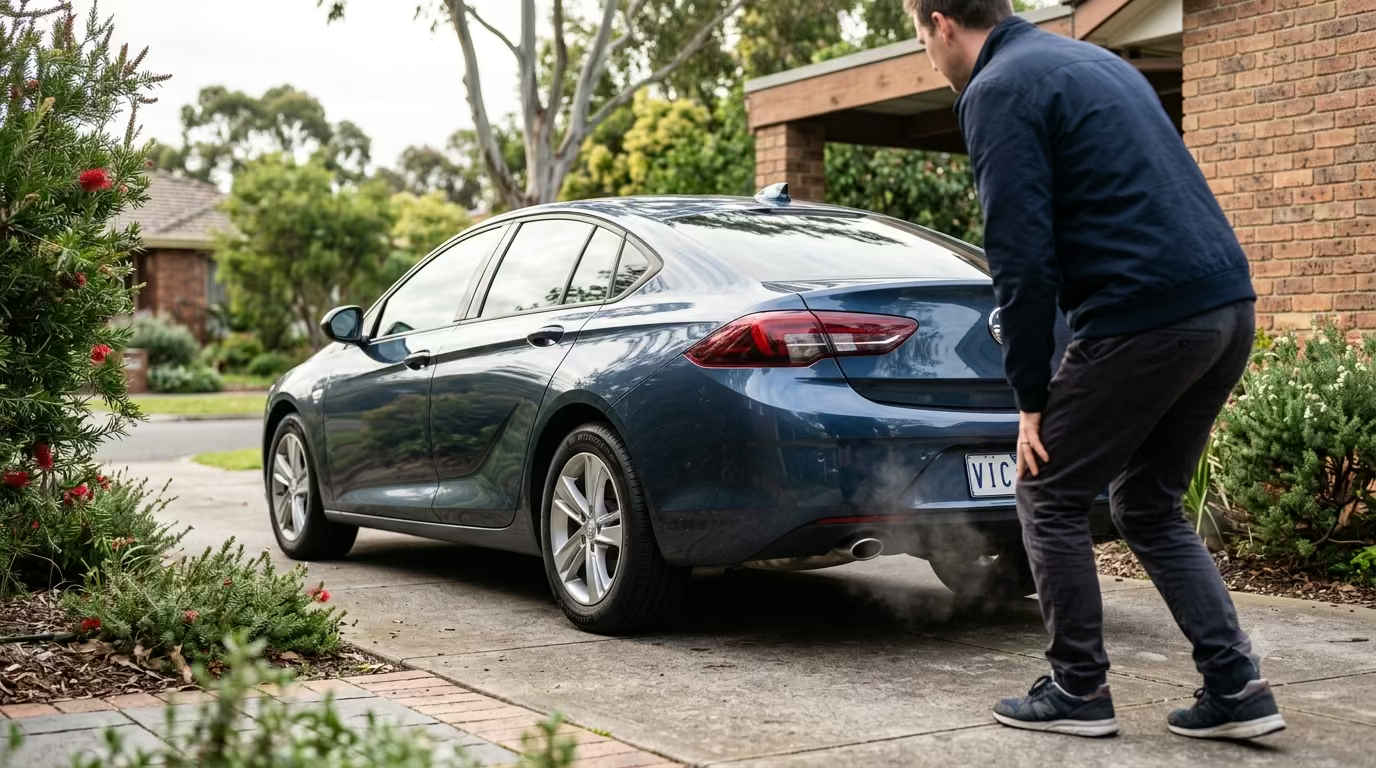
Before booking the car in, spend two minutes narrowing it down, because it genuinely shortens the diagnosis. Stand behind the car at idle: a smell that is clearly strongest at the tailpipe, and worse after a hard drive or a long climb, belongs to the exhaust and fuelling side. Open the bonnet after a decent run and smell around the battery: sharp sulphur concentrated there, especially with a warm or swollen battery, belongs to the charging system.
Crouch beside the car with the engine off and let your nose work along the underside: an oily sulphur smell around the gearbox, diff or the seams of the exhaust suggests a leak rather than a chemistry problem. And if the smell only shows up inside the cabin with the vents running, note that too, since it means something is being drawn in from outside and the source is still one of the three above rather than anything in the interior.
How Urgent a Sulphur Smell Really Is
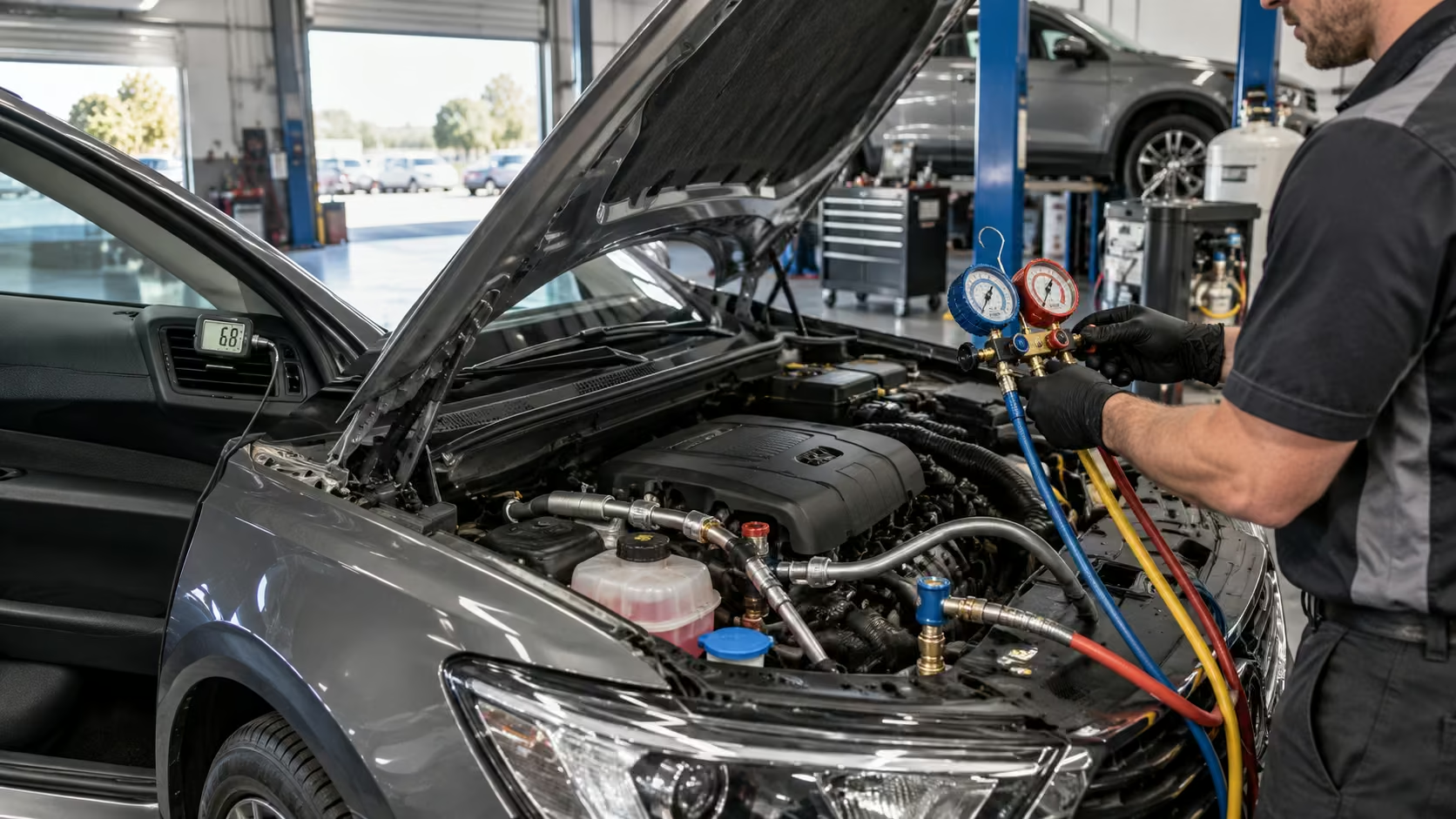
Ranked by how quickly it needs attention: a battery smell comes first, because venting gas and acid in a closed engine bay is a safety matter rather than an inconvenience. A rich running engine comes next, since every kilometre spent that way wastes fuel and quietly shortens whatever converter is fitted. A worn converter on an otherwise healthy engine is the least urgent, though it will fail an emissions requirement and eventually strangle performance. A gear oil leak sits alongside it, harmless smelling until the fluid level drops far enough to matter. In practice the sensible move is the same for all four, which is a diagnostic session that reads the fuelling data and tests the charging system before anyone quotes on parts, because the smell is the one symptom four unrelated systems happen to share.
Sorting a Sulphur Smell Without Guessing
Note where the smell is strongest, when it appears, and whether anything else has changed. A to Z Automotive Services then works the problem in the order that protects your money: fuelling and charging data first, parts conversation second. Book it in while the smell is the only symptom, because plenty of these end at an oxygen sensor or a leaking seal, and nobody here has any interest in selling you a catalytic converter that a cheaper fault was busy destroying.
Frequently Asked Questions
Can a tank of bad fuel cause the smell on its own?
It used to be a reasonable suspect and it is far less likely now, because the sulphur content permitted in Australian petrol has been tightened considerably in recent years. A smell that appeared after one fill and disappeared with the next tank was probably the fuel. One that survives two or three tanks is the car.
Is the rotten egg smell dangerous to breathe?
At the concentrations that drift around a car it is unpleasant rather than harmful, but it is not something to sit in. Ventilate the cabin, and treat any sulphur smell coming from under the bonnet with more caution than one from the tailpipe, since that version can involve a battery venting gas.
Will the smell trigger the engine light?
Often, but not always, and that catches people out. If the cause is a fuelling or sensor fault the light usually appears eventually. A converter that has simply aged past its useful life can smell for a long time while the dash stays perfectly calm.
Can I clean a catalytic converter instead of replacing it?
Additives and cleaning treatments occasionally help a converter that is lightly contaminated, and they do nothing for one that is physically broken down inside. They are a reasonable thing to try after the upstream cause is fixed, and a waste of money before it.