DPF regeneration is the burning of the trapped soot within the filter by heat and can occur in two ways. Passive regeneration takes place silently in the background whenever exhaust temperatures are naturally high enough, mostly during long highway driving, and you won’t even notice it. When the car’s computer senses that the soot load has reached a certain point – typically between 45 and 60 percent, depending on the manufacturer – it will automatically initiate an active regeneration cycle, injecting extra fuel to deliberately raise exhaust temperatures until the filter is cleared. Most regens you won’t notice. The ones that announce themselves with a faint burning smell or a longer than usual idle are the active type doing it’s job.
What a DPF Is Actually Doing While the Car Runs
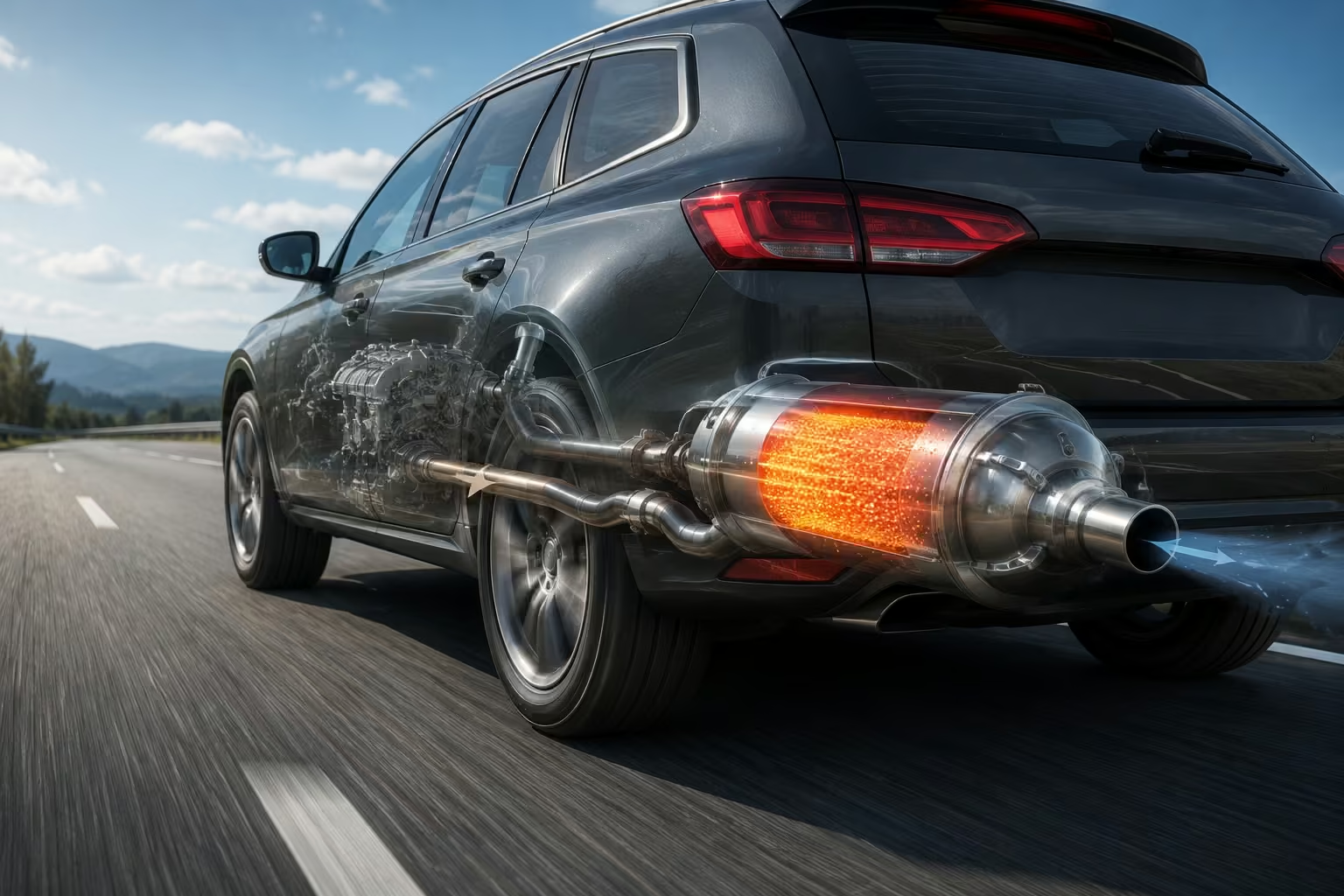
A diesel particulate filter is located in the exhaust system and physically traps the soot particles before they exit the tailpipe. The way the fuel burns means that diesel engines produce more soot than petrol engines and without a filter that soot would go straight into the air. The filter is basically a fine mesh which lets the exhaust gas through but traps the carbon particles in the honeycomb structure.
If left uncontrolled, that trapped soot would clog the filter in a matter of weeks. Regeneration stops that. It doesn’t just get filled up and need replacing like an air filter; the soot inside it is burnt off at high temperature and turned into a small amount of ash, which is far less volume than the original soot.
Passive Regeneration: The One You Never Notice
Passive regeneration is continuous and automatic, occurring whenever the exhaust gets hot enough on its own, typically over 350 degrees Celsius, the kind of temperature you get from sustained higher speed driving. There is no separate warning or trigger. The heat of normal operation of the engine does the work and soot burns off as you drive.
This is the version of regeneration that is working as it should. If your car does a lot of highway driving, you may be doing passive regens often enough that the active regen rarely needs to step in.
Active Regeneration: What Actually Triggers It
The question people ask most often is really about active regeneration, the automatic process. The engine control unit is constantly estimating how much soot has built up inside the filter, based on pressure sensors either side of it and how the car’s been driven. If that estimate is above the manufacturer’s threshold, the ECU will kick off an active regen cycle without any action on your part.
In this cycle, the engine management system adds a small amount of additional fuel late in the combustion cycle This fuel does not burn completely during the power stroke, but instead raises the exhaust temperature considerably, often to above 600 degrees Celsius. That heat is what burns off the soot that’s built up inside the filter. Usually the cycle is 10 to 20 minutes , but you need the right conditions , usually a constant speed and engine load to start and end the cycle.
This is also where a lot of drivers go wrong without knowing it. If the car is stopped , slowed into heavy traffic , or only ever doing short trips , the cycle gets interrupted before it finishes if an active regen starts . The soot is not cleared out completely and the ECU will try again when conditions allow. The repeated interruptions are what turn a managable soot load into a blocked filter in a few months.
Comparing the Three Types of Regeneration
| Type | What triggers it | What you’ll notice |
| Passive regeneration | Continuous, happens whenever exhaust temperature is naturally high enough, mainly sustained highway driving | Nothing. No dash light, no smell, no change in how the car drives |
| Active regeneration | ECU detects soot load has crossed a set threshold, usually around 45 to 60 percent depending on the manufacturer | Slightly higher idle, a faint hot or burning smell, cooling fan running after you’ve parked, occasionally a short rise in fuel use |
| Forced regeneration | Manually triggered by a technician through a diagnostic tool, used when active regeneration hasn’t completed on its own | Car sits stationary at operating temperature on a hoist for 20 to 30 minutes while the cycle runs |
Signs an Active Regeneration Is Happening Right Now
When an active regen is running there are a few things that tend to show up together and none of them mean anything’s wrong. The idle speed is frequently a bit higher than it should be. Occasionally there is a slight hot or burning smell coming from the exhaust that is unlike anything burning inside the cabin. Once you’ve parked and turned off, the cooling fan may continue to run for a few minutes as the system deals with the heat it just created. That drive can cause a slight increase in fuel consumption, simply due to the extra fuel injected to maintain the cycle.
None of these, by themselves, are cause for alarm. They are mostly good to know so you don’t confuse a normal regen for something failing.
When Automatic Regeneration Isn’t Enough
Automatic regeneration is entirely dependent on the driving conditions being suitable for it to run and complete. Cars doing mostly short trips, school runs or stop start traffic around town seldom get the sustained load needed meaning active regens keep getting triggered and interrupted. Soot accumulates more quickly than it is removed. Once that’s gone on long enough the DPF light comes on on the dashboard as a signal that the car can no longer fully manage it by itself. What it usually needs at that point is a forced regeneration run through a proper diagnostic scan on a hoist. A technician can then confirm the cycle actually completes, rather than starting and stalling again on the road.
Helping the Automatic Process Do Its Job
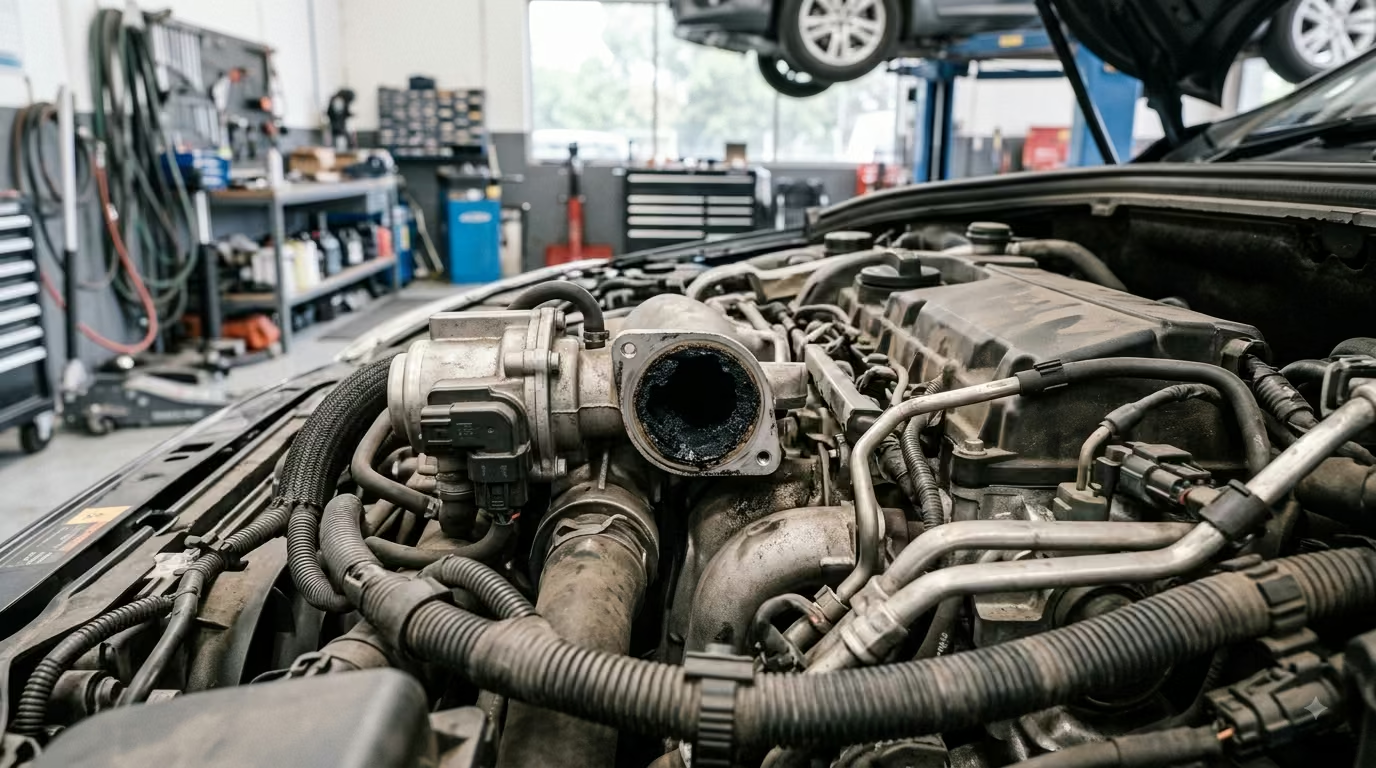
The easiest thing any diesel owner can do is to take the car out for a 20 to 30 minute run at a steady highway speed once or twice a week. That’s usually enough sustained load to get an active regen started and finished properly without you noticing anything at all. Using the right low SAPS oil specified for DPF equipped engines also matters, as it directly impacts how much ash builds up over time on top of the soot. Both of these are checked as a matter of course during a scheduled diesel service. This is also when early EGR or sensor problems that interfere with regeneration tend to be caught before they become a bigger problem.
Booking a Check Around Newcastle, Cardiff, Lake Macquarie and the Central Coast
If the DPF light’s come on and you’ve had a longer highway drive that hasn’t cleared it, time to get it looked at rather than keep guessing. We can read the actual soot load off the car and determine if a forced regeneration on the hoist will fix it, or if there is something else preventing the automatic process from working in the first place.
Frequently Asked Questions
How long does an automatic DPF regeneration take?
An active regeneration cycle usually runs for 10 to 20 minutes once it starts, though it needs the right driving conditions to begin and complete in that window.
Can I tell the difference between a regen and the engine overheating?
Yes. A regen brings a faint hot exhaust smell and sometimes a fan running after parking, but the temperature gauge stays normal. Overheating shows on the gauge itself and is usually accompanied by other warning lights, not just the DPF light.
Does idling the car help trigger a regeneration?
No. Idling doesn’t generate enough exhaust temperature or airflow for the ECU to start or complete a regen. It needs sustained load, which idling can’t provide.
Will a regeneration use more fuel?
Slightly, for the duration of the cycle, since extra fuel is injected to raise exhaust temperature. It’s a temporary increase rather than an ongoing one.
What happens if I stop the car halfway through a regeneration?
The cycle pauses and picks up again next time conditions allow. An interrupted regen isn’t damaging on its own, but if it keeps getting interrupted, soot keeps accumulating between attempts.
Is it normal for the cooling fan to keep running after I’ve parked and turned off the engine?
Yes, this is common during or just after a regeneration cycle, since the system is managing elevated exhaust temperatures even after the engine has stopped.
Do all diesel cars regenerate at the same soot load percentage?
No. The threshold that triggers active regeneration varies by manufacturer and engine, typically somewhere between 45 and 60 percent soot load.
Can short trips ever allow a successful automatic regeneration?
Rarely. Most short trips don’t sustain the exhaust temperature long enough for the cycle to finish, which is why regeneration failures cluster around vehicles doing mostly low speed, stop start driving.
Does a manual or forced regeneration mean something is wrong with the car?
Not necessarily. It often just means driving conditions haven’t allowed a natural regen to complete recently, rather than indicating a fault.
How do I know if my car has actually completed a regeneration?
From the driver’s seat, the main sign is the DPF light turning off after a longer drive. A workshop can confirm it directly by checking the soot load reading before and after.