DSG gearboxes in VW, Audi, and Skoda vehicles share predictable failure patterns: shuddering at low speed, hesitation when pulling away, and rough shifts in stop-start traffic. Most early faults are fluid-related or software-related and are correctable without major repair, provided the mechatronic unit has not yet been affected.
Because transmission faults can sometimes appear alongside dashboard warning lights, understanding what those warnings mean can help identify problems earlier.
How the DSG System Works and Why It Fails Differently From a Standard Automatic
A DSG (Direct Shift Gearbox) is a dual-clutch transmission. Unlike a traditional automatic, which uses a torque converter and a set of hydraulic clutch packs to select gears, a DSG uses two separate clutch units, one for odd-numbered gears and one for even-numbered gears. While you are driving in third gear, the DSG has already pre-selected fourth. Because the next gear is already engaged on the second clutch, gear changes happen in milliseconds without the interruption typical of a conventional automatic transmission. The shift happens almost instantly because the next gear is already engaged and waiting.
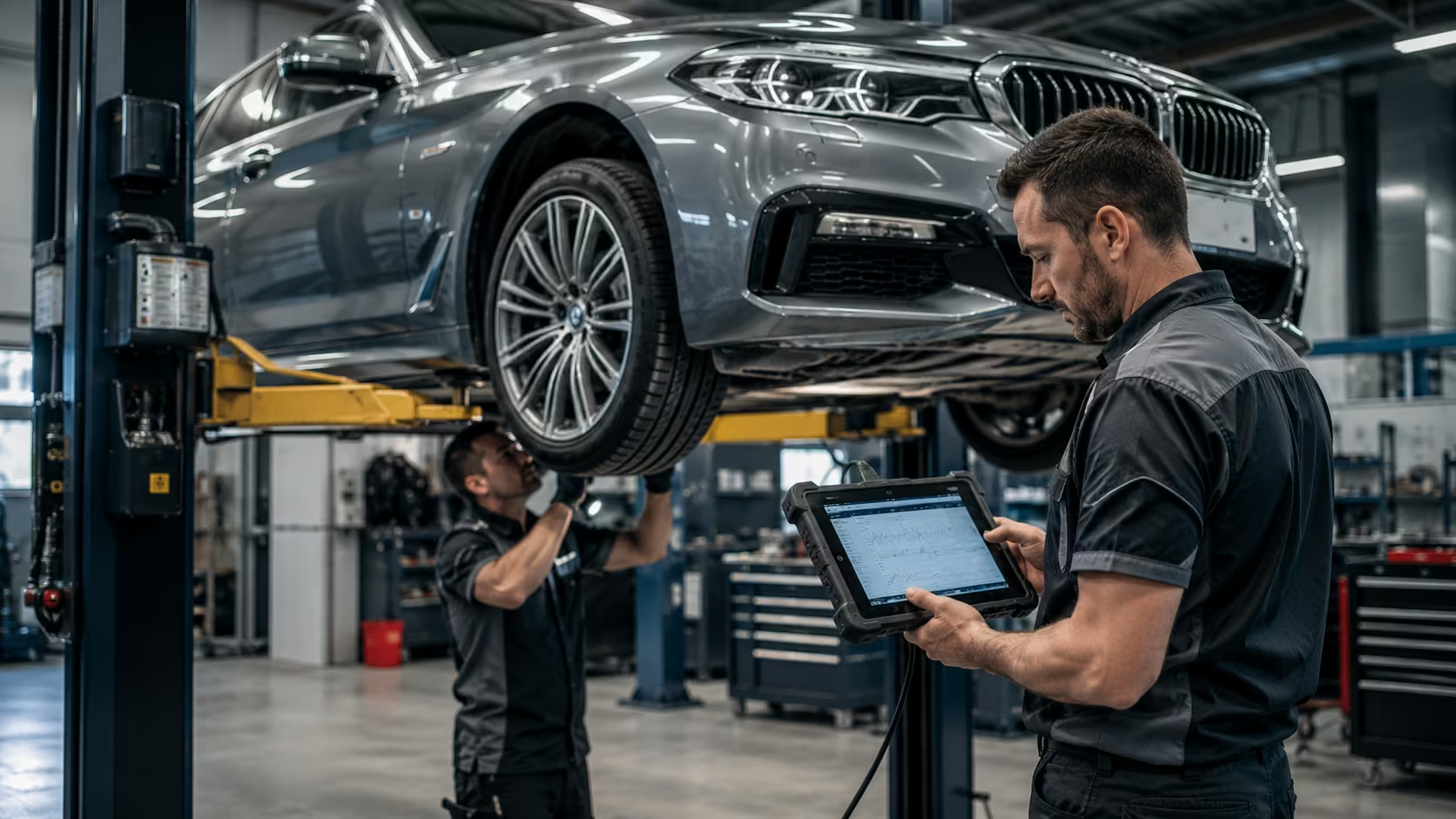
European vehicles often use manufacturer-specific transmission technologies that require specialised diagnostic knowledge.
That speed and efficiency is what makes DSG-equipped vehicles feel so responsive. It is also what makes them sensitive to problems. The system relies on precise clutch engagement, accurate pressure from the mechatronic unit, and clean, correctly specified fluid. When any of those three factors is compromised, the behaviour of the gearbox changes in ways that are easy to notice but sometimes difficult to interpret without the right diagnostic tools.
DQ200 vs DQ250: Why the Gearbox Type Determines the Fault Pattern
VW Group vehicles use several different DSG variants, and the two most common in Australia, the DQ200 and the DQ250, behave quite differently under load and fail in different ways.
| DQ200 (7-speed dry clutch) | DQ250 (6-speed wet clutch) | |
| Design | Dry clutch, no oil bath around clutch packs | Wet clutch, clutch packs run in transmission fluid |
| Torque rating | Up to 250Nm. Fitted to smaller engines including 1.4 TSI, 1.6 TDI, 2.0 TSI (some variants) | Up to 350Nm and above. Fitted to 2.0 TDI, 2.0 TSI (higher outputs), 3.0 TDI |
| Common vehicles | Golf 7 1.4 TSI, Polo GTI, Audi A3 1.4 TFSI, Skoda Octavia 1.6 TDI | Golf GTI, Golf R, Audi A3 2.0 TFSI, Skoda Superb 2.0 TDI, Amarok |
| Typical failure mode | Shudder on cold start and low-speed pull-away, mechatronic faults, clutch pack wear in urban driving | Fluid degradation, gear selector position faults, less shudder but higher repair cost when mechatronic fails |
| Service interval | Every 60,000 km, fluid and filter change with mechatronic adaptation reset | Every 60,000 km, fluid and filter change with mechatronic adaptation reset |
The DQ200 is more sensitive to urban driving conditions because its dry clutch design relies on precise engagement point calibration. Stop-start traffic in Newcastle, where the clutch is constantly engaging and disengaging at low speed, accelerates wear faster than highway driving does. The DQ250 is more robust in traffic but carries a higher repair cost when major components do eventually fail.
The Most Common DSG Symptoms Across VW Group Vehicles
DSG faults tend to present in a recognisable sequence. Understanding where a symptom sits in that sequence helps determine how urgently attention is needed.
Shudder on cold start or low-speed pull-away
This is the most reported DSG symptom, particularly on DQ200-equipped vehicles. It feels like a vibration or judder through the car when moving off from a standstill, especially on cold mornings. In early stages it disappears after the gearbox warms up. As it progresses, it occurs more frequently and under more conditions. The most common causes are degraded fluid, a clutch adaptation value that has drifted out of range, or clutch pack wear. A fluid change combined with an adaptation reset through a VW Group scan tool resolves many cases if caught early.
Keeping up with scheduled servicing can often identify transmission issues before they become expensive gearbox repairs.
Hesitation or delay when selecting Drive or Reverse
A noticeable pause of two or more seconds before the car moves after selecting a gear is a mechatronic symptom. The mechatronic unit controls clutch actuation hydraulically. When it begins to fail, pressure response slows and gear selection becomes sluggish. This is one of the clearest early warning signs that the mechatronic unit is approaching the end of its serviceable life.
Rough or abrupt gear changes
Gear changes that feel clunky, jerky, or uncharacteristically firm, particularly under normal load, point to clutch engagement calibration being off or to early mechatronic deterioration. On the DQ200, this can also indicate the dual-mass flywheel is contributing to the problem, since the flywheel works closely with the clutch engagement behaviour.
Gearbox warning light
A gearbox or transmission warning light on a VW Group vehicle should be scanned immediately, not cleared and ignored. DSG fault codes sit across multiple modules including the transmission control module and, on newer vehicles, the gateway module. A generic OBD reader will often return no codes or incomplete codes because it cannot communicate with the full module architecture. Only VW Group-specific diagnostic software reads the full fault history.
Continuing to clear fault codes without identifying the underlying cause can make intermittent gearbox faults harder to diagnose later.
What the Mechatronic Unit Is and Why It Changes the Repair Cost
The mechatronic unit is the combined electro-hydraulic control module for the DSG. It manages clutch engagement pressure, gear selector position, and the hydraulic actuation of the dual-clutch system. It sits inside the gearbox housing and operates in the transmission fluid environment.
When the mechatronic unit fails, the gearbox loses the ability to control its own operation accurately. Depending on the failure mode, the car may enter a limp mode that locks it in a single gear, may refuse to move at all, or may shift erratically. Mechatronic replacement is a significant repair. On a DQ200, a genuine replacement unit combined with labour is a material cost. On a DQ250 fitted to a higher-spec vehicle, it is higher again.
This is why catching DSG symptoms early, when fluid and adaptation are still the likely cause, represents a significantly lower cost outcome than presenting the car once the mechatronic has deteriorated to the point of failure.
Not every mechatronic fault requires complete gearbox replacement. Depending on the fault, some units can be repaired or replaced separately, which is why an accurate diagnosis is essential before approving major transmission work.
Why Generic Diagnostic Tools Miss DSG Faults
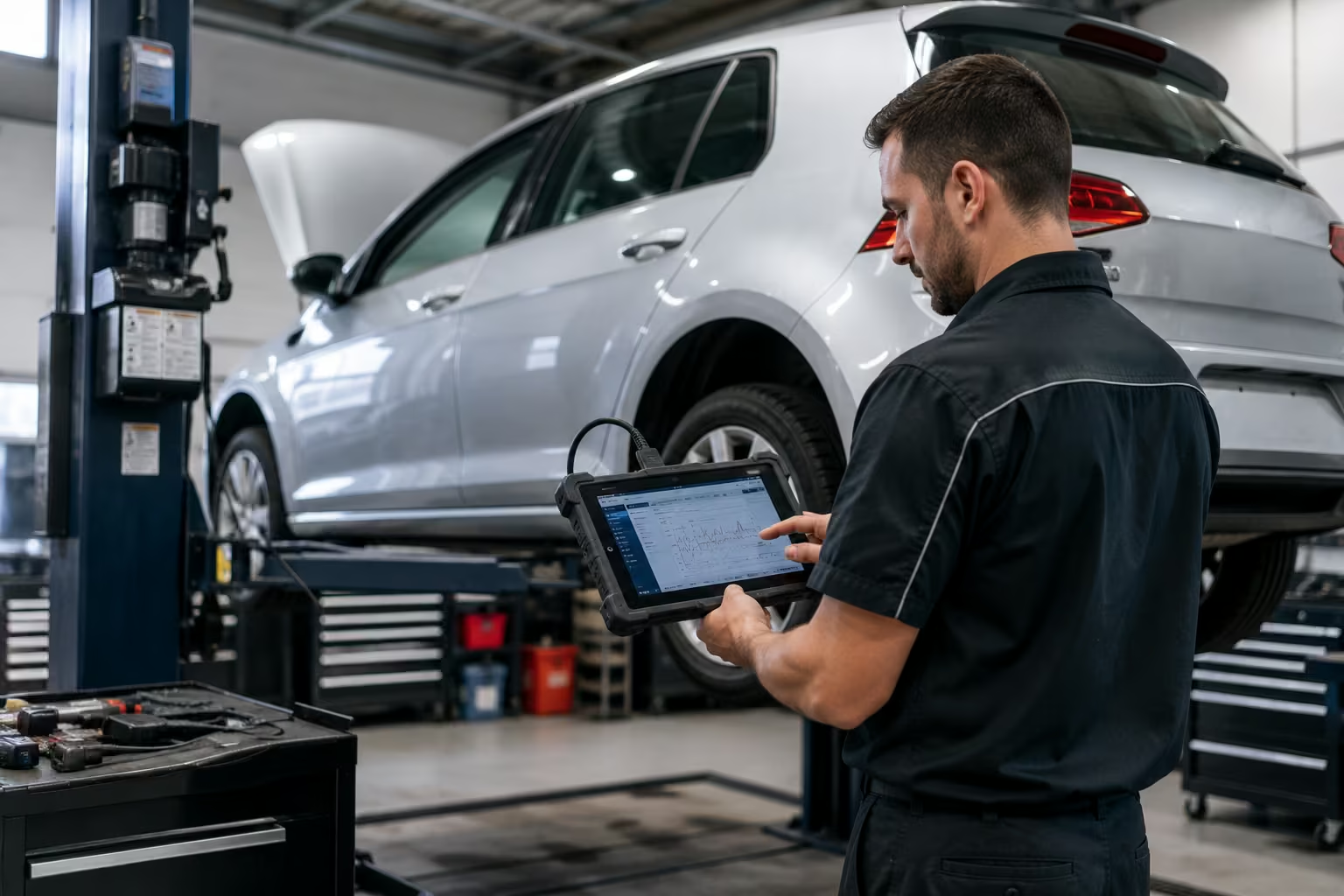
This is the practical difference between a general mechanic and a VW Group specialist for DSG diagnosis. A standard OBD-II reader communicates with the engine control module and a handful of other modules that are part of the universal diagnostic standard. DSG fault history, adaptation values, and live hydraulic pressure data sit in the transmission control module, which requires VW Group-specific software to access properly.
VCDS (VAG-COM Diagnostic System) and ODIS (the official VW Group dealer diagnostic platform) both read the full module architecture. This matters because a DSG that appears fault-free on a generic scan may have dozens of stored events in the transmission module that explain the shudder, the hesitation, or the warning light. Without reading that history, diagnosis is guesswork. For how we read fault history across all modules on Golf and Tiguan models, see our full VW Group diagnostic approach.
DSG Service Intervals and What Skipping Them Costs
Both the DQ200 and DQ250 require a fluid and filter change every 60,000 kilometres. This is not a VW Group recommendation that can be treated as optional. The fluid in a DSG does more than lubricate: on the DQ250 it cools and protects the clutch packs directly. On the DQ200 it provides the hydraulic pressure that the mechatronic unit uses to actuate the clutches.
Maintaining a complete service history is equally important for protecting long-term gearbox reliability and resale value.
As the fluid degrades, viscosity drops, contamination from clutch wear builds up, and hydraulic performance deteriorates. The mechatronic unit begins working harder to maintain the same pressure. Clutch engagement calibration drifts. Shudder begins. By the time symptoms are noticeable, the fluid has usually been degraded for a significant number of kilometres.
The mechatronic adaptation reset is as important as the fluid change itself. After the fluid is replaced, the transmission control module needs to relearn the clutch engagement points with the fresh fluid in the system. Without this reset, the old calibration values remain active and the new fluid does not deliver its full benefit. This procedure requires VW Group scan tools and cannot be completed correctly with generic equipment. For how the same dual-clutch architecture appears across the VW Group range, see our Skoda and VW Group servicing pages.
Using the correct VW Group-approved transmission fluid is critical, as incorrect fluid specifications can affect shift quality and long-term gearbox reliability.
What a Proper DSG Diagnostic and Service Covers
A thorough DSG diagnostic starts before any fluid is touched. The transmission module is scanned for all stored and active fault codes, adaptation values are reviewed, and live data including clutch engagement points, selector position, and hydraulic pressure response is assessed while the gearbox is operating. This gives a complete picture of what the gearbox has been doing and where it is currently calibrated.
If the diagnosis confirms a service is the right course of action, the fluid and filter are changed to VW Group specification, the mechatronic adaptation is reset through ODIS, and the gearbox is road-tested to confirm the behaviour has resolved. If the diagnosis points toward mechatronic deterioration beyond what a service can address, the repair options and associated costs are clearly explained before any further work is authorised. For our diagnostic and repair process for drivetrain faults, see our full gearbox and transmission service.
Frequently Asked Questions
Can I keep driving if my DSG warning light comes on?
It depends on what the light is accompanied by. A gearbox warning light with normal driving behaviour warrants prompt scanning but is not necessarily an emergency. A gearbox warning light combined with rough shifting, a car that is stuck in one gear, or a car that will not move at all means the vehicle should not be driven further until it has been assessed. Driving on a failing mechatronic unit can cause damage to the gearbox internals.
Is DSG shudder always a sign of serious damage?
Not always. In its early stages, DSG shudder on a DQ200 is frequently a calibration and fluid issue rather than a mechanical failure. If the shudder only occurs on cold starts and disappears after a few minutes of driving, and the vehicle is not overdue for its DSG service, a fluid change and adaptation reset is often sufficient. If the shudder is constant, getting worse, or occurring at higher speeds, the assessment is different.
Will a DSG problem affect my car’s factory warranty?
If the vehicle is still within the manufacturer warranty period, a DSG fault that is not caused by owner neglect should be assessed under warranty. If the DSG service has been missed or the wrong fluid has been used, warranty coverage may be affected. Under Australian Consumer Law, having your DSG serviced at an independent specialist using VW Group-approved fluid and procedures does not void the manufacturer warranty, provided the work is carried out correctly and documented.
How long does a DSG fluid service take?
Allow approximately two to three hours for a DSG fluid and filter change including the adaptation reset and road test. If the diagnostic scan identifies additional issues that require assessment, that time may extend. We will always confirm the scope and time involved before beginning any work.
Can a DSG gearbox be repaired or does it always need full replacement?
It depends on which component has failed. Mechatronic units can in some cases be rebuilt or replaced as a standalone unit rather than replacing the entire gearbox. Clutch packs can be replaced without replacing the full transmission. The cost and practicality of each option depends on the vehicle’s age, mileage, and which specific components are involved. We assess this on a case-by-case basis and provide clear options and costs before any work begins.
Can I buy a used VW with a DSG gearbox?
Yes, provided there is documented evidence of correct servicing, no history of unresolved gearbox faults, and the vehicle performs smoothly during a road test.