Most stop start failures are the system suspending itself rather than breaking. Low battery state of charge is the leading reason, followed by cabin temperature demands, an engine not yet at operating temperature, and a replacement battery that was never registered to the car’s battery management system.
Stop start is the feature owners notice most when it disappears, partly because it is so obvious at a red light and partly because nothing on the dashboard explains why. The important thing to understand before spending any money is that this system is designed to switch itself off constantly, under a long list of perfectly normal conditions, and telling a suspension apart from a genuine fault is most of the job.
How Stop Start Decides Whether to Shut the Engine Down
The system runs a continuous check against a list of conditions, and every single one has to be satisfied before it will cut the engine. Battery charge has to be above a threshold, the engine has to be at operating temperature, the cabin has to be near the temperature you asked for, the electrical load has to be manageable, the car has to be genuinely stationary, and the bonnet and doors have to be closed.
Fail any one of those and the engine keeps running, with no explanation offered. From the driver’s seat that looks identical to a broken system, which is why so many perfectly healthy cars end up in workshops for this. The system is not reporting a fault. It is quietly deciding that now is not the moment.
Low Battery State of Charge Is the Usual Reason
This one accounts for more stop start complaints than everything else combined. Shutting the engine down means the battery alone carries the lights, the fan, the infotainment and everything else until the engine restarts, and then supplies a full starting current again. The management system will only permit that if the battery has a healthy reserve, and it monitors state of charge continuously to decide.
The pattern is recognisable once you know it. Short trips are the enemy, because each start takes more out of the battery than a brief drive puts back, so a week of five minute journeys leaves the car declining to use the feature at all. A longer drive frequently brings it back, which is the clearest possible sign that nothing is broken. An older battery that still starts the car perfectly well can also sit permanently below the threshold, since the system demands more margin than mere starting does.
A Replacement Battery That Was Never Registered
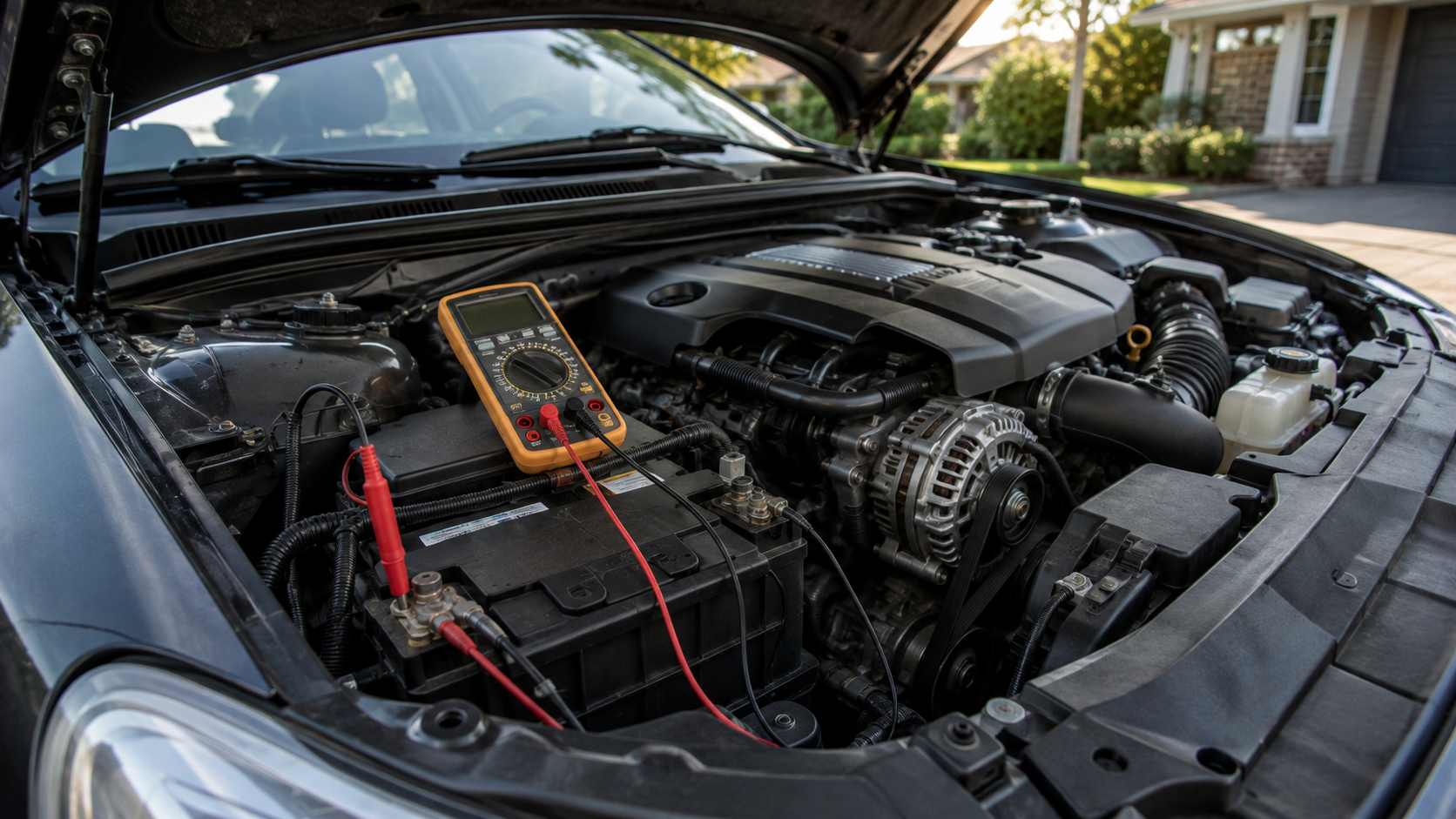
Here is the cause that catches out more owners than any other, and the one worth knowing before you buy a battery anywhere. Cars with battery management systems track the age, type and charge history of the battery fitted, and they tailor charging strategy accordingly. Fit a new battery without registering it, and the car keeps charging as though the old, tired battery is still there, which both shortens the new battery’s life and frequently stops the stop start function working entirely. If your stop start died at the same time as a battery replacement, that is not a coincidence, it is a missing step, and it needs diagnostic equipment rather than spanners to put right.
The other half of that mistake is fitting the wrong type. Stop start vehicles use AGM or EFB batteries specifically built for the punishing number of charge cycles the feature demands. An ordinary flooded battery in one of these cars will start the engine happily and then fail early, and in the meantime the function it was never designed to support quietly stops working.
Cabin Temperature and Air Conditioning Load
Climate control has priority over fuel saving, and rightly so. If the cabin has not yet reached the temperature you set, shutting down the engine would stop the compressor and let the cabin drift, so the system keeps running until it has caught up. On a hot afternoon or a cold morning that can mean stop start does not appear at all for the first stretch of a journey.
The same logic covers the demister. Switch it on and the system generally stands down entirely, because visibility is not something to trade for fuel economy. Owners who notice the feature vanishing in winter are usually watching this rule in action rather than a fault, and the tell is that it returns once the demister goes off and the cabin is warm.
Engine and Transmission Conditions That Suspend It
A cold engine will not shut down, because restarting it repeatedly before it reaches operating temperature increases wear and emissions. On diesels there is an additional layer: if the particulate filter is mid regeneration, the system suspends stop start entirely, since interrupting a regeneration cycle leaves the filter part way through a job it needs to finish.
Beyond that, most cars will not use the feature on a noticeable gradient, when the steering is turned past a certain angle, when the car is in reverse, or at very low speeds in a car park where you are clearly still manoeuvring. These are all deliberate and all invisible to the driver, which is why a system that behaves differently on different journeys is usually behaving exactly as designed.
The Sensors and Components That Genuinely Fail
Real faults do exist, and they sit in a short list. The battery monitoring sensor clamped to the negative terminal reports current flow and state of charge, and when it fails the system loses the information it needs to make any decision at all, so it defaults to not shutting down. Bonnet switches, brake pedal sensors and crankshaft position sensors can all fault in ways that suspend the function, and the reinforced starter these cars use does eventually wear. The distinguishing feature of a genuine fault is consistency: a system that has not worked once in weeks, regardless of conditions or trip length, has moved past the normal reasons for suspending itself and is worth scanning.
How to Tell a Fault From Normal Behaviour
Before booking anything, run a fair test. Take the car for a drive of at least twenty or thirty minutes, long enough to charge the battery properly and bring the engine to full temperature, with the climate control settled and the demister off. Then stop at a light and see what happens. If the engine shuts down, there was never anything wrong, and the answer is that your driving pattern has been keeping the battery below the threshold.
If it still refuses after a genuinely long drive with everything in its favour, that is when it becomes a diagnostic job rather than a curiosity. Note whether the failure started around a battery replacement, whether any warning lights appeared with it, and whether the car does short trips almost exclusively, because those three answers narrow the cause enormously.
Getting Stop Start Diagnosed
The first job is establishing whether the system is faulty or simply protecting itself, and a battery test plus a scan settles that quickly. State of charge, the management system’s own records, and whether a replacement battery was ever registered are all covered when A to Z Automotive Services looks at one of these, so book a check rather than replacing parts. A good share of these end with a registration procedure or the advice to take the long way home occasionally, and being told that costs you nothing beyond the visit.
Frequently Asked Questions
Does stop start wear the engine out faster?
Engines built for it are engineered around the extra cycles, with reinforced starters, uprated bearing surfaces and often an auxiliary electric water pump. The wear concern belongs to the early days of the technology rather than to modern implementations, and the servicing that matters is simply doing it on schedule.
Can stop start be permanently switched off?
The dashboard button turns it off for the current drive on most cars, and it resets each time you start the engine. Permanent disabling is possible on some vehicles through coding, though it may affect emissions compliance the car was certified with, so it is worth understanding what you are changing before asking for it.
Why does it work in the morning but not in the afternoon?
Almost always temperature and battery charge. A short trip in the morning leaves the battery less charged than it started, and a hot afternoon means the air conditioning is working hard enough that shutting the engine down would leave the cabin uncomfortable. The system is choosing not to, rather than failing to.
Do I need a special battery for a stop start car?
Yes, and it is not optional. These cars use AGM or EFB batteries built to survive far more charge cycles than a conventional battery, and fitting an ordinary flooded battery gives you a unit that fails early and a stop start function that stops working long before it does.