A car that cranks slowly or clicks rapidly with dim dash lights usually has a flat battery. A single loud click with bright dash lights points at the starter motor. A car that jump starts, runs, then dies again shortly afterwards has an alternator that is no longer charging.
Three components, three very different invoices, and one symptom shared between them: the car does not start. Parts shops sell an enormous number of batteries to people whose alternator was the actual problem, and the second flat battery a fortnight later is how most of them find out. The good news is that these three fail in recognisably different ways, and telling them apart in a driveway takes about two minutes.
What Each Component Actually Does
The battery has one demanding job and one easy one. It supplies the enormous burst of current needed to spin the engine over, and it keeps the memories and alarms alive while the car sits. That is the extent of it. Once the engine is running, the battery should be a passenger.
The starter motor is what converts that current into physical rotation, engaging with the flywheel and turning the engine fast enough to fire. The alternator takes over the moment the engine runs, generating the electricity the car consumes and refilling the battery as it goes. Knowing which one does what is most of the diagnosis, because each failure interrupts a different part of that sequence.
What Happens When You Turn the Key
Nothing else you can do in a driveway reveals as much as that first turn, so pay close attention before trying anything else. A healthy start is instant and consistent. Everything else falls into four recognisable categories, and each points somewhere specific.
Slow, laboured cranking that sounds like the engine is turning through treacle, with dash lights visibly dimming as the starter engages, is the classic flat battery. Rapid machine gun clicking with lights dimming heavily is the same story further along: there is enough current to pull the solenoid in and out repeatedly but nowhere near enough to spin the engine. A single loud clunk or click with the dash lights staying bright is a very different signal, because bright lights mean the battery is delivering, which moves suspicion to the starter. And complete silence with a fully lit dashboard belongs to a third category entirely, covering immobilisers, safety switches and ignition faults.
Dashboard Light Brightness Is the Free Test
There is a reason that detail keeps appearing above. Interior and dash lights draw very little current, so they stay bright on a battery that is nearly flat, right up until the moment you ask for the starter. Watching those lights at the exact moment the starter is asked to work costs nothing and tells you more than any tool in the boot.
If the lights dim dramatically or die as you turn the key, the battery cannot supply the load, and it is either flat or failing. If they stay steady and bright while nothing happens mechanically, the electrical supply is fine and the fault sits further downstream in the starter or its circuit. It takes one attempt to find out, and it halves the list of suspects without any tools at all.
The Jump Start Test Separates Battery From Alternator
Once the car is running again on a jump, the next few minutes tell you almost everything. Disconnect the leads and let the engine idle. If the car keeps running happily, drives normally and starts again later, the battery was the problem, either flat from a light left on or old enough to stop holding charge. The charging system did its job.
If instead the engine dies within minutes of the leads coming off, or the car runs but the headlights fade and the dash lights up with unrelated warnings, nothing is charging and the alternator is the culprit. The car is running purely on whatever the jump put into the battery. Worth knowing that a charging failure has its own dashboard warning that often appeared days or weeks earlier, so a car that has been showing that light and has now gone flat has already answered this question.
How the Fault Arrived Tells You Almost as Much
Timing is evidence people overlook. A battery that has been quietly ageing tends to fail suddenly and completely: fine on Tuesday, dead on Wednesday, usually on the coldest morning of the month. That abruptness is characteristic, because a battery holds up until it drops below the threshold the starter demands and then has nothing left in reserve.
Starters and alternators are more talkative. A starter often works intermittently for weeks first, needing a second turn of the key occasionally, or producing a whirring noise without engaging. An alternator usually gives warning through a whine from the engine bay, headlights that dim at idle and brighten as you rev, or the battery light appearing and clearing. A gradual decline points away from the battery. An overnight death points straight at it.
Why the Obvious Answer Is Sometimes Wrong
Here is the trap that costs people the most money. A failing alternator does not simply stop charging, it also drains and damages the battery it should be maintaining, so by the time the car will not start, the battery genuinely tests bad too. Replace only the battery and the car works beautifully for a few days, then goes flat again, and the second battery gets blamed for being faulty.
The reverse also happens. A battery that has been deeply flat several times, or one nearing the end of its life, makes an alternator work far harder than it was designed to, which shortens the alternator’s life in turn. And a third possibility sits behind both: corroded terminals or a poor main cable connection can produce every symptom of a failed component while the components themselves are perfectly healthy, which explains why healthy components can still leave you stranded turns out to be a common scenario rather than a contradiction.
How the Three Are Tested Properly
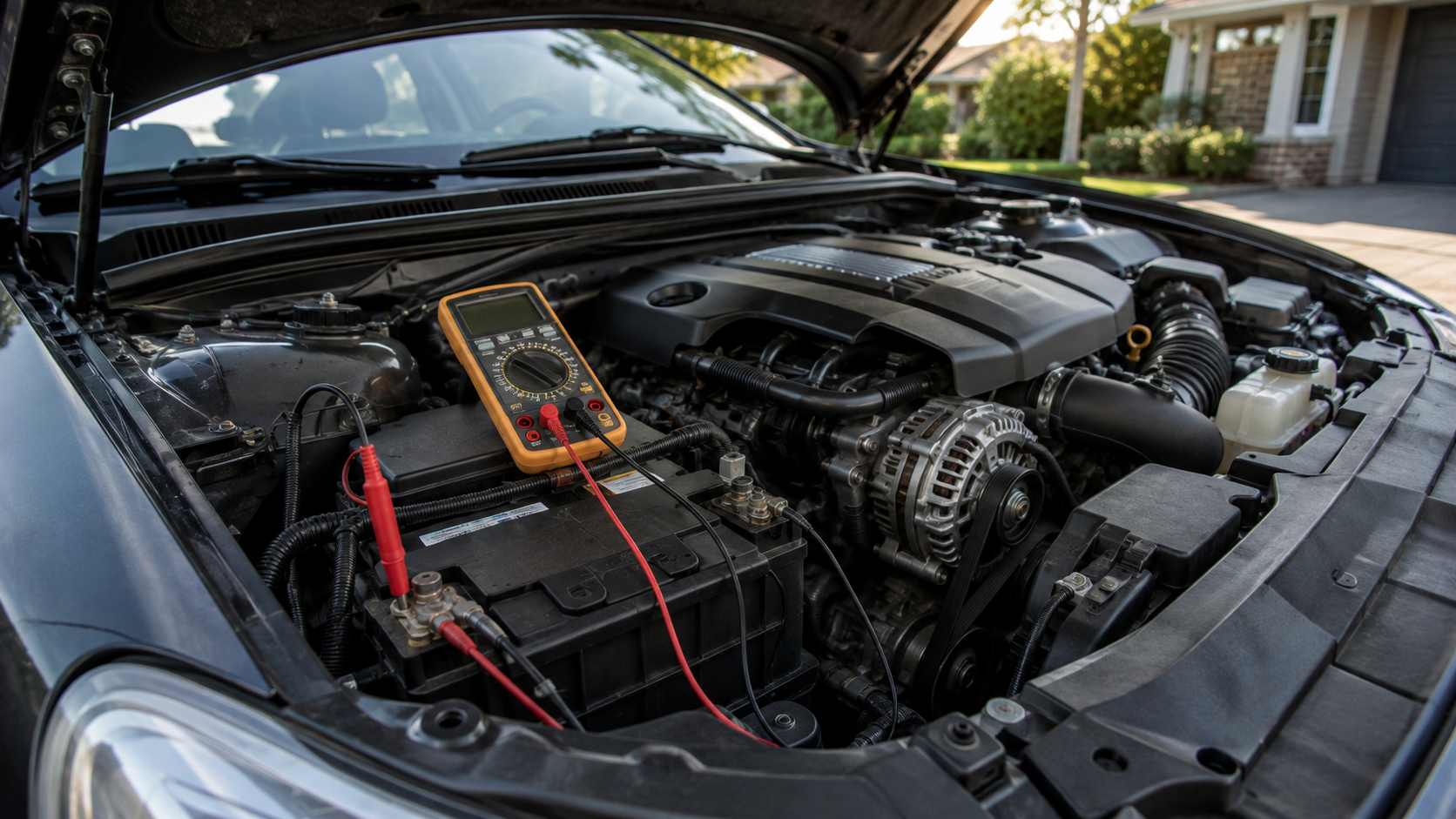
Guesswork ends where measurement begins, and the measurements are quick. A load test puts the battery under realistic demand and shows whether it can actually deliver current rather than merely hold voltage. A charging system test reads what the alternator produces at idle and under load, which catches a unit that is working but underperforming. A voltage drop test finds resistance in cables and connections that no amount of component swapping will fix. And a current draw test finds the parasitic drain behind a battery that keeps going flat overnight on a car where everything else checks out. Running the full set takes far less time than fitting the wrong part twice.
Before You Buy a Battery
If your car has gone flat, get the whole charging circuit tested rather than assuming the cheapest component is guilty. A to Z Automotive Services load tests the battery, measures alternator output and checks the cabling in one visit, so book the test before the parts shop. If the battery really has simply reached the end of a good life, that is a five minute conversation and a straightforward fix, and nobody will be inventing an alternator to go with it.
Frequently Asked Questions
Can a jump start damage a modern car?
Done correctly it is safe, and done carelessly it can be expensive. Connecting the leads the wrong way round or letting the clamps touch sends a surge through electronics that were never designed for it. Follow the sequence in the handbook, and on cars with the battery mounted in the boot, use the dedicated jump points under the bonnet rather than the terminals themselves.
How long should a car battery last?
Three to five years is the usual working life in Australian conditions, and heat shortens it more than cold does. A battery entering its fifth summer is living on borrowed time regardless of how well it has behaved so far, which is worth remembering before blaming something more expensive.
Why did my car start fine yesterday and not today?
That pattern points at the battery more often than anything else, because a battery holds up until it reaches a threshold and then fails to deliver on a colder morning. Starters and alternators usually give some warning first, a noise or a light, so an abrupt overnight change is the battery’s signature more than theirs.
If I replace the battery, do I need anything else done?
On many modern cars, yes. Vehicles with battery management systems need the new battery registered so the charging strategy matches its age and type, and skipping that step shortens the life of the battery you just paid for. It takes minutes with the right equipment and cannot be done with a spanner alone.