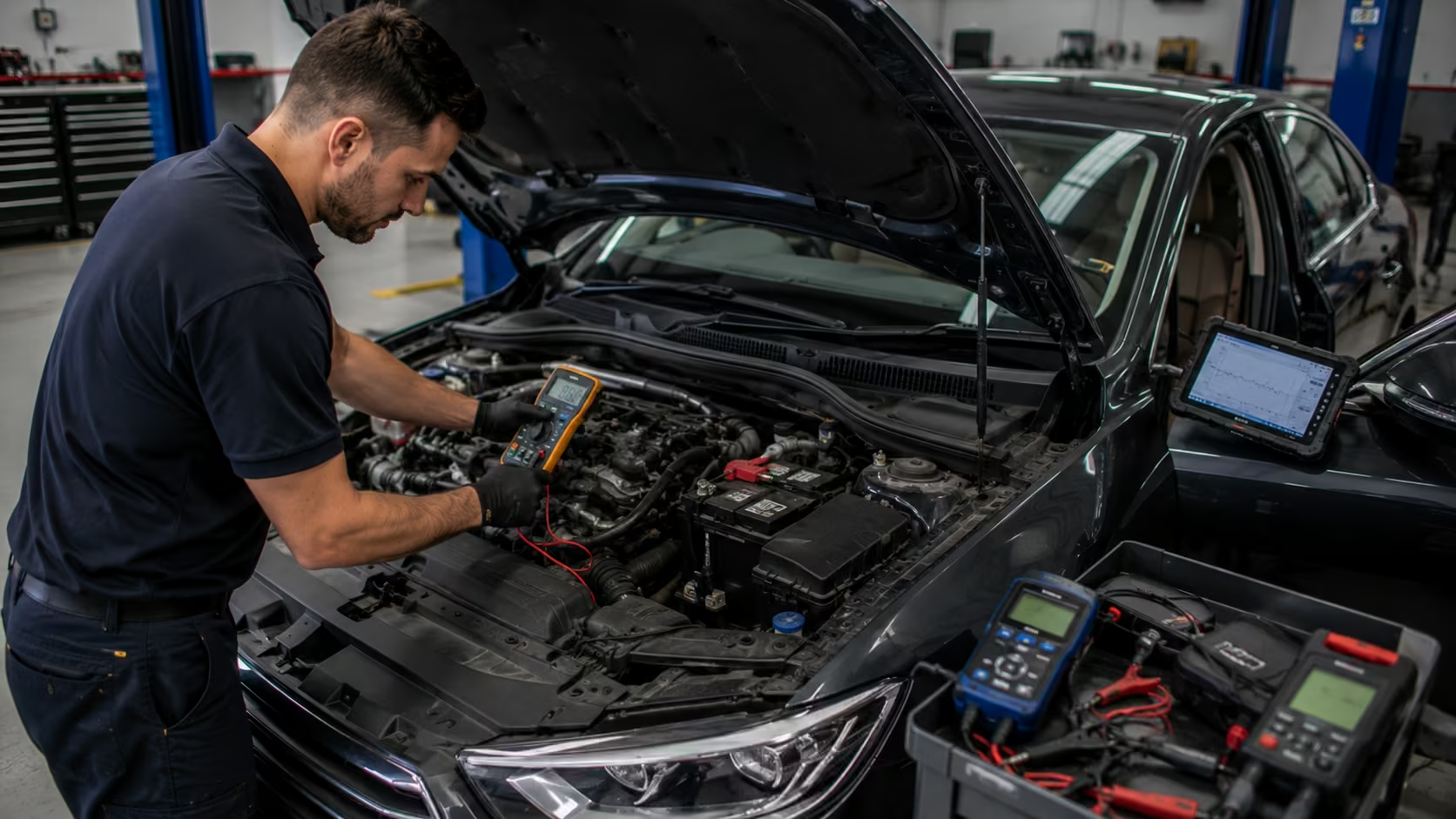
If your car won’t start but the battery is OK, the fault is usually one of three things: the starter motor, fuel delivery system, or the ignition system. The quickest way to tell which one it is, is to turn the key and see if the engine cranks over, or if it remains silent.
A car that won’t fire, even with a battery that checks out fine, usually comes down to whether the engine is turning over or not. That one detail alone rules out half the list before you even pop the bonnet.
Call Now
Does the Engine Crank When You Turn the Key
Turn the key and if the engine spins over normally (even briefly) before not firing, the starter motor and battery are doing their job and the problem is further down the line, usually fuel delivery or ignition. But if you get one single click, a fast repeated clicking or silence, then the problem is more likely electrical between the battery and the starter itself – even if the battery tests OK on its own.
This is more important than almost anything else you can check yourself, as it splits the entire fault list in two before a scan tool is even connected. It is the first thing worth noting and mentioning when you call in to book the car.
A Single Click Points to the Starter Motor
When you turn the key and hear one loud click, it usually means the starter solenoid is engaging but the starter motor itself is not cranking the engine. Often this is because the motor has worn out internally or the connection to it is not getting enough current. This is not a battery problem , because the electrical system has enough power to trigger the solenoid , it just does n’t have enough to spin the engine over .
Starter motors go the way of anything with moving parts and it is usually age and heat under the bonnet that is the cause. A starter that is bad will work, then not work, then work again, and eventually just stop working.
Rapid Clicking Points to a Bad Connection, Not the Battery
Another sign is rapid, repeated clicking, which usually means the battery terminals are corroded or loose, not that the battery or starter is bad. Even a fully charged battery behind a bad connection may not deliver enough current when the starter calls for it. Resistance in a corroded terminal may be fine at rest but increase sharply under heavy load.
This is one of the more overlooked causes. A visual check of the terminals may look fine, even if corrosion has built up internally around the connection point. Sometimes this will be fixed by cleaning and tightening the terminals, but once a terminal has corroded it is worth checking again at a later date.
Engine Cranks But Won’t Fire Fuel and Ignition Faults
If the engine spins over at normal speed but will not start, the problem has changed from the electrical side to either fuel or ignition. Even if everything upstream is working, a failed fuel pump, a blocked fuel filter, or a fuel pump relay that has dropped out can all starve the engine of fuel . Another reason for the same symptom is the ignition side: a bad crank angle sensor, a worn ignition coil or fouled spark plugs can prevent the engine from sparking at the right time. It is the same diagnostic principle as when we get a dashboard warning light on, the symptom on the surface doesn’t tell you which system underneath is actually responsible.
Immobiliser and Key Faults on Newer Vehicles
With a healthy battery and a healthy starter motor, many of the newer vehicles will not start at all if the key is not recognised by the immobiliser system. This is often down to a flat battery in the key fob itself, interference from another device near the ignition or sometimes a fault with the immobiliser module. This is an easy one to miss because nothing about the starting attempt looks electrical or mechanical, the car just won’t start like nothing is happening at all.
If that’s the case, the common sign is that the vehicle doesn’t even try to crank, there’s no click and no engine movement, just complete silence when you turn the key. If you have a spare key, it’s worth trying that before assuming the fault is more serious.
Neutral Safety Switch and Selector Position Faults
Automatic cars have a safety switch that prevents the starter from engaging unless the car is in park or neutral. If the switch is faulty, it can stop the car from starting even if everything else is in good working order. This is more common on older vehicles or ones where the selector linkage has been a little out of adjustment. Some owners confirm the switch as the culprit, if you wiggle the selector while turning the key to fire up the car. But it’s a sign that the switch needs some proper attention and not something to keep relying on.
What a Proper Diagnosis Involves
A car that won’t start can be a number of unrelated systems . A proper diagnosis usually starts with checking cranking voltage and current draw at the battery and starter and then goes into fuel pressure and spark if the engine is cranking normally . That’s the difference between paying for one fix that works and paying for two or three that didn’t. A full diagnostic check will rule these in or out in order, instead of guessing at parts.
Book a Diagnostic Check
If your car won’t start but the battery has already tested fine, book a diagnostic inspection with A to Z Automotive Services. We’ll identify the real cause before unnecessary parts are replaced.
Frequently Asked Questions
Can a battery test fine and still be the problem?
Yes. A battery can hold a resting voltage that looks fine on a basic test but still fail to deliver enough current the moment the starter demands a heavy load, particularly if it is getting old or the terminals are corroded.
Why does my car just click when I turn the key?
A single click usually points to the starter itself, while rapid repeated clicking more often points to a poor connection at the battery terminals rather than the battery or starter being faulty.
What does it mean if the engine cranks but won’t start?
It means the electrical side is working and the fault has moved to fuel delivery or ignition, both of which need a proper check to identify which one specifically.
Can a key fob stop a car from starting?
Yes, on newer vehicles fitted with an immobiliser system. A low battery inside the fob or a fault in the immobiliser module can prevent the engine from starting even though nothing else is wrong.