Routine servicing on a hybrid costs about the same as an equivalent petrol car, sometimes slightly less. Brakes last far longer thanks to regenerative braking and the engine works fewer hours, but hybrids add service items of their own, and the honest cost question is the high voltage battery once the warranty ends.
It is a question nearly every hybrid shopper asks, and the marketing on both sides muddies it. Hybrid sceptics talk about battery bills as though every pack fails the week the warranty ends. Hybrid enthusiasts talk as though the cars barely need a workshop at all. The truth sits in the middle and it is worth walking through properly, because the costs do not land where most people expect.
Call Now
Where Hybrids Genuinely Save on Servicing
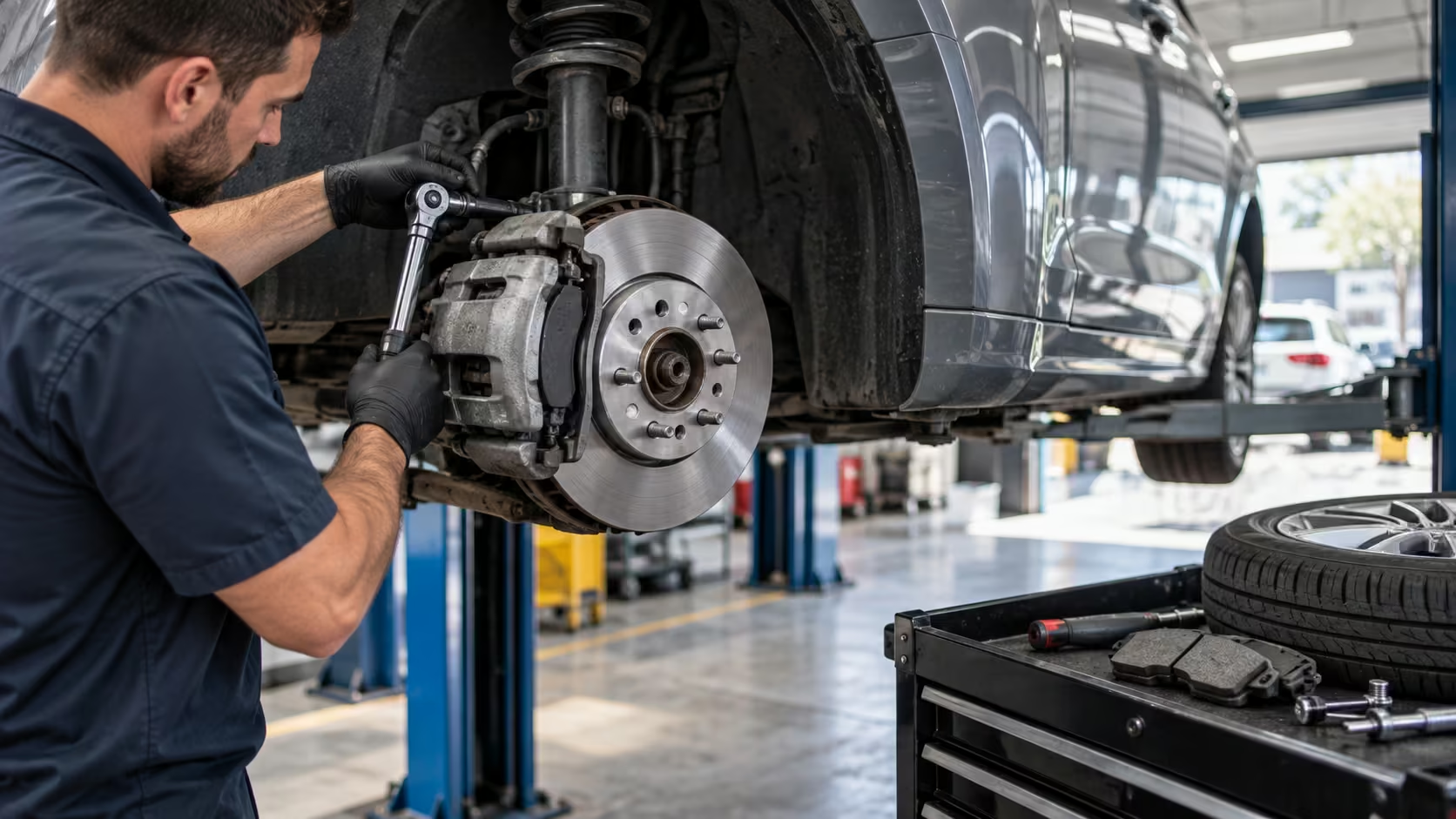
The biggest saving is one nobody advertises: brakes. A hybrid does a large share of its everyday slowing through regenerative braking, using the electric motor as a generator, which means the conventional pads and discs are loafing most of the time. It is entirely normal for hybrid brake components to last double what they would on the same car with a petrol engine alone, and on gently driven examples, longer still.
The petrol engine itself also lives an easier life. It shuts off at the lights, hands over to the electric motor at low speed, and accumulates fewer running hours per ten thousand kilometres than a conventional engine covering the same distance. Add the absence of a conventional starter motor and alternator, two classic wear items, and the mechanical side of a hybrid genuinely carries less to go wrong.
Hybrid Servicing Items Petrol Cars Do Not Have
None of that is free, because the hybrid system brings its own maintenance list. The inverter that manages power flow has its own cooling circuit with its own coolant on its own schedule. The high voltage battery is cooled too, and on many models the battery cooling intake and filter need periodic cleaning, a small job that matters more than it sounds, since a battery running hot ages faster than anything else in the car.
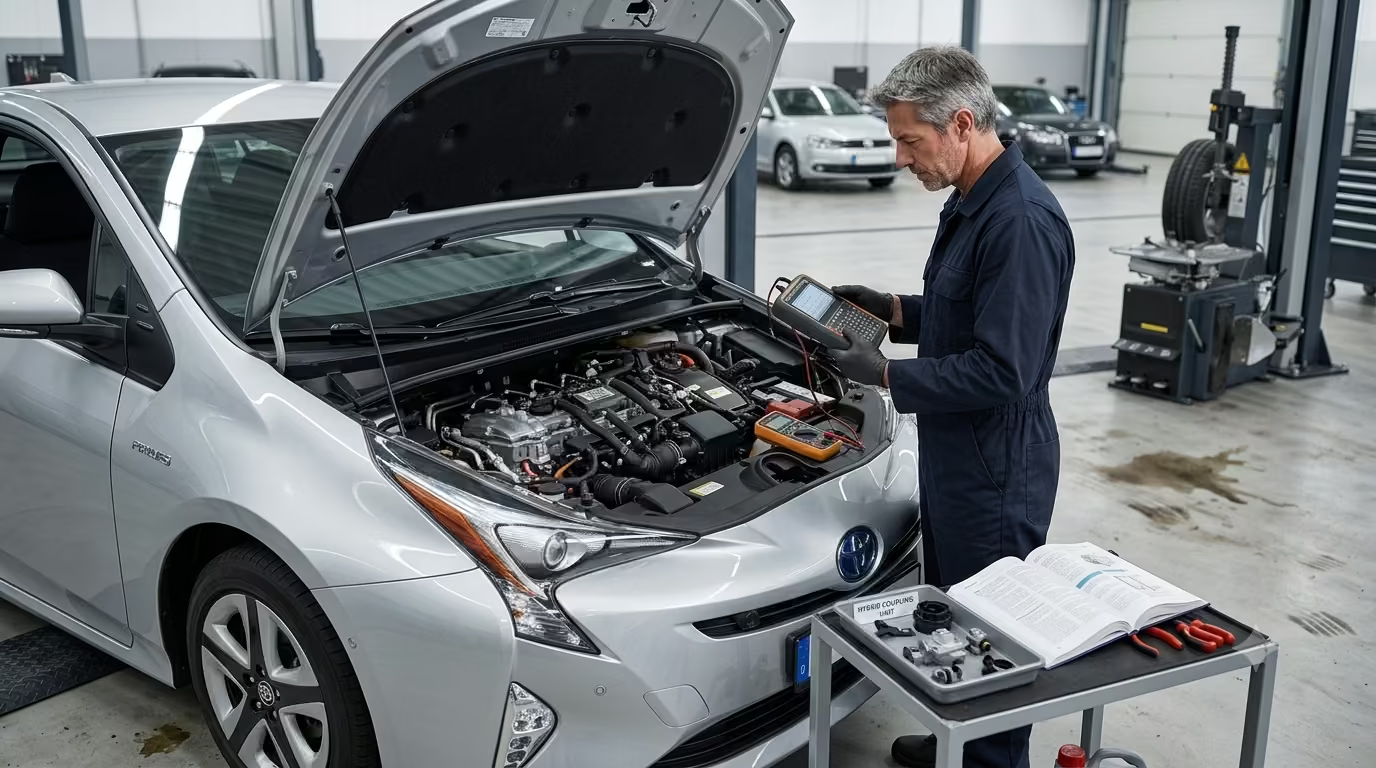
Then there is the annual hybrid health check that some manufacturers build into their battery warranty conditions, an inspection of the pack’s cells, temperatures and cooling performance. Skip it and, on some brands, the extended battery cover quietly lapses. These items are not expensive individually. They simply need a workshop that knows they exist, because a service that treats a hybrid like an ordinary petrol car leaves them undone.
The Hybrid Battery Question Answered Properly
The high voltage battery is the number everyone fears, so here are the facts that matter. Hybrid batteries in mainstream cars have proven far more durable than early sceptics predicted, with packs routinely outliving the rest of the vehicle. Manufacturer warranties reflect that confidence, typically running eight years or more, and some brands extend battery cover to around a decade provided the car gets its annual hybrid inspection.
Out of warranty, a failed pack is a significant bill, there is no pretending otherwise. But the risk needs pricing honestly: it is a possibility, not a schedule, and reconditioned and aftermarket pack options have matured to soften the worst case. Set against years of brake and engine savings, the averaged cost of hybrid ownership tends to come out level with petrol or ahead of it, which is not the horror story secondhand wisdom suggests.
The 12 Volt Battery Still Fails and Still Strands You
Here is the one that surprises hybrid owners most. Every hybrid still carries an ordinary 12 volt battery to wake the car’s electronics, and when it dies, the car will not start, no matter how much charge the big high voltage pack is holding. The giant battery cannot help because the small one is what switches everything on.
These 12 volt batteries are often smaller than a petrol car’s and live a slightly odd electrical life, so they do not always last as long as people expect. If a hybrid is dead in the driveway, this is the first suspect, and it is a routine, inexpensive fix, provided whoever attends knows not to treat the jump start like a conventional car, since hybrids have specific procedures for it.
So Do Hybrids Cost Less to Service Overall
Across a normal ownership span, yes, by a modest margin, provided two conditions hold. The car has to be serviced by someone who actually performs the hybrid specific items rather than skipping what they do not recognise, and the servicing has to follow the schedule the manufacturer wrote so the battery warranty conditions stay satisfied while they matter. Meet both and the hybrid quietly wins on brakes and engine wear. Miss them and the savings leak away, sometimes along with the battery cover.
Servicing a Hybrid Properly
A hybrid rewards the workshop that treats it as a hybrid, not as a petrol car with mystery orange cables. A to Z Automotive Services has hybrid trained technicians who work on these systems week in and week out, from health checks to the high voltage side, so if yours is due, or dead in the driveway, it will be looked after by someone who knows exactly which parts of it are different and which parts are just a car.
Frequently Asked Questions
Do hybrids need special engine oil?
They need the grade and specification the manufacturer lists, same as any modern car, and hybrids can be harder on oil than people expect because the engine stops and starts constantly. The schedule matters as much as the spec.
Do hybrid brakes really last longer?
Genuinely, yes. Regenerative braking does a large share of everyday slowing, so the pads and discs are used far less. Double the usual pad life is common on gently driven hybrids. The trade off is that lightly used brakes need checking for seizing and corrosion, not for wear.
What does a hybrid battery health check involve?
It reads the state of the high voltage battery through the car’s own systems, cell voltages, temperatures, cooling performance, and confirms the pack is behaving within specification. On some brands, completing it annually is what keeps the extended battery warranty alive.
Can any mechanic safely service a hybrid?
The petrol half, mostly yes. Anything near the high voltage system requires training and isolation procedures, because the orange cabling carries enough voltage to be genuinely dangerous. It is a fair question to ask any workshop before booking.