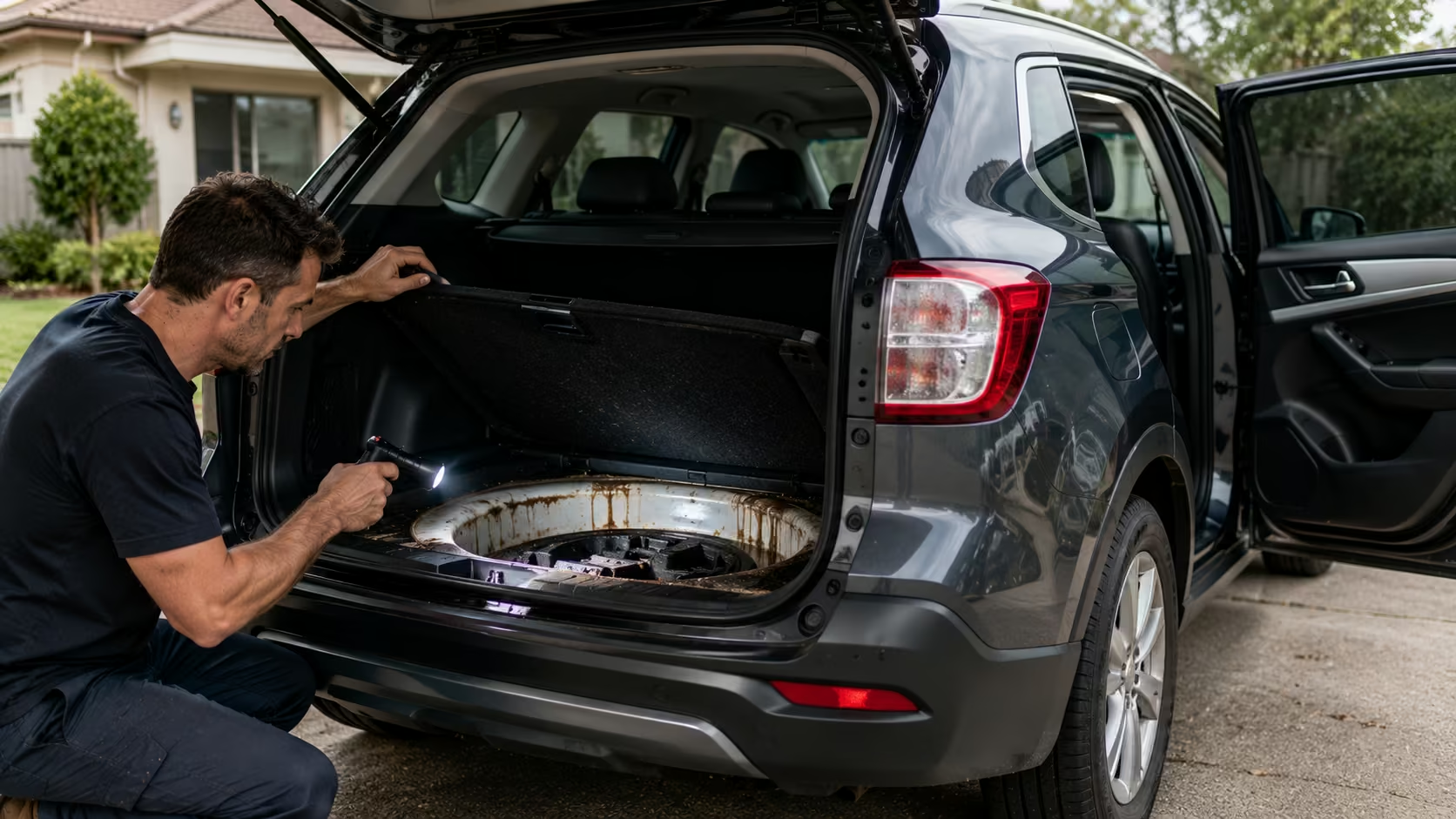
A flood damaged car gives itself away through musty smells, silt in hidden cavities, corrosion in places water should never reach, fogged lights, and electrical glitches. A PPSR check against the VIN reveals whether it has been written off. Any one sign warrants suspicion. Two or more means walk away.
Flood events push a wave of damaged cars into the used market, and the Hunter has seen enough of them for this to be a live local risk, not a hypothetical. A flooded car can be dried, shampooed and photographed into looking immaculate. What it cannot do is hide the evidence from someone who knows where to look, because water always leaves a trail. Here is the trail.
Call Now
The Smell Test Comes First
Water finds its way into carpet underlay, seat foam and door cavities, and once it has been there, no amount of drying removes the memory entirely. The result is a musty, damp odour that is strongest when the car has been closed up, which is why the first seconds after opening the door are the most honest moment of the whole inspection. Sit in the car with the doors shut and breathe before you look at anything.
The counter move sellers use is fragrance, and it works against them if you are paying attention. An overpowering air freshener, a heavily perfumed shampoo job, or several scent trees working together in a car that is otherwise being sold cheap is masking behaviour. A clean, honest car smells like not much at all. A flooded one smells like a losing argument between mould and vanilla.
Silt and Water Marks Hide in Predictable Places
Floodwater is dirty, and it deposits fine silt in every cavity it enters. Detailers clean what shows, but the hiding spots are consistent: under the boot carpet around the spare wheel, in the seat mounting rails, inside the light housings, along the underside edges of the dashboard, and in the drain channels under the doors. Run a finger where fingers do not normally go and grit tells the story.
The single best trick costs nothing: pull each seatbelt out to its full length. Belts spend flood events partly wound in their reels, and a water line or tide mark of dirt partway along the webbing is evidence the detailing missed, because almost nobody thinks to clean inside a belt reel. Fogging or a visible water line inside headlights and tail lights reads the same way.
Corrosion Where Water Has No Business Being
Cars rust in known places, and flood cars rust in wrong ones. Surface corrosion on the seat frames under the cushions, on the metal brackets beneath the dash, on the heads of bolts inside the cabin, or across brackets high in the boot cavity has no innocent explanation, because those areas never see water in normal life, not in rain, not in washing, not in a decade of ownership.
Bring a small torch and spend two minutes looking under the dash and under the seats. Fresh, even surface rust across multiple interior fixings on a car only a few years old is one of the strongest single indicators on this list, and unlike smells and shampoo, it is very hard for a seller to talk around.
Electrical Gremlins Are the Lasting Legacy
Water and connectors are patient enemies. A flooded car often works fine on the test drive, then spends the following years developing faults one module at a time as corrosion creeps through pins and earth points. During the inspection, work every switch, every window, every seat adjustment, the infotainment, all the cameras and sensors, and watch the dash through a full start cycle for warning lights that appear, vanish, or flicker.
One glitchy window in an older car is life. A cluster of small electrical oddities, an intermittent warning light, a screen that reboots, a sensor that drops out, in a car that also smells shampooed and sits at a sharp price, is a pattern, and patterns are what this whole inspection is about.
The PPSR Check and the Written Off Register
Paperwork is the check that catches what your senses cannot. A PPSR search against the car’s VIN costs a few dollars online and reports whether the vehicle is recorded on the written off vehicle register, along with finance owing and stolen status. In NSW, flood damaged cars are typically written off outright and cannot legally return to the road here, but vehicles written off under different rules elsewhere can migrate between states and reappear for sale looking innocent.
Treat a missing or reluctant VIN the same as a failed check. A seller who hesitates to provide the VIN for a two dollar search is answering your question, just not with words. And a car with a clean PPSR but multiple physical signs from this list still deserves suspicion, because the register only catches the cars that went through insurance.
A Professional Inspection Beats All of It
Everything above is what a careful buyer can do in a driveway. A workshop inspection goes further, up on a hoist where waterline evidence on the underbody is obvious, behind trim panels, and through the car’s electronic systems where flood history shows up as a scatter of stored faults across unrelated modules. On a purchase worth tens of thousands, an hour of professional scepticism is the cheapest insurance available.
Before You Hand Over the Money
If a car you are considering shows any of these signs, ask A to Z Automotive Services to inspect it first. And understand what you are buying with that inspection: if the car is flood damaged, you will be told to walk away in plain words, even though a sale falling through earns a workshop nothing. The wrong car avoided is worth more than any repair ever booked.
Frequently Asked Questions
Can a flood damaged car ever be repaired properly?
Cosmetically, easily. Genuinely, rarely. Water reaches connectors, modules and metal that no repair realistically strips back and replaces, and corrosion keeps working long after the car is dried, detailed and sold. That is why NSW treats flood write offs so severely.
Will the seller have to tell me the car was flooded?
A licensed dealer has disclosure obligations. A private seller marketing a car they know was flooded is another story, and by the time you could prove they knew, the money has usually changed hands. Your own checks protect you better than their honesty.
Is a suspiciously cheap price the biggest red flag?
It is a strong one, especially in the months after flood events when written off stock is moving around. Combine a sharp price with a freshly shampooed interior, a heavy air freshener, and a seller keen on a fast sale, and the pattern deserves real caution.
What does a PPSR check cost and cover?
A few dollars, done online in minutes against the car’s VIN. It reveals whether the vehicle is recorded as written off, carries finance owing, or is listed as stolen. It is the single cheapest piece of protection in the entire used car process.