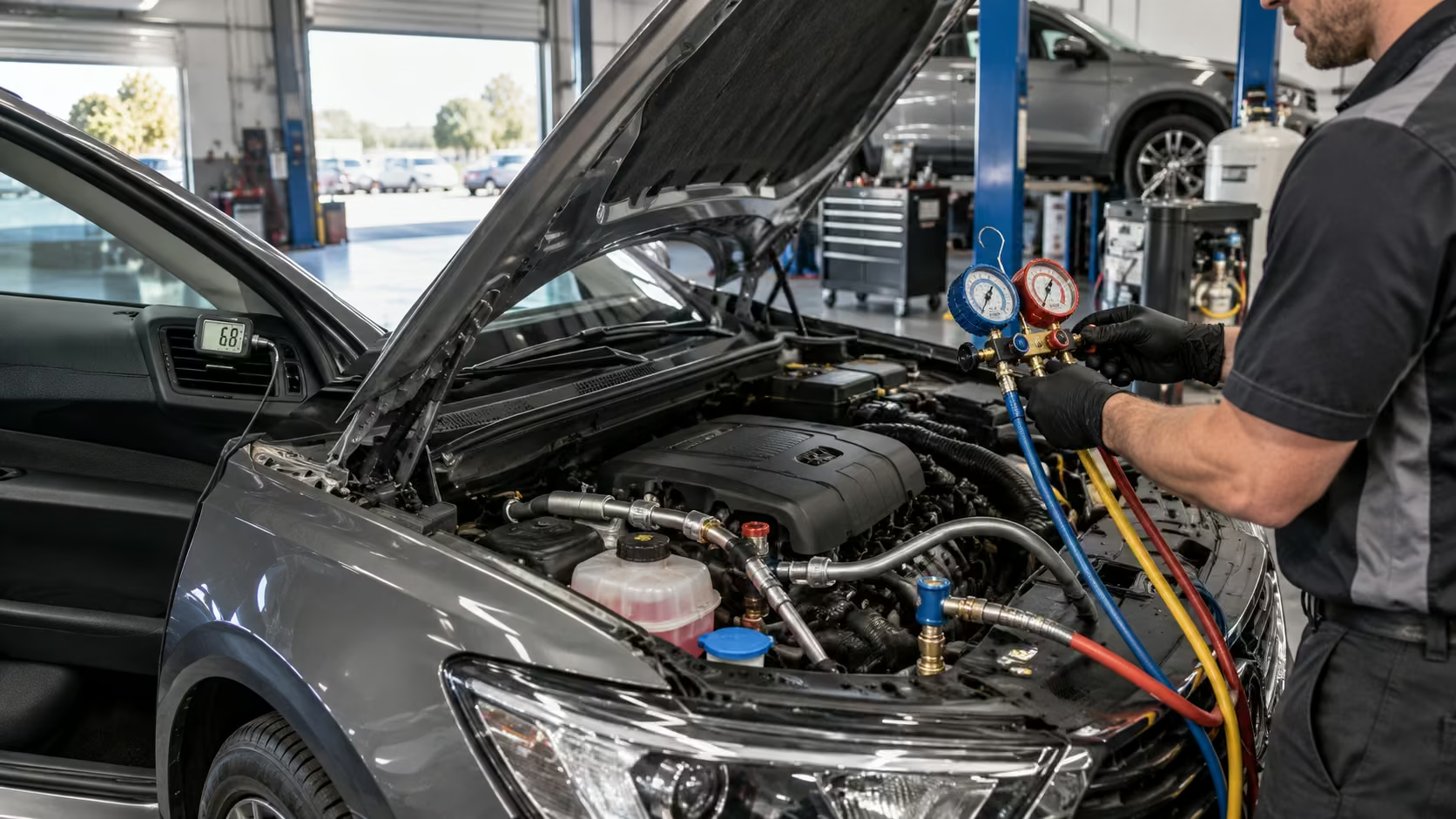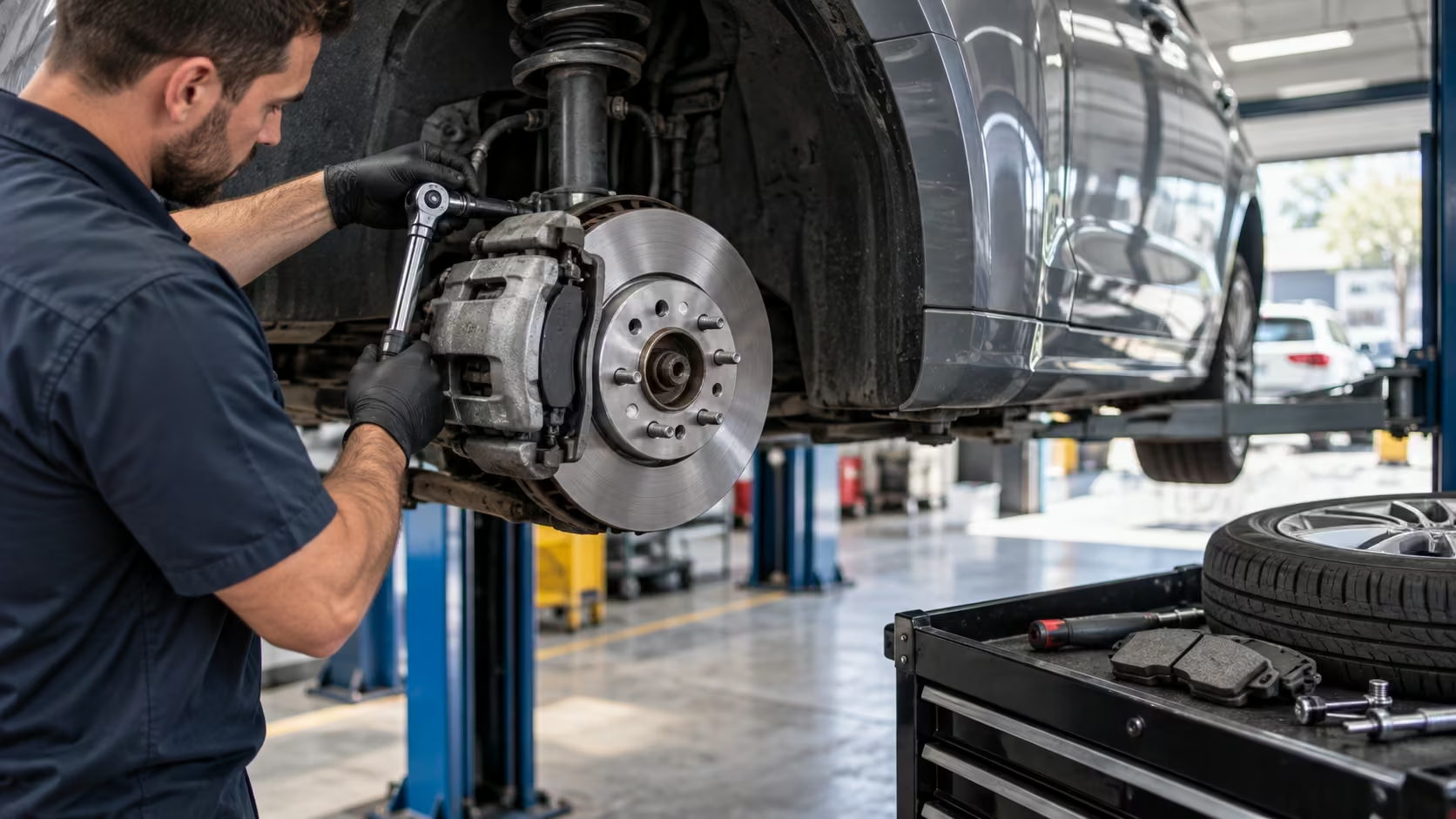

The Hyundai problems that warrant swift action are engine knock or ticking in Theta II GDI engines, shudder from the seven speed dual clutch gearbox, the ABS module recall affecting some models, steering coupler clunks and blocked diesel particulate filters in CRDi engines driven almost exclusively on short trips.
Call Now
What are the most common Hyundai engine problems?
The engine family that generates the most workshop visits is the Theta II direct injection petrol, fitted to a range of Sonata, Tucson and Santa Fe models over the years. The known weakness is bearing wear that manifests itself as a faint metallic ticking or knocking sound that is most audible at idle with the engine warm and grows louder over weeks, not months.
The annoying thing is that oil consumption always seems to increase first and owners never get a puddle to warn them because these engines don’t always leak. If your Hyundai is burning oil between services don’t wait for the low pressure light to come on. Check the dipstick monthly and any new ticking noises should be investigated promptly. Some engines in this family were under manufacturer campaigns so it’s worth asking if yours was ever inspected under one.
The results are much better if you catch it at the noise stage, than after a bearing lets go at highway speed. When an engine fails completely, it is usually not repairable and must be replaced.
Why does my Hyundai shudder or hesitate at low speed?
If you have an i30, Kona or Tucson with the seven speed dual clutch some low speed behaviour is just the nature of the gearbox. A DCT is an automated manual which means it creeps and takes up drive differently to a conventional automatic. A little hesitation is normal when crawling in traffic.
What is not normal is a sharp judder or vibration through the car on take off, a lurch between first and second or a burning smell after slow traffic. They point to clutch pack wear or overheating and driving through it accelerates damage. The sensible thing is to get the dual clutch unit checked out while it is still an adjustment or a clutch job and not a full mechatronic failure.
One practical tip that really helps these gearboxes: during long stop start crawling, hold the brake hard rather than crawl on a slipping clutch, to keep heat out of the system.
What is the Hyundai ABS module recall about?
Hyundai has issued a recall for a number of models in Australia after a fault was found in the anti lock braking module that can develop an internal short circuit even when the car is switched off. In more serious cases the official advice at the time was to park the affected vehicles outside until they were repaired.
The fix is free and simple but remember completion rates are never 100% and there are plenty of affected cars now with their second or third owners. If you’ve never checked, run your VIN through the federal government vehicle recalls register. It takes a minute and this is a fault you don’t want to take a chance on.
Why is there a clunk in my Hyundai steering?
A light knock or clunk through the steering wheel when travelling at low speeds, especially over bumps or when turning out of driveways, is a signature fault on the i30 and Elantra. The usual suspect is a flexible coupling in the steering column, a small rubber and metal joint that wears out faster than it should.
The good news is that this is one of the cheapest problems on this list to fix, and it doesn’t turn the car into a death trap overnight. It does get worse though, and a loose feeling in the steering is never something to file under later. A quick check will determine if it is the coupler or something in the front suspension that is knocking.
Do Hyundai diesels have DPF problems?
The CRDi diesels are powerful engines but like all modern diesels they have a particulate filter that requires regular sustained running to keep it clean. The same pattern is played out around Newcastle; a diesel Tucson or Santa Fe that lives its life on five-kilometre trips, regenerations that never end and a filter that slowly chokes.
Warning signs include a yellow filter light, flat performance and a cooling fan that runs long after you turn the system off. If that sounds familiar, a scan will show the soot load and regeneration history prior to the problem becoming serious enough to go limp mode. The cheapest DPF maintenance? A twenty minute highway run once a month.
When should you get a Hyundai fault checked?
The common theme to all the above problems is that early symptoms are cheap and late symptoms are expensive. Most of these faults are caught while small by keeping up with scheduled maintenance visits as it is in the oil condition, fluid levels and noise checks that the first evidence shows up.
If your Hyundai is ticking, shuddering or clunking the team at A to Z Automotive Services can road test it, pull the data and tell you honestly whether it is a quirk or a fault. Give 0432 553 905 a call, describe the symptom and we will tell you how urgent it sounds before you book.
FAQ
Does servicing my Hyundai at an independent workshop void the warranty?
No. Australian law allows any qualified workshop to carry out scheduled servicing using appropriate parts and fluids while keeping the manufacturer warranty intact, provided the work follows the service schedule and is recorded properly.
How do I check if my Hyundai has an outstanding recall?
Enter your VIN on the federal government vehicle recalls website or on the manufacturer recall lookup page. It takes about a minute and recall repairs are carried out free of charge regardless of where the car is normally serviced.
Should I avoid buying a used Hyundai with a dual clutch transmission?
Not necessarily. A well maintained DCT with a clean service history can be perfectly reliable. Take it for an extended test drive in stop start conditions, feel for shudder on take off, and have the transmission data read before committing.
Are Hyundais expensive to keep on the road?
Generally no. Parts availability is good in Australia and routine servicing costs sit below the European average. The costs escalate only when early warning signs like ticking, shudder or steering clunks are ignored until they become component failures.