
Most garages will happily book in a BMW. Fewer actually can read one. This article is about the difference between getting the job and getting the job done right, and why so many owners who have been through two or three general mechanics end up at a specialist anyway, usually after paying twice for the same fault.
A BMW mechanic is different from a general mechanic in three ways: Factory diagnostic software that reads every BMW module Brand specific training on BMW engines and transmissions Access to genuine parts and correct fluids. General workshops can work on a BMW but they tend to miss faults that only BMW level tools can find.
Call Now
Why Do BMWs Need a Specialist Mechanic?
Let’s begin with something as simple as the service interval. Most cars have a set schedule, every 10,000 km or six months, written in the logbook. BMW doesn’t. These cars have been using Condition Based Service since the early 2000s, where the car itself works out when it needs a service depending on how it is driven. Many short trips ? Oil interval gets shorter. Long stretches of highway ? It gets to.
A BMW workshop that treats a BMW like any other car ignores all of this. They change the oil, put a sticker on the windscreen and give the keys back with the CBS counters untouched, so the iDrive keeps nagging the owner about a service that has already been done. We get cars coming in with three services in the paper history and none of them recorded on the car.
And then there’s the oil. BMW engines are approved for certain Longlife grades and there is less room for error than people think. Some 4 cylinder petrol engines are known to suffer from timing chain wear and running a generic oil that matches the viscosity but not the approval accelerates it. No one notices for 40,000 km. Then they do.
What Diagnostic Tools Does a BMW Mechanic Use?
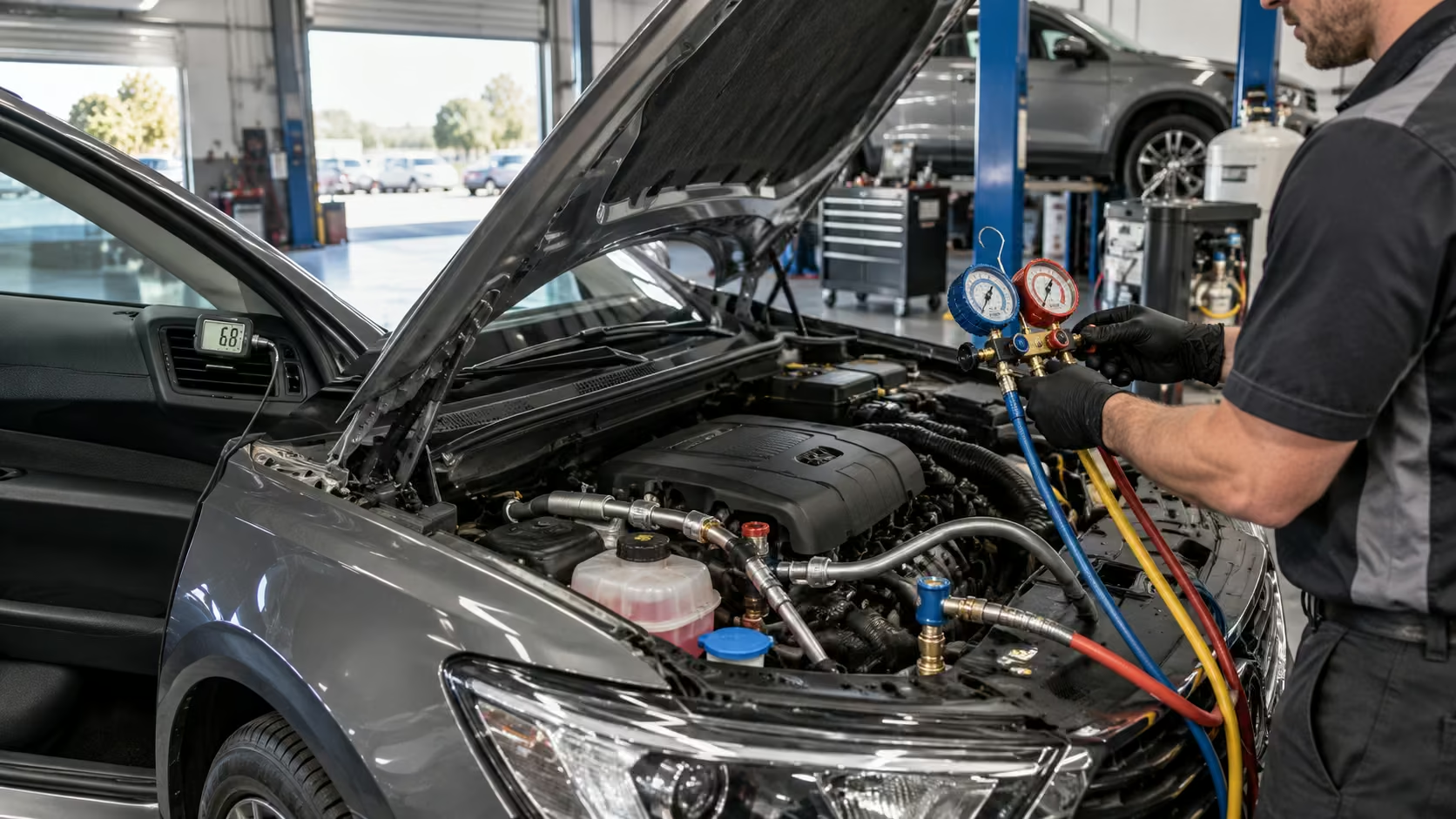
An OBD2 scanner reads engine fault codes, in general. Well, that’s that. A modern BMW has dozens of control modules talking to each other over the car’s own network, and most of them are invisible to a generic tool. What it takes to read them properly is ISTA, the same factory platform BMW dealers use, at the heart of the dealer grade diagnostics and factory coding we run in our workshop.
Here’s a little example that catches people out all the time: the battery. Most BMWs from the mid 2000s on require a new battery to be registered so the charging system knows how old it is and how much capacity it has. Fit one without registering it and the alternator keeps charging it as if it was the old tired battery. The new one is slow cooking and fails in a couple years and the owner blames the battery brand. It is registered by a specialist in 5 minutes. Usually they can’t because their scan tool doesn’t know the function is there.
The same logic applies to replacement modules, retrofits and software upgrades. If a part requires coding to the car – and many do on a BMW – the tool is just as important as the spanner.
Common BMW Problems a General Workshop Can Miss
There are a few patterns that repeat themselves over and over on these cars, and knowing them changes how you service one.
The classic cooling systems. A lot of plastic in BMW water pumps and thermostat housings. They tend to go around the 100.000 km mark. An expert will look for early signs and recommend replacement before it fails. The general workshop will wait for the tow truck since nothing they have ever seen suggests that a pump without a leak needs changing.
Another is automatic transmissions. ZF themselves recommend a fluid change at around 100k km. Most modern BMW’s are fitted with a ZF gearbox and are filled for life. The owners who buy into the BS of sealed for life gearboxes end up with a gearbox that shunts and hesitates at 160,000km and by then the repair costs many times what the fluid service would have.
Add in cold start rattles that suggest chain stretch, run flat tyres that need matched replacements and staggered wheel setups that can’t be rotated front to rear and you get a picture of a car where general rules of thumb quietly fail.
Is a BMW Specialist More Expensive Than a General Mechanic?
A little more than the hourly rate sometimes. No, not even close to the dealer. But the rate is the wrong number to look at.
The actual cost of a workshop is counted in the number of visits to solve a problem. A specialist who can diagnose the actual fault the first time is cheaper than a general mechanic who replaces 2 parts on a guess then sends you elsewhere. We see cars coming in time and time again with new parts fitted for a fault those parts were never going to cure.
Warranty, the other misconception. A factory warranty does not need to be protected by a dealer. Under Australian Consumer Law, a qualified independent workshop is allowed to perform logbook servicing to BMW specifications and we’ve shown you exactly how to get your logbook stamped without setting foot in a dealership. Real parts, correct fluids, documented work. The warranty is still good and the invoice is shorter.
How to Choose a BMW Mechanic Near You
Ask what diagnostic platform the workshop uses. Ask them if they register batteries and reset service counters using factory software. Ask what BMW engines their techs have actually worked on. Vague answers tell everything. For the full checklist, there’s a more complete guide on how to vet a workshop before you book.
Our head technicians at A to Z Automotive Services come from BMW dealerships and work on these cars on a daily basis, from old 3 Series still going strong to the current G chassis models, right here in our Newcastle workshop. When it’s time for your BMW to have a service, or you’ve had a nagging feeling on your way to work, give us a call and speak to someone who speaks the language.
Frequently Asked Questions
Should I trust the BMW service indicator or service more often?
Condition Based Service is a reasonable baseline, but it can stretch oil intervals beyond 15,000 km on highway driven cars. Many specialists cap oil changes at around 10,000 to 12,000 km for Australian conditions, particularly on turbocharged engines and cars used mostly for short trips.
Do BMW specialist mechanics also service MINI?
Usually yes. Modern MINI models share BMW engines, platforms and diagnostic systems, so a workshop equipped for BMW can service, diagnose and code a MINI with the same tools and training.
Does an older BMW still need a specialist mechanic?
The electronics are simpler on older models, but the mechanical quirks are stronger. Cooling system weaknesses, VANOS wear and ageing plastics are all areas where model familiarity saves money on cars from the E46 and E90 era.