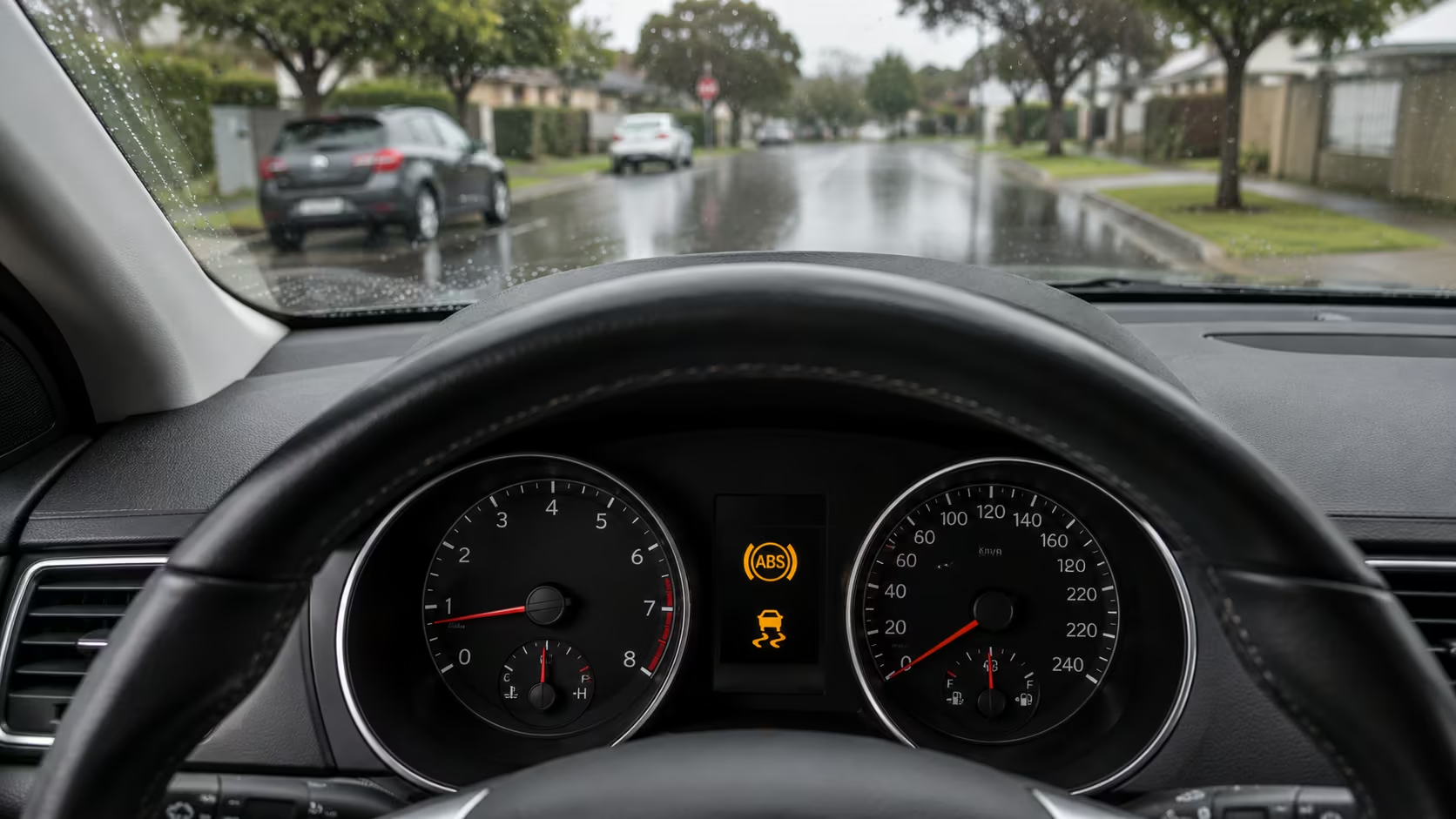
European cars cost more to service because the parts cost more, the fluids they use are under the strictest manufacturer specifications, their engineering puts more systems into less space and the diagnostic equipment they require is a real investment. The gap is real, it’s explainable, and it’s not as large as dealer pricing would have you believe.
Every BMW, Mercedes, Audi and Volkswagen owner knows the moment: a quote comes in, an eyebrow is raised and the question forms. Why does the same sounding job cost more on this car than the Corolla it replaced? That’s a fair question that rarely gets a straight answer, so here’s one, itemised, because once you see where the money actually goes, the bill stops feeling like a mystery and starts being something you can manage.
The Parts Themselves Simply Cost More
Take the simplest piece of the gap. European manufacturers make parts to their own specifications, often single sourced, often model specific and priced accordingly by the time they reach Australia. Before anyone has laid a hand on the car, a control arm, a water pump or a sensor for a German car routinely ends up at a multiple of its Japanese equivalent. Chains of import and volume also play their part: parts for cars sold here in the tens of thousands are cheaper to move than parts for cars sold in the thousands.
And this is where the best savings live, because the after-market for European cars is deep and great. The factories’ suppliers sell the same components in their own boxes, and a shop that knows the genuine from the gamble can shave serious money off a repair without touching its quality. That knowledge is a real skill, and is worth what it saves you from.
Fluids Are Specified Not Suggested
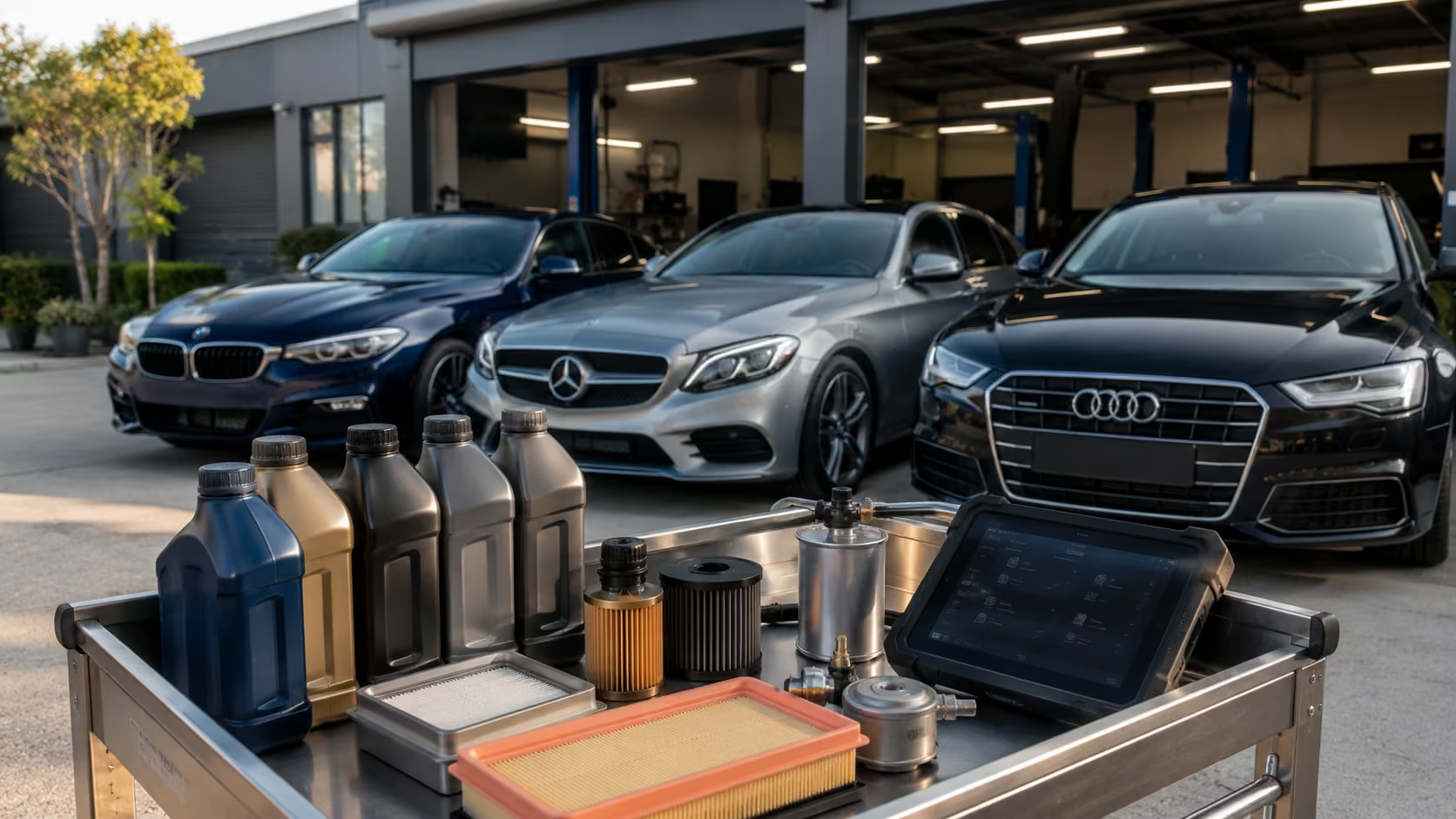
On many cars oil is oil and coolant is coolant, within reason. That’s not the way European manufacturers operate. Engine oils must be approved by the manufacturer, gearbox oils are matched to particular gearboxes. Coolants are matched to particular chemistry and using the generic version is not a harmless economy it is a slow way to buy the next repair. The right fluids are more expensive per litre and European engines and gearboxes tend to have more litres.
The service that is in accordance with those specs is really a lot more expensive than the service that is not and it’s worth every cent of the difference because fluid shortcuts on these cars show up later as gearbox behaviour, emissions system trouble and engine wear. If a European service quote shows fluids at what seems like an astronomical figure, it is usually the car’s requirement that is being quoted, not the garage’s imagination.
Engineering Density Turns Into Labour Hours
European vehicles have more technology per cubic centimetre than almost anything else on the road. More control modules, more sensors, more comfort and safety systems, stuffed into engine bays with no wasted space. It is a good drive, but not as quick to work on. A job that takes an hour on a simply packaged car can take two or three when parts have to be removed to get to other parts, and labour hours are the multiplier under every line of a service bill.
That’s all no padding. It is the real cost of getting well filled machinery, and it is the reason why the very same jobs, a set of spark plugs, a starter motor, a coolant hose, have different labour numbers on different badges. The statement is about the architecture of the car, not the appetite of the workshop.
The Tooling Behind the Workshop Door
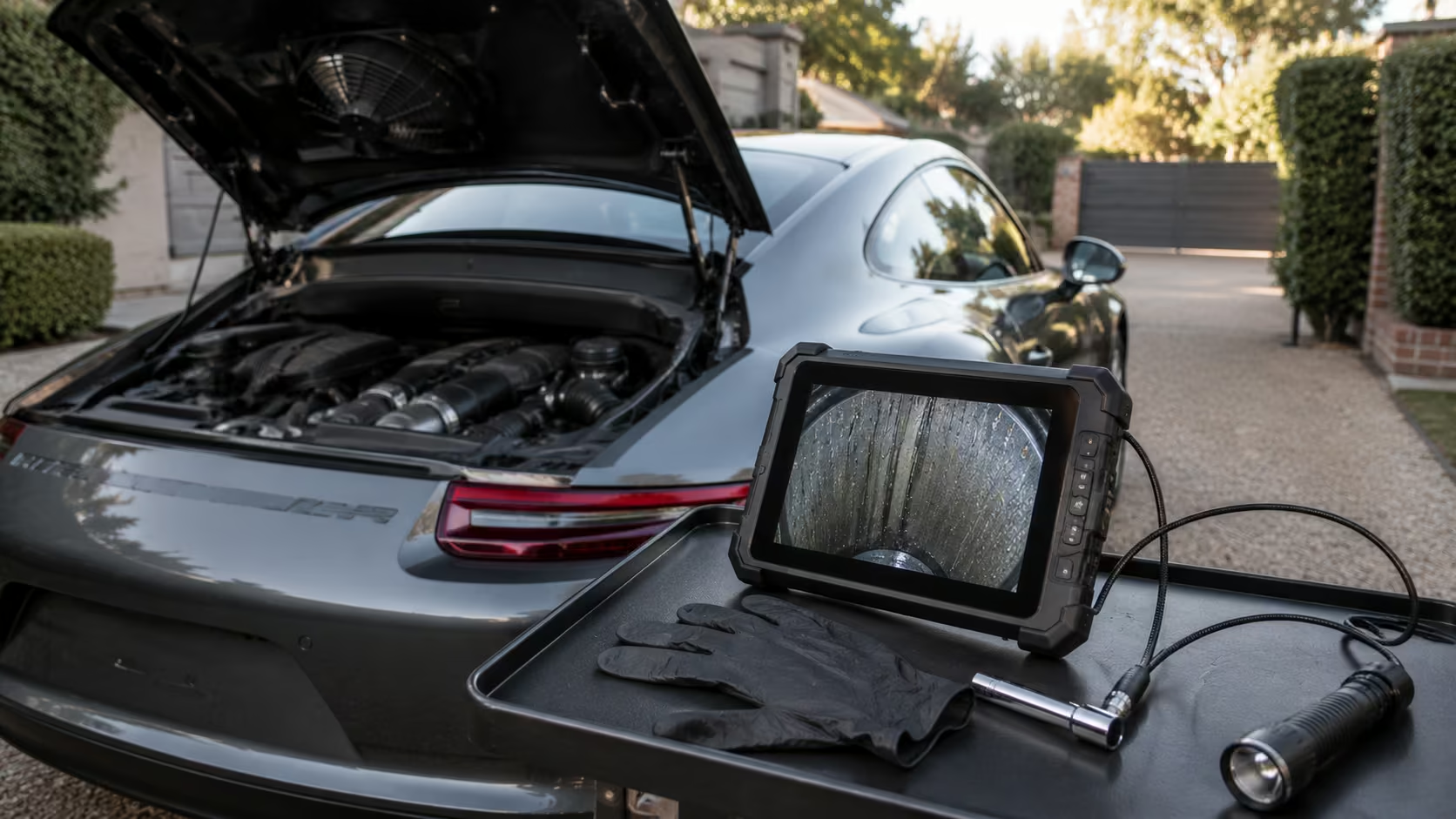
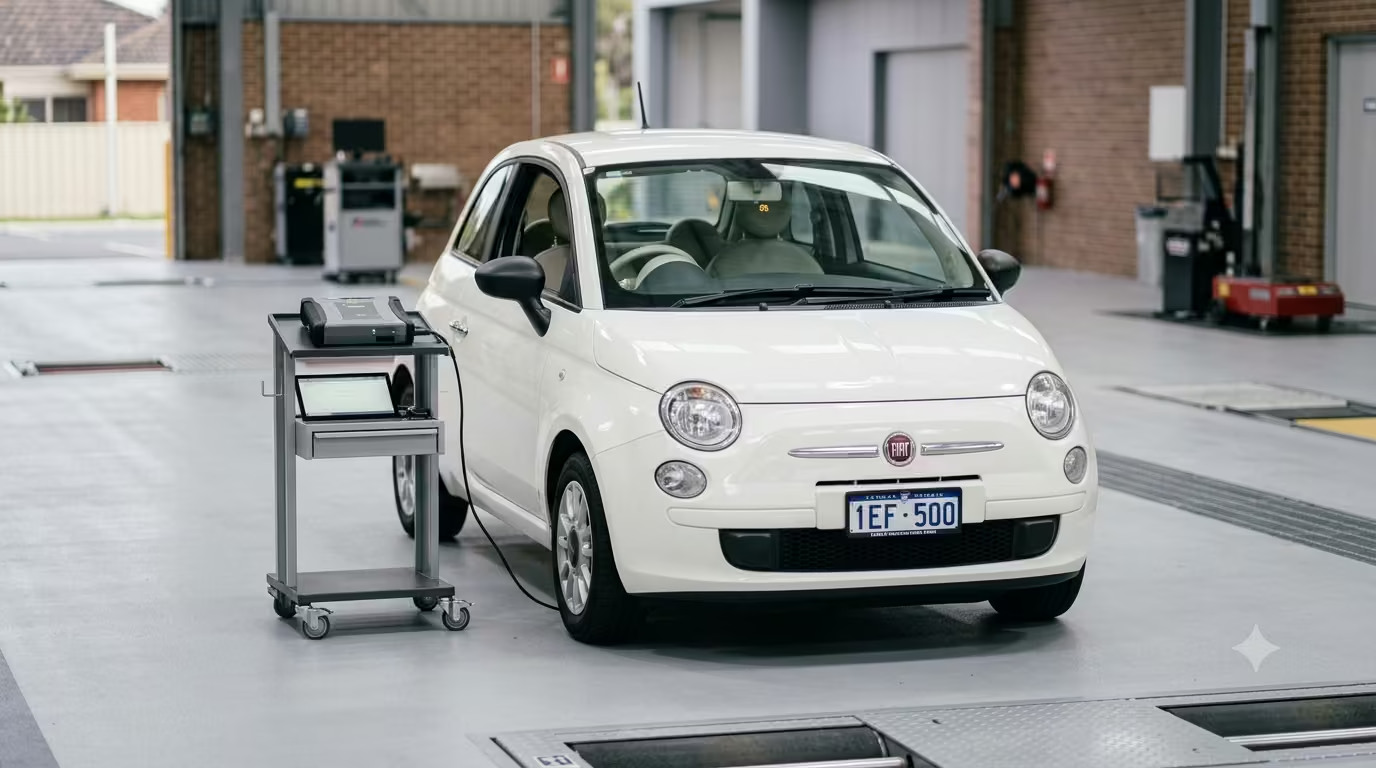
The least visible cost is the one that most defines who can service these cars properly. Each European maker runs its own diagnostic ecosystem, factory platforms, software subscriptions, coding and calibration functions, and a workshop that services these brands seriously pays for that access and the training to drive it, every year. It is the difference between reading what the car’s systems are actually reporting and guessing from the outside, and on vehicles this computerised, guessing is the expensive option wearing a cheap disguise. A slice of every European service bill funds that capability, and it is the slice that makes the rest of the work trustworthy.
Where the Gap Closes and Where It Does Not
Honesty demands the other half of the picture. Plenty of work costs no more on a European car than anything else: tyres, batteries, wiper blades, many brake jobs, the everyday consumables of motoring. The gap concentrates in parts, fluids, labour density and electronics, and it narrows sharply the moment the car leaves dealership pricing for a capable independent using quality parts. What closes it furthest of all is discipline, because servicing done on schedule to the maker’s requirements is precisely what keeps a European car in the affordable half of its ownership story. The frightening bills belong overwhelmingly to the cars that skipped the small ones.
Paying European Prices Only Where They Are Real
A to Z Automotive Services built its workshop around exactly this equation: factory level diagnostic platforms, approval correct fluids, and the parts knowledge to know where premium is mandatory and where it is marketing. The result is European servicing at the price the car genuinely requires rather than the price the badge can command, and every quote arrives itemised so you can see where each dollar goes, because a bill you understand is the only kind worth paying.
Frequently Asked Questions
Does costing more to service mean European cars are less reliable?
Not as a rule. It means they are built to a different philosophy, more systems, tighter tolerances, and a maintenance schedule that assumes it will actually be followed. A properly maintained European car is dependable. A neglected one bills you for the neglect with interest.
Can quality aftermarket parts bring the cost down?
Substantially, and this is where independents earn their keep. Many premium aftermarket parts come off the same production lines as the factory boxes, and knowing which ones do, and which corners genuinely cannot be cut, is most of the saving without any of the risk.
Why do dealerships charge even more again?
You are paying for the building as much as the spanner. Dealer overheads are enormous, and their pricing reflects showroom real estate and corporate structure. The tooling and training exist outside dealerships now, which is exactly what makes specialist independents viable.
Is stretching out services a sensible way to save money on a European car?
It is the single most expensive mistake available. These cars tolerate deferred maintenance worse than most, and nearly every giant European repair bill started life as a small service someone skipped. The cheap way to run one is strict maintenance, paid on time.