Porsche bore scoring The sound of Porsche bore scoring is a ticking or knocking sound when the engine is warm, a sooty black deposit on one exhaust tip more than the other, increased oil consumption and misfires on the affected cylinders. A few water cooled flat six and Cayenne V8 engines are affected . Only a borescope inspection will tell.
Few phrases empty a Porsche owner’s stomach quicker than bore scoring. Forums call it a curse. Sellers pretend the words don’t exist. Somewhere between the panic and the denial is a mechanical problem that is real, serious, and thoroughly understood. The good part is that the condition manifests itself in familiar ways well before it kills an engine, and knowing what to listen for is worth real money to anyone who owns or wants one of these cars.
Call Now
What Bore Scoring Actually Is
Each piston within the engine moves up and down its cylinder against walls finished to an extraordinarily fine tolerance, riding on a film of oil only a few microns thick. This scoring is what occurs when this arrangement breaks down and the piston makes contact with the wall with enough force to drag vertical scratches in it. This is usually down the thrust side where the piston pushes hardest. When scratched, the wall never sealed properly against the piston rings again.
“And the results are due to that missing seal. Oil sneaks past the rings and burns . Combustion gases sneak down . With each heat cycle, the damaged surface promotes its own wear . You’ll tend to see scoring on these engines concentrated in the rear-most cylinders of one bank far more than anywhere else, and this is due to the way the oil drains and cools over the flat six layout. It is a wear process and not an actual failure event, and this is exactly why early recognition changes the story.
The Warm Ticking Knock Owners Hear First
The classic first sign comes in through the ears. A scored engine has a distinctive tick or light knock that shows up or gets louder when it is fully warmed up, normally at a hot idle, usually after a highway trip and then a stop. Cold , the engine can sound perfectly healthy . Metal clearances tighten as temperatures climb , and the loose fit of a worn piston in a scratched bore only announces itself when the engine is at full temperature .
That warm, lazy pattern is worth remembering, as it goes backwards from most innocent engine noises, which are usually loudest when cold and quieter as things warm up. The tick that goes the other direction, quiet to begin with and there when hot, that’s the one to look into, not shrug off and drown out with a louder stereo.
One Sooty Exhaust Tip the Sign Everyone Walks Past
Here’s the free inspection that’s missed at a thousand car inspections: Stand behind the car and compare the exhaust tips. Each cylinder bank breathes through its own side of the exhaust and since scoring favours one bank the oil it burns tends to come out one side. The result is a tailpipe with a noticeably heavier coat of dry black soot than its twin.
An unevenly sooty tip is in itself more a clue than a conviction, for there are other causes for exhaust staining. But as part of a pattern, combined with a hot tick or oil consumption, it’s very telling. And it’s the kind of evidence a seller can’t erase by flushing the codes or washing the car. The soot is not a liar, it just waits for the knowing eye.
Oil Consumption Climbing and Misfires Arriving
The next is the lost ring seal on the dipstick. All engines use some oil and owners know what their car normally eats, which is why the trend is more important than the number: consumption that has clearly increased in recent months, with the same oil and the same driving, is the engine telling you that more is escaping past the rings and burning.
Further on the affected cylinders start to miss. Oil fouls their spark plugs, compression dies with a failing seal, and the engine begins to misfire on specific cylinders, sometimes felt as a subtle roughness at idle, sometimes only visible in the fault memory. It’s an engine that is running warm and drinking oil. And it’s misfiring, coming back to the same rear cylinders on one bank. The pattern is almost a diagnosis.
Which Porsche Engines Are Prone to Scoring
This problem is mostly seen on the water-cooled flat-six engines used in the 911, Boxster and Cayman ranges from the late 90s to the 2000s. The larger capacity versions of that engine design have the worst reputation for it, and some Cayenne V8s from the same era carry their own version of the problem. Later generations of the engine changed the design in question and largely abandoned scoring. The same era flat six is also infamous for the completely separate IMS bearing issue. A specialist who lives with these engines checks for both rather than confusing one with the other. They fail differently are inspected differently and cost differently.
Not Every Noise Is Scoring and How It Is Confirmed
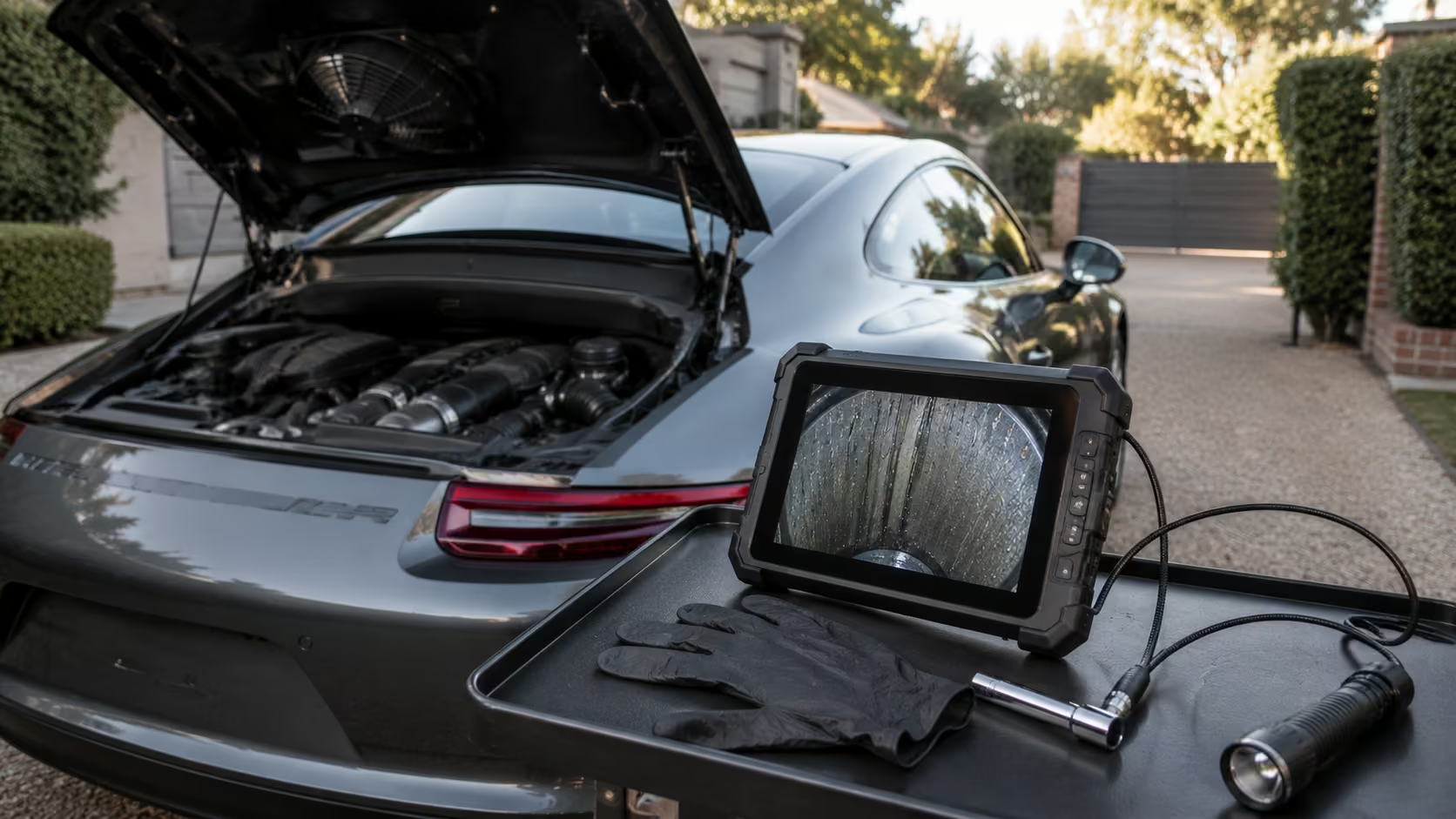
Now for the reassurance, because it is real. These are loquacious engines, naturally. Lifters tick, chain tensioners rattle briefly on start, and plenty of healthy examples make noises that have sent owners into a scoring panic for naught. The condition cannot be confirmed by ear, or by forum thread, or by fear. You can confirm this with a borescope by looking down the spark plug holes and looking at the camera on the actual cylinder walls where the scoring is unmistakable. An oil analysis can support this where useful since scored walls shed aluminium that will be found by the lab. Months of expensive guessing either way are replaced by an hour of inspection.
What Accelerates Scoring and What Slows It Down
The known aggravators are the daily ones. These engines suffer the most from cold starts and short trips, which make the pistons work hard in cylinders that haven’t warmed up. Long oil change intervals force tired oil to do a precision job, and these engines reward shorter intervals with quality oil beyond what the maintenance schedule strictly requires. A proper warm up before asking the engine for real performance costs nothing and counts.
None of this is a guarantee of immunity, and a bore that has already been scored doesn’t heal because the oil got better. But throughout the population of these cars, the pampered, properly warmed, frequently serviced engines do better than the short tripped and neglected ones, which makes the ownership recipe simple even if it is not a cure: drive it warm, drive it properly, change the oil early, and have the bores looked at whenever the plugs are out anyway.
When Scoring Is Confirmed the Options
A confirmed case sets up a decision rather than an immediate breakdown. Light scoring caught early can often be managed for a time, monitored through oil use and follow up inspections while the owner plans. The permanent repair is major engine work, reconditioning the cylinders with new liners built to handle the job, or an engine exchange, and it is genuinely expensive, which is precisely why the diagnosis deserves to be certain before that word enters the conversation.
For buyers, the equation is simpler still. On these models, a pre purchase borescope is not paranoia, it is due diligence, and it turns the market’s fear of scoring into an advantage: the inspected car with clean bores is worth paying properly for, and the one the seller will not allow a camera into has answered the question already.
Getting the Bores Checked
A to Z Automotive Services borescopes these engines as a matter of course, during servicing, ahead of purchases, and whenever a warm tick has an owner worried, so the scoring question gets answered with pictures of your actual cylinder walls instead of a verdict by ear. If your Porsche is ticking, drinking oil, or wearing one sooty tip, find out what is real before the forums decide for you. And when a pre purchase inspection does find scoring, the advice will be to keep your money, whatever anyone else wanted that sale to do.
Frequently Asked Questions
Can an oil additive or a thicker oil fix bore scoring?
No. Scoring is physical damage to the cylinder wall, and nothing poured into the engine repairs metal. A heavier oil can sometimes quieten the knock, which treats the soundtrack rather than the problem, and can lull an owner while the scoring keeps progressing underneath.
Is bore scoring the same as the IMS bearing problem?
No, though they haunt the same era of engines and get confused constantly. The IMS issue is a bearing that can fail and take the engine with it in one event. Scoring is gradual wear of the cylinder walls. A car can have either, both, or neither, and they are checked in different ways.
Should I buy one of these Porsches without a borescope inspection?
Honestly, no. A borescope through the plug holes is the only way to see the actual cylinder walls, it takes a workshop very little time, and on these engines it has become a standard part of any serious pre purchase inspection. The cost is trivial against the price of being wrong.
Does confirmed scoring mean the engine is about to fail?
Not overnight. Scoring progresses over time rather than exploding, and plenty of lightly scored engines keep running while their owners plan properly. What it does mean is that the clock is running, the repair is coming, and every decision about the car should be made knowing that.