Most manufacturers specify a brake fluid change every two years regardless of kilometres, because brake fluid takes on water from the atmosphere as the years pass rather than wearing out through use. Old fluid boils at a lower temperature under heavy braking and corrodes the system internally, with the ABS unit the most expensive casualty.
Brake fluid is the most neglected fluid in the car, and it is neglected for an understandable reason: nothing about it announces a problem. Oil goes black, coolant leaves puddles, tyres wear where you can see them. Brake fluid degrades invisibly, silently, on a schedule measured in years rather than kilometres, and the first time most owners think about it is when a pedal feels wrong.
Why Brake Fluid Degrades Even When the Car Sits
The property that makes brake fluid work is also the property that ruins it. It is hygroscopic, meaning it actively absorbs water from the atmosphere, and that is deliberate: any moisture that finds its way into the system gets absorbed and dispersed through the fluid rather than pooling as free water in a caliper, where it would corrode and freeze.
The trade off is that absorption never stops. Moisture migrates through flexible hoses, past seals, and in through the reservoir, so the water content climbs steadily whether the car covers thirty thousand kilometres a year or three thousand. This is why brake fluid intervals are specified in time rather than distance, and why the low kilometre garage queen is often the car with the worst fluid in it.
What Water in the Fluid Does to Your Brakes
Braking converts speed into heat, and a lot of that heat ends up in the fluid sitting inside the calipers. Fresh brake fluid has a boiling point comfortably above anything normal driving produces. Add absorbed water and that boiling point falls, because water boils far lower than the fluid it has contaminated, and it falls further with every year of absorption.
The failure this creates is specific and alarming. Braking is hydraulic because liquid does not compress, so pressure at the pedal becomes pressure at the caliper. Boil the fluid and you create vapour, vapour compresses, and the pedal sinks toward the floor while the car does considerably less stopping than requested. It happens under sustained heavy braking, a long descent or an emergency stop, which is precisely when it matters most, and it can recover once things cool, leaving the driver with a frightening moment and no visible fault.
Corrosion Inside the ABS Unit and Calipers
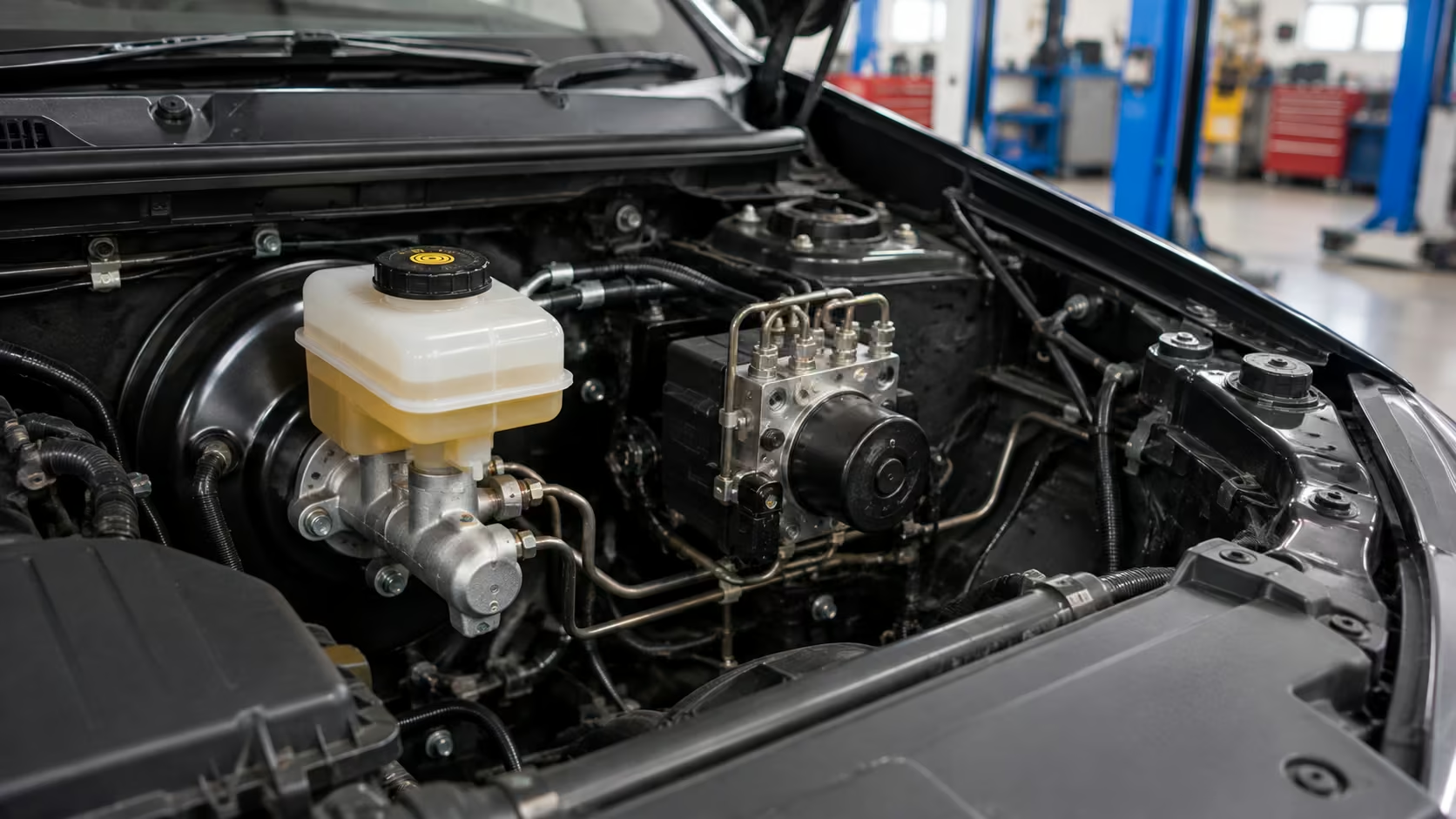
The slower damage is corrosion. Water carried in the fluid attacks the system from the inside, pitting caliper bores, seizing seals, and reaching the ABS modulator, which contains fine passages and precision valves that do not tolerate corrosion at all. Replacing an ABS unit costs a great deal more than several decades of fluid changes, and the symptoms often present first as warning lights appearing on the dash rather than as anything you feel through the pedal.
There is a coastal angle worth noting too. Cars living in salt laden air already fight corrosion on the outside of brake lines, and old moisture rich fluid means the same components are being attacked from within at the same time. Near the ocean, the two year interval is a floor rather than a target.
The Two Year Interval and Where It Comes From
Two years is the figure most manufacturers land on, sometimes expressed as two years or a set distance, whichever comes first, and it exists because that is roughly how long typical fluid takes to absorb enough moisture to meaningfully lower its boiling point. Some vehicles specify three, a few performance applications ask for annual changes, and the handbook for your specific car is the number that counts.
It is worth knowing that this is one of the intervals most commonly skipped, partly because a car with healthy pads and discs feels fine, and partly because nobody complains about fluid they cannot see. A brake service that replaces pads without ever addressing fluid leaves the hydraulic half of the system running on whatever went in years ago, which is why fluid deserves asking about specifically when brake work is quoted.
How to Tell If Your Brake Fluid Is Due
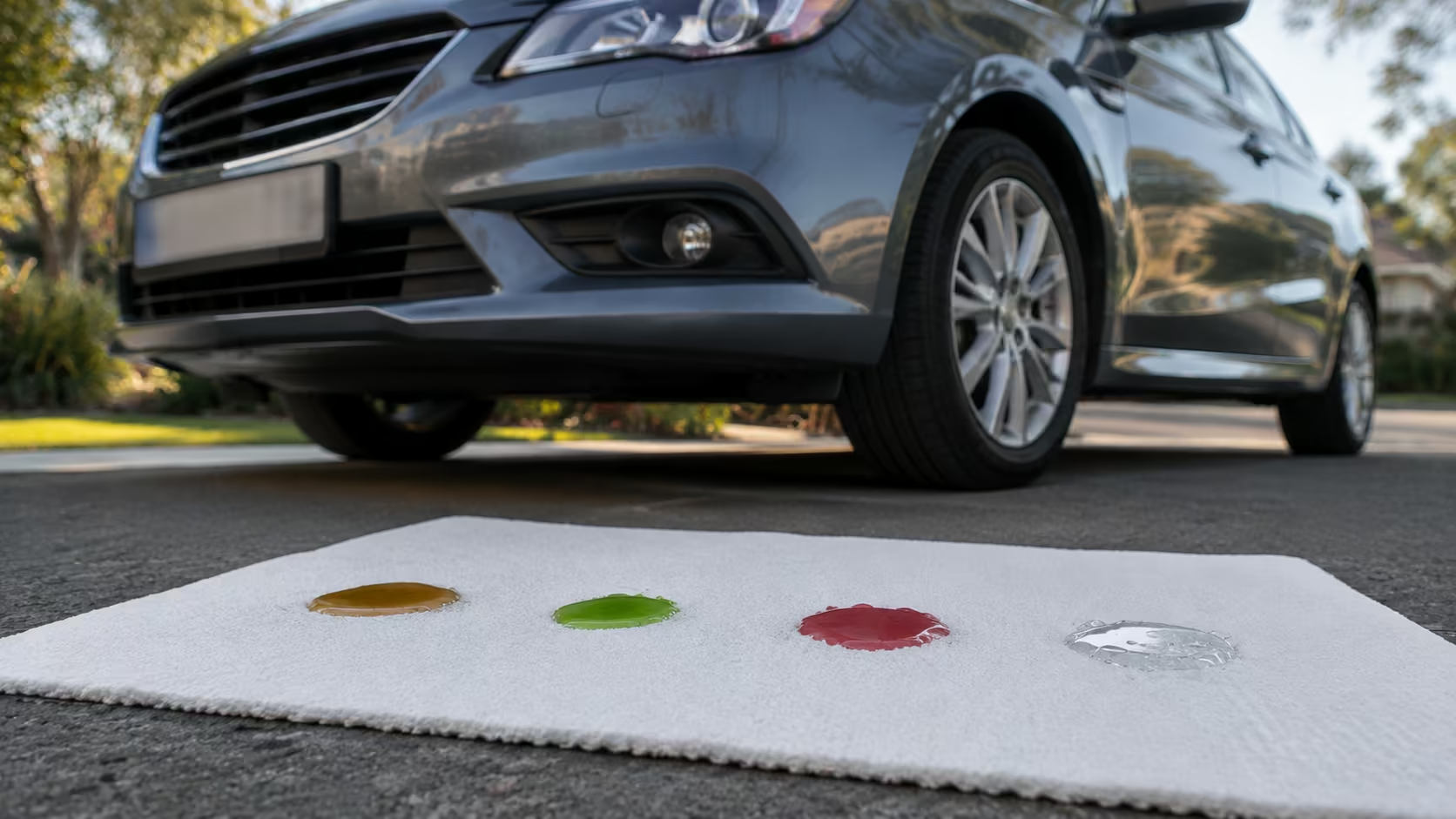
The reliable method is measurement rather than appearance. A moisture tester reads water content as a percentage in seconds, and around three percent is the widely used threshold for replacement. Colour offers a rough clue, since new fluid runs pale and darkens toward brown as it ages and picks up contamination, but plenty of dark looking fluid tests acceptable and some clear fluid does not. If you are checking the reservoir yourself, note that a level which has dropped is a separate matter entirely and points at either worn pads or a leak in the system, both of which need looking at rather than topping up.
As for feel, a pedal that has softened slightly, or now sinks further than it once did, can indicate moisture in the fluid, and can equally indicate air, a leak, or a failing master cylinder. It is a symptom worth reporting and a poor tool for self diagnosis, which is the argument for testing on a schedule instead of waiting to notice something.
What a Proper Brake Fluid Change Involves
Done properly, the job pushes fresh fluid through the entire system until clean fluid runs at every corner, with the reservoir never allowed to run dry and introduce air. Vehicles with ABS often need the pump cycled through diagnostic equipment so the fluid trapped inside the modulator is exchanged too, and skipping that step leaves the oldest, wettest fluid in the most expensive component in the system. The correct specification matters as well, since a car calling for one rating should not receive another, which is part of why fluid choices are specified rather than suggested on modern vehicles.
Booking a Brake Fluid Service
If you cannot remember the last time your brake fluid was changed, that is usually the answer to whether it is due. A to Z Automotive Services puts a moisture reading on the fluid before recommending anything, cycle the ABS unit during the change so the whole system gets fresh fluid, and tell you plainly if the fluid tests fine and the car can wait another year. It is a small job that quietly protects the most expensive part of the braking system, and the only one that has to work every single time.
Frequently Asked Questions
Does brake fluid go bad even if the car barely gets driven?
Yes, and a low kilometre car is the classic case. The degradation is moisture absorbed from the air over time, not wear from use, so a garaged weekend car on eight year old fluid is in worse shape than a commuter whose fluid was changed last year.
Can moisture in brake fluid be measured?
It can, quickly and cheaply, with a tester that reads the water content as a percentage. Around three percent is the usual point at which fluid is considered due for replacement, and having a number takes the argument out of the conversation entirely.
Is a brake fluid change the same as bleeding the brakes?
Not quite. Bleeding removes air from the system, typically after a repair. A fluid change pushes all the old fluid out and replaces it throughout, including the parts of the system a simple bleed at one corner never reaches.
What happens if I never change it?
Two things, slowly. The boiling point falls, so heavy braking can produce vapour in the lines and a pedal that sinks when you need it most. And moisture corrodes the system from inside, damaging ABS components that cost far more than a lifetime of fluid changes would have.