
Salt air corrodes every vehicle, but the bill lands harder on European cars because more of what corrodes is aluminium, electronic or model specific. Brake lines, alloy suspension components, electrical connectors and air conditioning condensers are the usual casualties, and underbody washing is the single most effective defence.
Anyone who has owned a car within sight of the water knows it ages differently, and anyone who has owned a European car there has usually paid for the privilege of finding out. It is worth being clear at the outset that this is not a European problem, it is a coastal one. Every badge parked near the ocean fights the same chemistry. What changes with a European car is what that chemistry reaches and what those parts cost to put right.
Call Now
What Salt Air Actually Does to a Vehicle
Sea spray becomes an aerosol that settles as a fine dust across everything outdoors, and salt has one property that makes it far worse than ordinary dirt: being hygroscopic, it draws water vapour from the surrounding atmosphere and traps it against whatever it has landed on. A salted panel does not simply get dirty, it stays permanently damp at a microscopic level.
That dampness completes a circuit. Salt water conducts, and once it bridges bare metal and any surrounding surface, an electrolytic cell forms and corrosion runs continuously rather than only when it rains. This is why a coastal car can develop rust in places a car inland never would, and why the corrosion continues quietly through dry weeks when nothing looks wet at all.
Mixed Metal Construction and Galvanic Corrosion
Here is the specifically European part of the story. Manufacturers chasing weight savings have used aluminium extensively for bonnets, guards, suspension arms and subframe components, often bolted directly to steel structures elsewhere in the car. Put two different metals in contact, add salt water as an electrolyte, and you have built a battery. The less noble metal corrodes preferentially, and it does so at the join.
Galvanic corrosion of this kind shows up around fasteners, at the interface between an aluminium suspension arm and its steel mounting, and behind trim where dissimilar metals meet out of sight. Manufacturers engineer isolation into these joints deliberately, and that isolation degrades with age and damage. It is not a defect so much as a maintenance reality, and it is worse near the ocean than anywhere else.
Brake Lines and Underbody Components Corrode First
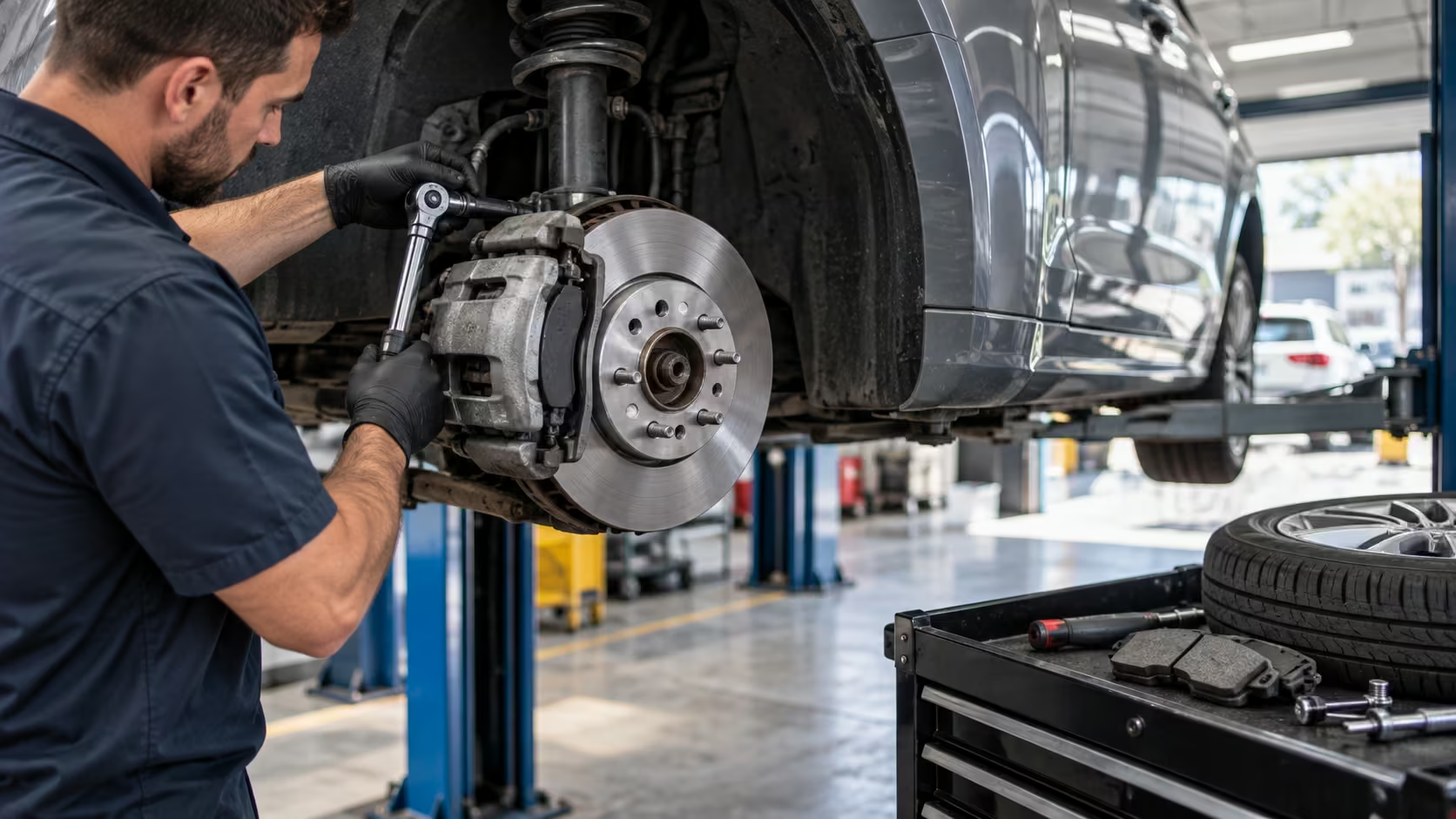
The most consequential corrosion is the corrosion nobody looks at. Brake lines run the length of the underbody, exposed to everything the road throws upward, and a corroded line thins from the outside until it weeps or bursts. Manufacturers have run service campaigns in salt heavy regions for exactly this, because the failure sequence is predictable: corrosion, a slow loss of fluid, a pedal that softens gradually, and eventually a brake system that cannot hold pressure. It is also why a fluid patch appearing near a wheel deserves urgent attention on a coastal car rather than a note to mention at the next service.
Fuel and coolant lines take the same punishment, as do subframe mounts, exhaust hangers and the fasteners holding all of it together. Seized bolts are the hidden tax here: a suspension job that would take an hour on an inland car turns into a fight when every fastener has rusted into place, and a snapped bolt in an aluminium component turns a small job into a large one.
Electrical Connectors Are the Modern Weak Point
Rust on a subframe is at least visible. Corrosion inside a connector is not, and modern European vehicles carry a great many connectors under the car and in the wheel arches, feeding wheel speed sensors, parking sensors, ride height sensors and lighting. Salt laden moisture creeps past ageing seals, corrodes the pins inside, and produces resistance where the design assumed none.
The symptoms rarely announce themselves as corrosion. They arrive as intermittent warning lights, sensors that drop out in wet weather and behave in dry, and faults that clear on a restart and return a week later. It goes some way to explaining why ABS and traction lights turn up together on coastal cars more often than they do further inland, and why a scan that names the circuit saves a great deal of guessing.
Air Conditioning Condensers and Radiators
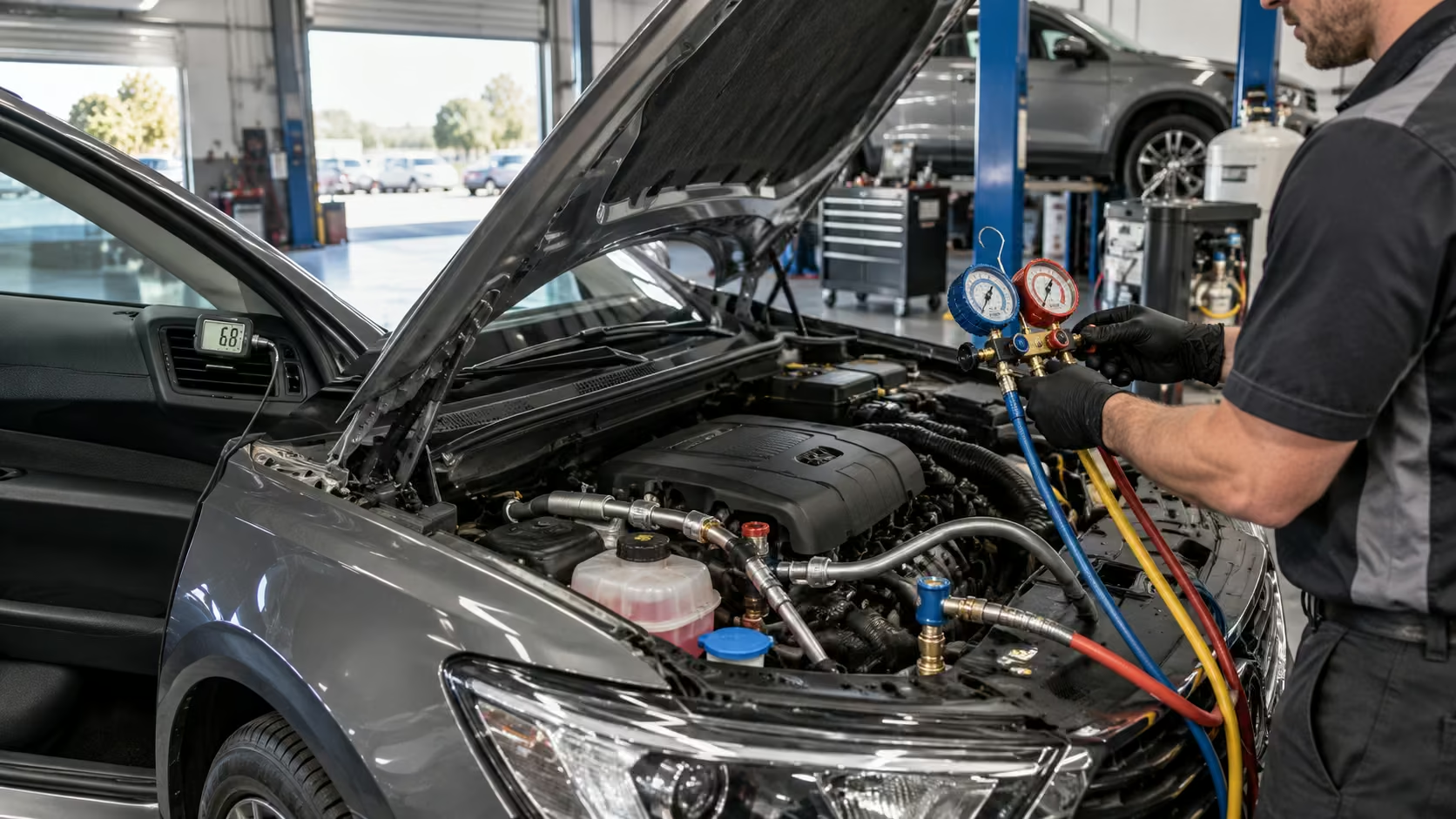
Sitting at the very front of the car is a stack of finely finned aluminium heat exchangers, perfectly positioned to catch every particle of airborne salt the vehicle drives through. Condensers and radiators corrode from the outside in, and on a fine finned aluminium condenser it does not take much material loss to produce a pinhole and a slow refrigerant leak.
The characteristic story is an air conditioning system that gradually cools less well over a couple of summers, gets regassed, and loses its charge again, because nobody looked for the reason it went flat. On a coastal car, a condenser that has quietly corroded is a leading suspect, and it is worth knowing before paying for a second regas that will follow the first one out through the same hole.
Why the Same Corrosion Costs More on a European Car
Everything above happens to every car parked near salt water. What differs is the invoice. Aluminium suspension components are not straightened or welded the way a steel arm sometimes can be, they are replaced. Model specific sensors and connectors cost more than generic ones. Electronic modules mounted low in the car, where water and salt collect, are dearer to replace than anything mechanical of similar size.
A labour dimension sits alongside it, and it owes nothing to badge snobbery. Densely packaged engine bays and underbodies mean more has to come apart to reach a corroded component, and seized fasteners on tightly packed assemblies turn straightforward jobs into slow ones. None of this makes European cars a poor choice near the coast. It makes the preventive habits below worth considerably more than they would be on a simpler vehicle.
How to Protect a Coastal Car Properly
The single most effective habit is washing the underbody, not the paint. A wash that includes a proper underbody spray removes the salt from the places that matter, and doing it regularly through summer and after any beach trip is worth more than any wax. Cars that live near the water and never get their underside rinsed accumulate salt continuously for years.
Beyond that: rinse after driving on sand or through salt water, keep the paint and its protective coating intact since a stone chip is where coastal rust starts, and make sure the drain holes in doors, sills and sunroof channels stay clear so salt laden water is not sitting inside cavities. Then have the underbody actually inspected once a year rather than assumed fine, because everything described in this post begins somewhere nobody can see from the driver’s seat.
Getting a Coastal Car Checked Underneath
Cars living near the water need someone to look at the parts of them nobody photographs. A to Z Automotive Services gets coastal vehicles up on the hoist and works through brake and fuel lines, subframe mounts, suspension joints and connector condition as a matter of course, so book an underbody inspection before corrosion becomes a repair rather than an observation. And if a car turns out to have been looked after well and needs nothing beyond a better wash routine, expect to hear precisely that.
Frequently Asked Questions
Do I need to live on the beach for salt air to matter?
No. Salt aerosol carries well inland on prevailing winds, so suburbs several kilometres from the water still sit in a salt laden atmosphere. The exposure is milder than a beachfront driveway, and it is not zero, which is why the underbody habits below are worth having anywhere along the coast.
Is a garage enough to protect a car near the coast?
It helps with paint and interior far more than with the underside. A car garaged overnight but driven daily still collects salt on its underbody, and parking a damp, salt covered car in a still enclosed space can actually hold moisture against the metal longer than open air would.
Does a car wash actually remove salt from underneath?
A wash with a proper underbody spray does, and a top wash alone mostly does not. The salt that matters is sitting on suspension components, subframes and brake lines where a hand wash never reaches, which is why the underbody function is the part worth paying for.
Are European cars more likely to rust than other cars?
Not inherently, and modern galvanising is good across the board. The difference is what corrosion costs once it starts, because more of the affected components are aluminium, electronic, or model specific, and those are dearer to replace than their equivalents on a simpler car.