A diesel that struggles only on cold mornings usually has failing glow plugs or a faulty glow plug relay. A battery that is marginal, injectors bleeding fuel back overnight, and a clogged or water contaminated fuel filter account for most of the rest. Warm starts being normal is the clue that points at pre heating.
Diesels are unfussy engines in most respects and cold mornings are where they show their one real vulnerability. If yours fires instantly all afternoon and fights you at seven in the morning, that pattern is not random, and it narrows the possibilities considerably before anyone touches the car.
Why Cold Weather Makes Diesels Harder to Start
A petrol engine has a spark plug to light the mixture whenever it likes. A diesel has nothing of the kind. It relies entirely on compressing air hard enough to make it hot enough to ignite fuel injected into it, which works beautifully once everything is warm and becomes marginal when the engine and the air entering it are cold.
Cold metal draws heat out of the compressed air faster than warm metal does, so the temperature at the top of the compression stroke falls below what reliable ignition needs. That is the entire problem, and every cause below is either something that was supposed to compensate for it, or something making it worse.
Glow Plugs and the Pre Heat System
Glow plugs exist precisely to solve this. One sits in each cylinder, heating the combustion chamber for a few seconds before you crank so the air reaches ignition temperature despite the cold. On modern engines they also stay on for a period after starting, which is what keeps a cold diesel running smoothly through the first minute instead of stumbling.
They fail one at a time, and that gradual failure explains why this problem creeps up on people over a winter or two. A single dead plug on a four cylinder engine might only produce slightly rougher running on a frosty morning. Two makes starting noticeably harder. Three and the car cranks and cranks and eventually catches with a cloud of white unburnt fuel and a shudder that lasts until things warm up. The characteristic signature is that everything is perfect once the engine is hot, and terrible again the next morning.
The Glow Plug Relay Fails More Often Than People Expect
Before condemning four plugs, the module that drives them deserves checking, because a failed relay or control unit produces identical symptoms with a set of perfectly healthy plugs underneath. It is a genuinely common finding and a considerably cheaper repair than replacing plugs that were never the problem, which is a fair argument for having the pre heat circuit tested rather than assumed. Worth noting too that seized glow plugs are a real risk on high kilometre engines, where a plug that has been in place for a decade can shear off during removal, so a workshop that finds the relay at fault has saved you from a job with genuine complications attached.
A Marginal Battery Fails a Diesel Before a Petrol
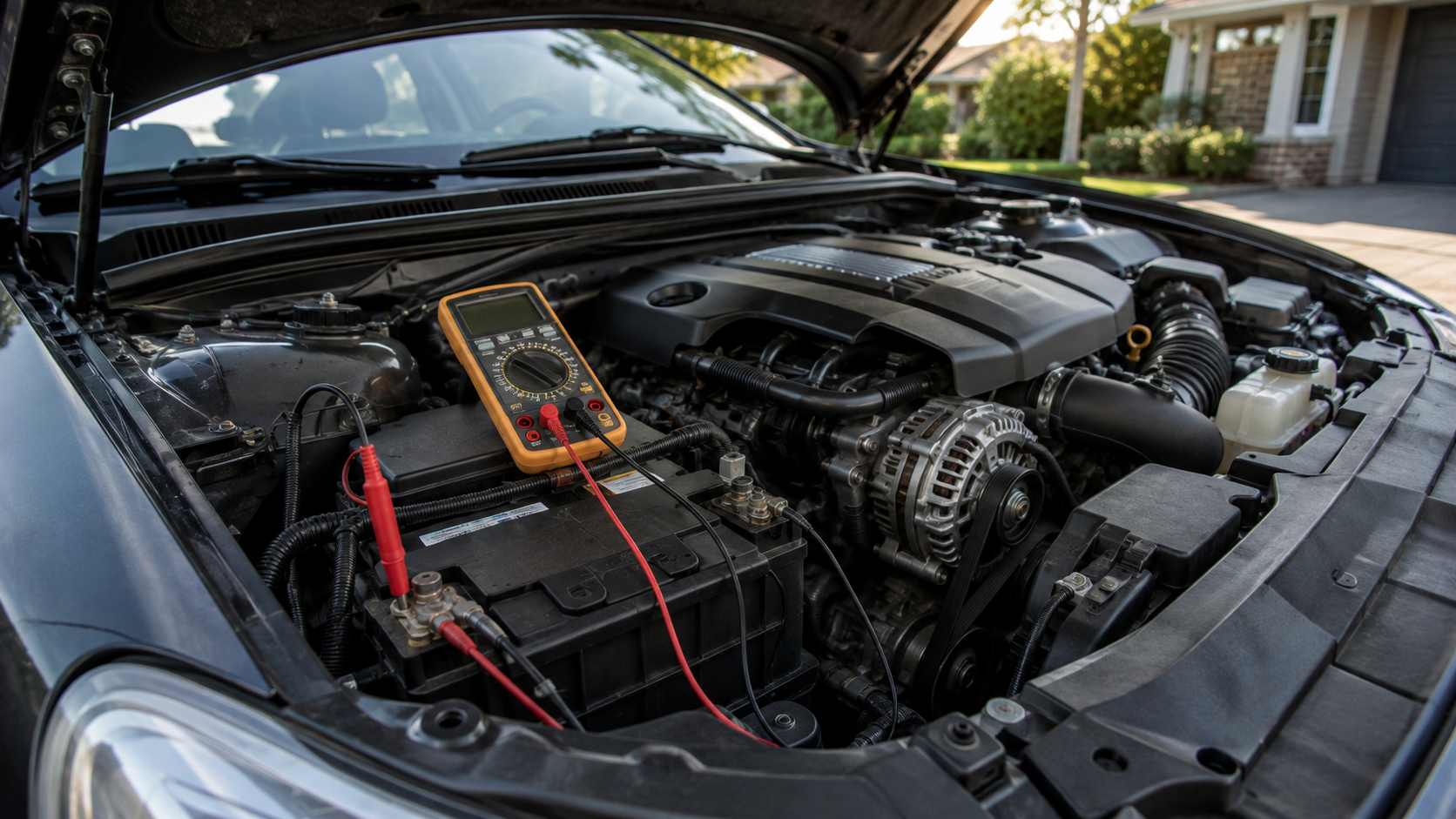
Diesels ask far more of a battery than petrol engines do. The compression ratios are much higher, so the starter has to work considerably harder to turn the engine over, and on top of that the glow plugs themselves draw serious current in the seconds before cranking. Cold weather then reduces what a battery can deliver at exactly the moment demand peaks.
The practical consequence is that a battery which would start a petrol car all winter can leave a diesel cranking slowly and refusing to fire. Slow, laboured cranking on a cold morning that improves as the day warms is as much a battery signature as a glow plug one, which is why testing the battery properly comes before condemning the pre heat system.
Injector Leak Back and Long Cranking
A different pattern points somewhere else entirely. If the engine cranks at normal speed for a long time before catching, particularly after sitting overnight, but starts almost immediately if you have driven it recently, fuel is draining back out of the system while the car sits. Worn injectors or a failing lift pump let fuel bleed back toward the tank, so the first several seconds of cranking are spent refilling lines that should still have been full.
The distinction matters because this is not really a cold weather fault at all, it simply shows up in the mornings because that is when the car has been standing longest. Cold makes it worse rather than causing it, and no number of glow plugs will fix it. Injector leak back can be measured directly, which settles the diagnosis rather than debating it.
Fuel Filters Water and Cold Weather Fuel
Diesel fuel systems are unusually sensitive to contamination, and water is the common culprit here. Condensation accumulates in tanks, particularly ones habitually run low, and most diesels have a water separator that needs draining as part of servicing. Water in the fuel produces hard starting and rough running, and left long enough it corrodes injection hardware priced well beyond what the filter would have cost.
Fuel waxing deserves an honest mention rather than a scare. In genuinely cold conditions, diesel forms wax crystals that clog filters, and Australian fuel is blended seasonally to account for local conditions. Along the New South Wales coast this is rarely the explanation, and it becomes a genuine consideration for vehicles heading inland or into the high country in winter, where overnight temperatures are a different proposition entirely.
Compression Loss and the Serious End of the List
When pre heating, battery and fuel supply all check out, the remaining possibility is the engine itself. Worn rings, bores or valves mean the compression that generates ignition heat is no longer what it was, and a high kilometre engine can reach a point where it starts perfectly warm and struggles badly cold simply because the margin has gone. A compression test measures it directly, and what the exhaust does during those first stumbling seconds adds useful evidence alongside the numbers.
What Not to Do When a Diesel Will Not Start
Two habits do real damage. The first is cranking in long bursts, which overheats the starter motor and drains a battery that was already marginal, turning one problem into two. Ten seconds at a time with a genuine pause between attempts is the sensible limit.
The second is reaching for ether based starting spray, which is a genuinely poor idea on a glow plug engine, since the spray ignites early and violently against a hot plug and engines have been damaged doing exactly that. It also hides the fault rather than fixing it. If the car eventually starts and you plan to drive it, be aware that the underlying cause has not gone anywhere, and a car that cranks but will not fire tends to get worse rather than better with each cold morning that passes.
Getting a Cold Start Problem Sorted Before Winter
Note whether it cranks slowly or cranks normally, how long it takes to fire, and whether warm starts are perfect, because those three answers point at three different systems. Testing the pre heat circuit, the battery and injector leak back is how A to Z Automotive Services approaches this, rather than fitting glow plugs on a hunch, so book it in while it still starts eventually. A relay or a battery is a modest bill, and finding that out is considerably better than discovering it after paying for four plugs that were working perfectly.
Frequently Asked Questions
Should I use start spray to get a diesel going?
No. Ether based starting sprays and glow plugs are a genuinely bad combination, because the spray ignites early and violently against a hot plug, and engines have been damaged doing it. It also masks whatever the underlying fault is. If a diesel needs chemical help to start, it needs a workshop instead.
How long should I wait for the glow plug light?
Until it goes out, which on a modern diesel is usually a couple of seconds and on a cold morning can be longer. The light exists to tell you the pre heat cycle is finished, and turning the key before it clears is asking the engine to start without the help it was about to receive.
Do glow plugs fail all at once?
Rarely. They go one at a time, which is why the symptom creeps in so gradually. One dead plug on a four cylinder engine may produce nothing more than slightly rougher running on a cold morning, while three dead plugs make the car nearly impossible to start below about ten degrees.
Is it normal for a diesel to smoke on a cold start?
A brief puff of white vapour that clears within a few seconds is ordinary in cold weather. White smoke that hangs around for a minute or two while the engine stumbles is unburnt fuel from cylinders that are not lighting properly, and that points at the pre heat system rather than at nothing.