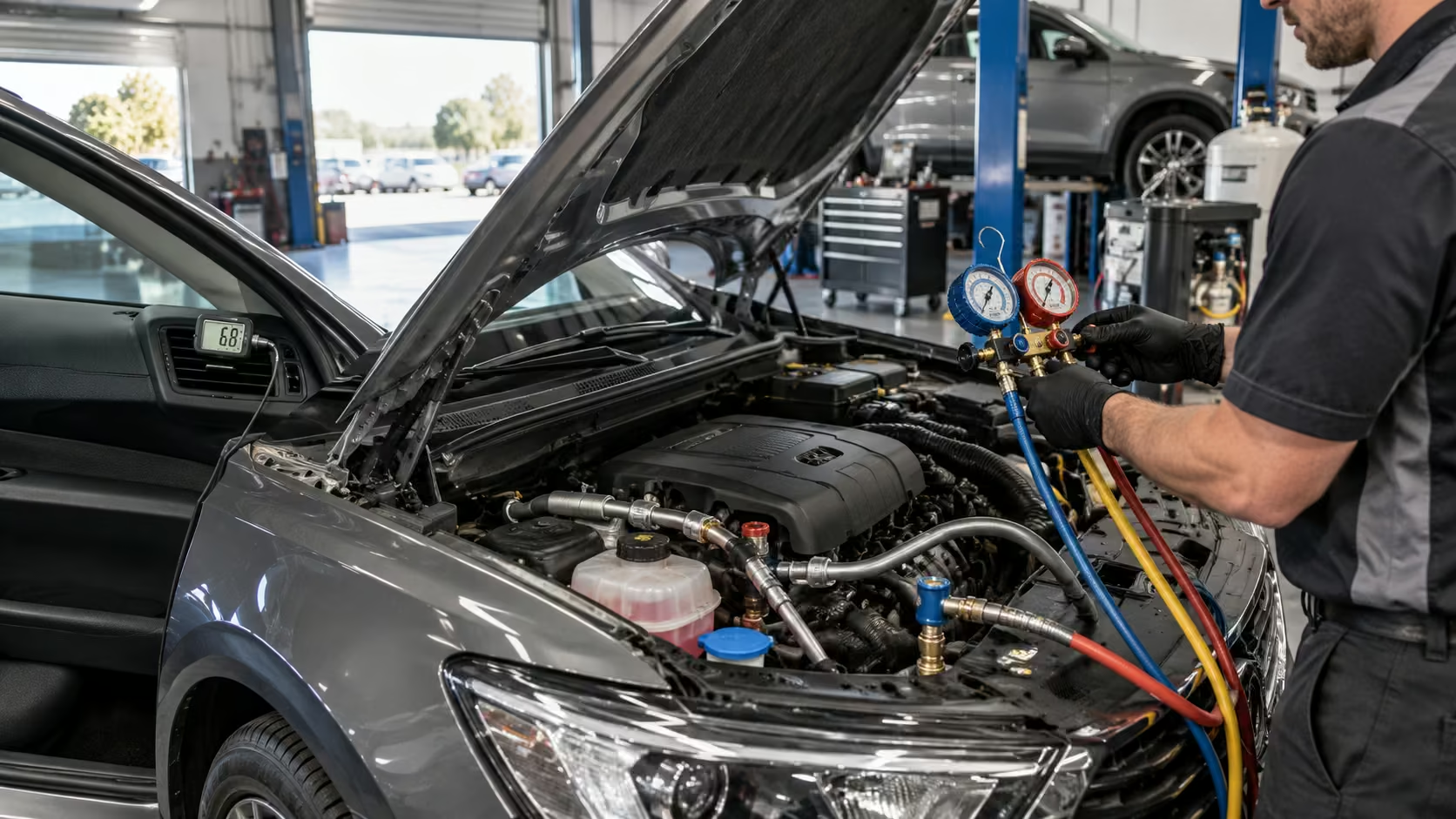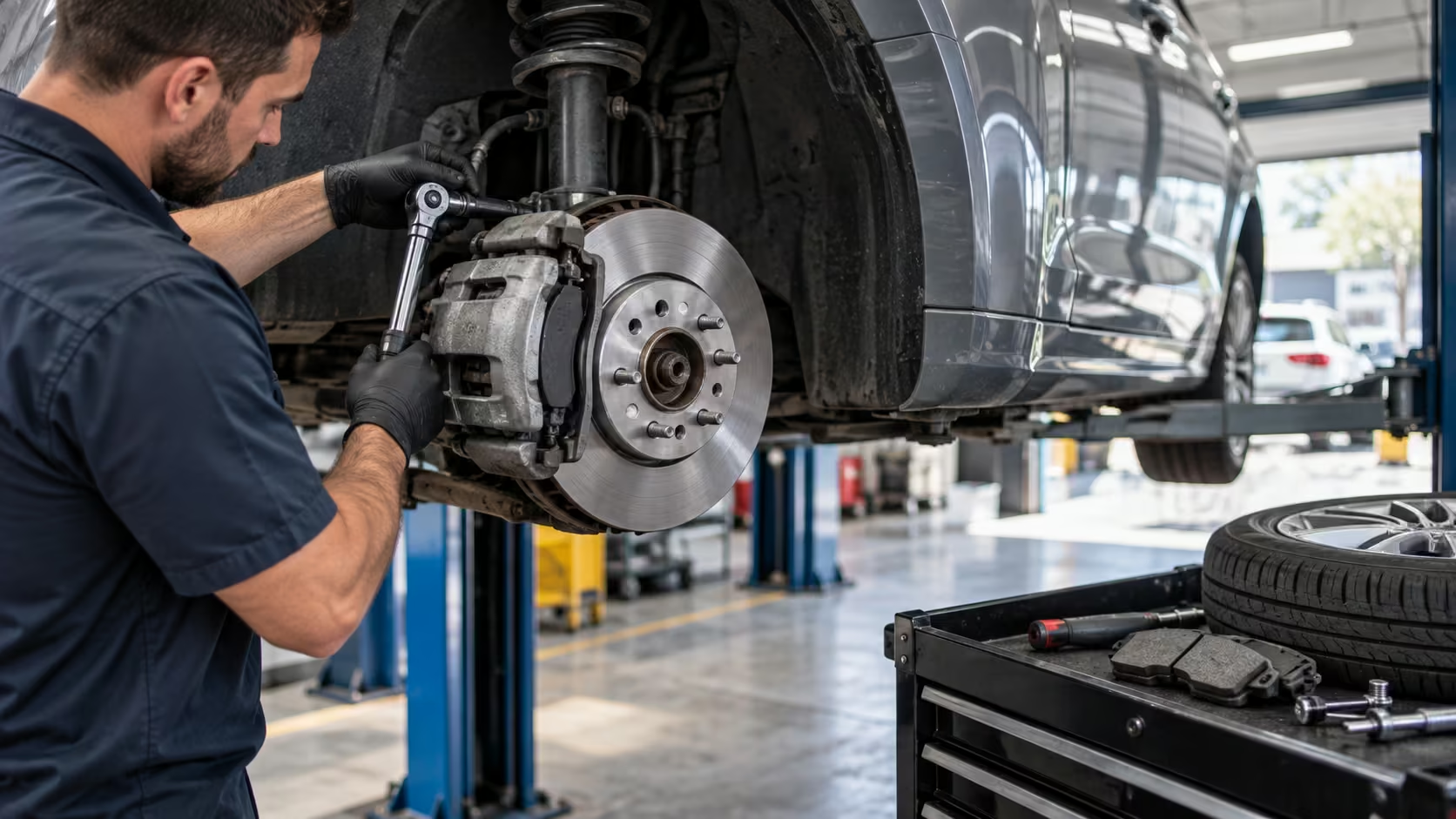

The question of logbook servicing versus regular servicing is one almost every Australian driver faces when their car is due for a tune-up. Both involve a mechanic working on your car . Both hold it in the road. But they are not the same and choosing poorly at the wrong time can end up costing you a lot more than the service itself.
Once you know what each type of service is really supposed to do, it’s not a hard topic to wrap your head around. You’ll know what your car needs right now and why it matters by the time you’re done.
Call Now
What Is Included in a Logbook Service and Who Decides the Schedule
The maintenance schedule is written by the manufacturer of your vehicle and is followed by a logbook service. Every car sold with a manufacturer’s warranty is sold with a logbook, a document that details exactly what has to be checked, replaced or adjusted, at each service interval, whether that is every 10,000 kilometres, every 15,000 kilometres or a set number of months, whichever comes first.
The manufacturer wrote that schedule based on how their specific engine, transmission, fuel system and safety parts wear over time. Right engine oil grade, right filter specs, brake fluid interval, coolant type, spark plug replacement point, the whole lot is tailored to your exact make and model. Next is a logbook service that follows the schedule to the letter, and each service is stamped and recorded in the logbook with the date and odometer reading.
This documented record protects your warranty while the vehicle is under the manufacturer’s coverage period and creates a full service history that significantly increases your car’s resale value when you do eventually sell it.
The Difference Between a Logbook Service and a Normal Service
The regular service offers the basics. Change the engine oil and filter. Perform a general safety inspection. Top up fluids. Check tyre condition and pressure. Check the brakes. Visually inspect anything that looks worn or at risk. It is not based on the manufacturer’s schedule, it is based on broad best-practice intervals.
It’s not just the depth of inspection that separates a logbook service from a normal service. It depends on whether the service is based on a manufacturer specified protocol or a general maintenance approach. Both are correct. They serve different vehicles at different times.
For a car well out of its warranty period used for everyday driving a regular service is the best option. It maintains the vehicle safe and reliable without the manufacturer-specific requirements that are no longer valid.
Can You Use an Independent Mechanic for a Logbook Service Without Losing Your Warranty
Yes and that is one of the most important things that Australian car owners need to understand. The Competition and Consumer Act 2010 protects your right to use a licensed mechanic for your logbook service. You do not need to go back to the dealership. What the Act does state is that the service is done to the manufacturer’s schedule with the correct quality parts and the correct grade of fluids and is properly recorded in your log book.
A full service to manufacturer specifications carried out at an independent workshop and stamps your logbook. Warranty is still valid. If service does not meet manufacturer requirements, whether at a dealership or independent shop, the warranty is void.
This is very important to drivers of European cars, especially BMW, Mercedes, Audi, Volkswagen, Volvo. These makes will cost anything between two and three times less than a dealership logbook service, by a qualified independent specialist working to the same standards. “Under Australian law you have the right to choose.
What Actually Happens If You Skip a Logbook Service While Under Warranty
Missing a logbook service interval when your car is still under the manufacturer’s warranty gives the manufacturer grounds to dispute a warranty claim should a related fault develop. They can claim that the vehicle was not serviced on their schedule, and that shifts the liability to you.
That doesn’t mean that every warranty claim will be refused if you are a few weeks late. But a major mechanical failure, especially in the drivetrain, engine or gearbox, where the cost of repairs routinely runs into the thousands of dollars, creates a dispute risk you don’t want.
The answer is simple: While the car is still under warranty, keep the log book in operation. Disputing a warranty claim will almost always cost more than what you were trying to save by delaying service.
Which Service Your Car Needs and How to Know
If your car is still in the manufacturer’s warranty period then it needs a logbook service completed to manufacturer specifications and logged in the logbook. There is no other option that will protect that warranty.
If your car is out of warranty, normal service is appropriate for routine maintenance intervals. Your mechanic should be able to tell you whether any manufacturer recommendations still apply, depending on the age and condition of your car and how you use it.
At A to Z Automotive Services in Newcastle we carry out manufacturer scheduled car servicing for all types of vehicles including European makes stamping and completing your log book to full manufacturer specifications so your warranty and service history is fully protected. For cars outside of the warranty period, our general car servicing in Newcastle is exactly what the car needs at the right interval.
Frequently Asked Questions
Is a logbook service more expensive than a regular service?
Generally yes, because a logbook service uses manufacturer-specified parts and fluids, and follows a more detailed checklist. The exact cost difference depends on your vehicle’s make, model and the service interval. For European vehicles the difference can be more significant than for Australian or Japanese makes. However the cost of a missed warranty claim, if a fault arises after a skipped logbook service, almost always exceeds the difference between the two service types.
Does my car still need a logbook service if it is older and out of warranty?
Once your car is out of the manufacturer’s warranty period there is no legal requirement to follow the logbook schedule. A regular service is appropriate for most drivers at that stage. Your mechanic can advise if any of the original manufacturer intervals are still worth keeping based on the specific vehicle, how many kilometres are on it and your driving conditions. A full logbook history is still worth maintaining if you plan to sell the car, as it can noticeably improve the resale price.
Do European cars like BMW, Mercedes and Audi have different logbook service requirements?
Yes. European manufacturers specify their own service intervals, oil grades and parts quality levels. BMW and Mercedes in particular use longer oil change intervals with synthetic oils of specific viscosity ratings that must be met. These requirements are documented in the vehicle’s service booklet. A qualified independent mechanic who works on European vehicles regularly will have the diagnostic tools and product knowledge to meet these specifications without you having to go back to the dealership.
Does a full logbook service history actually improve my car’s resale value?
Yes, and in most cases the impact is meaningful. A complete logbook service history shows a potential buyer that the vehicle has been maintained exactly as the manufacturer intended. It removes the biggest uncertainty buyers have about a used car — whether it has been properly looked after. In practical terms, a car with a full logbook history typically sells faster and at a higher price than a similar vehicle with a patchy or missing service record.