A car heater blowing cold usually means either the engine is not getting hot enough, most often from a thermostat stuck open, or hot coolant is not reaching the heater core because of a low level, trapped air or a blockage. A failed blend door actuator is the common cause when the engine is hot and the air is not.
Cabin heating is one of the few systems in a car that costs nothing to run, because it works entirely on heat the engine was throwing away anyway. That simplicity is useful when it stops working, since there are only a handful of things that can interrupt it, and one glance at the temperature gauge splits them into two neat groups before anyone opens the bonnet.
Call Now
How Your Car Heater Actually Works
Coolant circulating through the engine picks up heat, and some of that hot coolant is routed through a small radiator tucked behind the dashboard called the heater core. The blower fan pushes cabin air across it, the air picks up the heat, and it arrives at the vents. That is the entire system: hot coolant, a small radiator, and a fan.
Two conditions have to be met for it to work. The engine has to actually get hot, and the coolant carrying that heat has to reach the heater core in sufficient quantity. Almost every no heat complaint fails one of those two conditions, and the temperature gauge on the dashboard tells you which.
Check the Temperature Gauge Before Anything Else
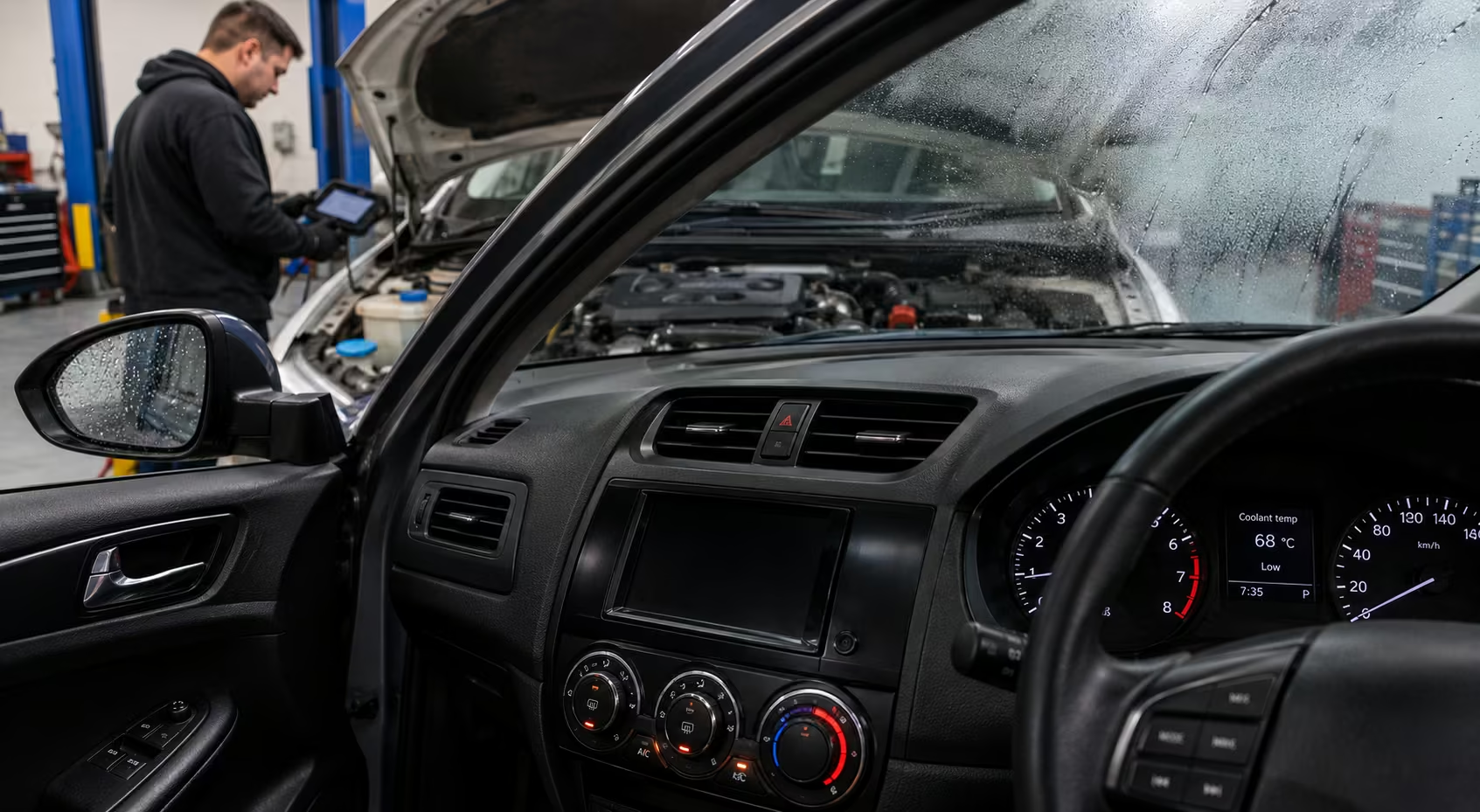
Drive the car for fifteen minutes and watch where the needle settles. If it sits noticeably below its normal position, or takes far longer than usual to get anywhere, the engine itself is not reaching operating temperature, and the heater has nothing to work with. That points at the thermostat and the first group of causes.
If the gauge reaches its usual place and the vents are still cold, the engine is producing plenty of heat and something is stopping it reaching the cabin. That is the second group: coolant level, trapped air, a blocked core, or the flap that directs air inside the dashboard. Establishing which group you are in takes one drive and costs nothing, and it is genuinely the most useful thing an owner can do before booking the car in.
A Thermostat Stuck Open Is the Most Common Cause
The thermostat is a temperature sensitive valve that stays closed when the engine is cold, keeping coolant circulating within the engine so it warms up quickly, then opens to let coolant reach the radiator once operating temperature arrives. When one fails stuck open, coolant flows to the radiator from the moment you start the car, and the engine is being cooled before it has warmed up.
The result is an engine that never quite reaches temperature, a heater that produces lukewarm air at best, and a gauge reading low, particularly on a cold morning or at highway speed where airflow through the radiator is strongest. It also quietly costs you money in fuel, because an engine running below its intended temperature runs richer and less efficiently. The part itself is usually inexpensive, which puts this among the more satisfying repairs on the list.
Low Coolant and Air Trapped in the System
The heater core sits high in the cooling circuit on many vehicles, which makes it the first thing to lose supply when the coolant level drops or when air finds its way in. That is why a heater going cold is sometimes the earliest sign of a coolant loss nobody had noticed yet, and why a level that has dropped deserves proper investigation rather than a top up, since coolant finding a way out of a sealed system has consequences well beyond a cold cabin.
Trapped air behaves in a recognisable way. Cooling systems have to be bled properly after any work that opens them, and an air pocket sitting in the heater core blocks flow the way a kink in a hose would. The signature is heat that comes and goes, often absent at idle and returning as you drive, sometimes accompanied by a gurgling sound from behind the dashboard. Bleeding the system correctly resolves it, and if air keeps reappearing afterwards, something is drawing it in and that becomes the real question.
A Blocked Heater Core Restricting Flow
Coolant does more than transfer heat. It carries corrosion inhibitors that protect the metal inside the system, and those additives deplete over time, which is exactly why coolant has a replacement interval rather than lasting forever. On a car where that interval has been ignored for years, corrosion products and sediment accumulate, and the heater core, with its narrow passages, is where they collect first.
A partially blocked core produces weak, lukewarm heat with an engine at full temperature and a healthy coolant level. Flushing sometimes restores it and sometimes does not, depending how far the blockage has gone. Worth distinguishing this from a heater core that is leaking rather than blocked, because a leaking core announces itself quite differently through a sweet smell and an oily haze that settles across the inside of the glass.
Blend Door Actuator Faults and Heat on One Side Only
If the engine is hot, the coolant level is correct and the heater core is fine, the fault has usually moved from the cooling system to the ventilation system. Inside the dashboard sits a flap called the blend door, moved by a small electric actuator, which decides how much air passes across the heater core before reaching the vents. When that actuator fails, the flap stops moving, and if it stops in the cold position you get cold air regardless of what the dial says.
Two clues point here specifically. A repetitive clicking or tapping noise from behind the dashboard when you change the temperature setting is a failing actuator struggling to move, and on dual zone systems, warm air from one side of the dashboard with cold from the other is almost a diagnosis in itself, since each side has its own actuator. Neither of those symptoms belongs to a cooling system problem, which is useful for narrowing things quickly.
Water Pump Failure and Poor Circulation
Less common, and worth knowing because the consequences run beyond comfort. The water pump moves coolant around the whole system, and a pump with a corroded or damaged impeller can still turn while shifting far less coolant than it should. Heat that is weak at idle and improves as revs rise fits this pattern, since more pump speed partially compensates for the lost efficiency.
What makes this one worth catching is that a heater complaint may be the mildest symptom it will ever produce. A cooling system with poor circulation is an overheating event waiting for a hot day and a hill, so weak heat alongside a gauge creeping above its usual mark under load is a combination to have checked promptly rather than filed under minor annoyance.
Why a Cold Heater Is a Safety Issue Not Just Comfort
It is easy to treat this as something to live with until spring, and there is a reason not to. The same hot air that warms the cabin is what clears fog and condensation from the inside of the windscreen, and a car that cannot demist properly is a car with compromised visibility in exactly the weather where visibility matters most. Windscreen condition and demisting capability both fall squarely within what a safety inspection examines.
There is a mechanical argument too. If the cause is a thermostat stuck open, the engine is spending its life below its designed operating temperature, which increases fuel consumption, produces more condensation inside the engine and its oil, and accelerates wear over time. The cold cabin is the symptom you notice. The engine running cold is the part that quietly costs you.
Getting the Heat Back
Note where the temperature gauge settles after a decent drive, whether the heat varies with engine speed, and whether one side of the dashboard runs warmer than the other, since those three answers do most of the narrowing. A to Z Automotive Services confirms the thermostat and cooling system condition before touching anything behind the dashboard, so book it in before winter properly arrives. A fair number of these end at an inexpensive thermostat or a bleed of the cooling system, and being told that is far better news than the dashboard coming apart.
Frequently Asked Questions
Can low coolant cause the heater to blow cold?
Yes, and it belongs near the top of the checklist. The heater draws hot coolant from the engine, and if the level has fallen far enough, there is not enough circulating to reach the heater core at all. A level that has dropped also means it went somewhere, so the missing coolant is its own question worth answering.
Why do I get heat when driving but not when stopped?
That pattern usually points at air trapped in the cooling system or a weak water pump. At higher revs there is enough flow to push coolant through the heater core, and at idle there is not. It is a recognisable enough symptom to be worth mentioning specifically at the time of booking.
Is driving without a working heater actually a problem?
Beyond comfort, yes, because the same system clears your windscreen. A car that cannot demist properly in cold or wet weather is a visibility problem, and that is exactly what an inspection is entitled to fail you for. It also frequently means the engine is not reaching operating temperature, which affects economy and wear.
Does a stuck thermostat need a whole new part?
Thermostats are not repaired, they are replaced, and they are generally an inexpensive component. Most of what you pay for is the labour to reach it and the coolant to refill and bleed the system afterwards, which is why it is often done alongside other cooling system work rather than on its own.