A misfire means one or more cylinders are failing to burn their fuel properly. It feels like a stumble, shake or hesitation, usually worst at idle and under acceleration. Ignition faults, fuel delivery problems, air leaks and compression loss are the four families of cause, and identifying the affected cylinder comes before anything else.
Misfire is one of those words that gets used loosely for any rough running, which is a shame, because it describes something quite specific and the specificity is what makes it fixable. An engine is a set of cylinders each contributing in turn, and a misfire means one of them has stopped pulling its weight. Everything about diagnosing it comes down to working out which one, and why.
Call Now
What a Misfire Actually Is
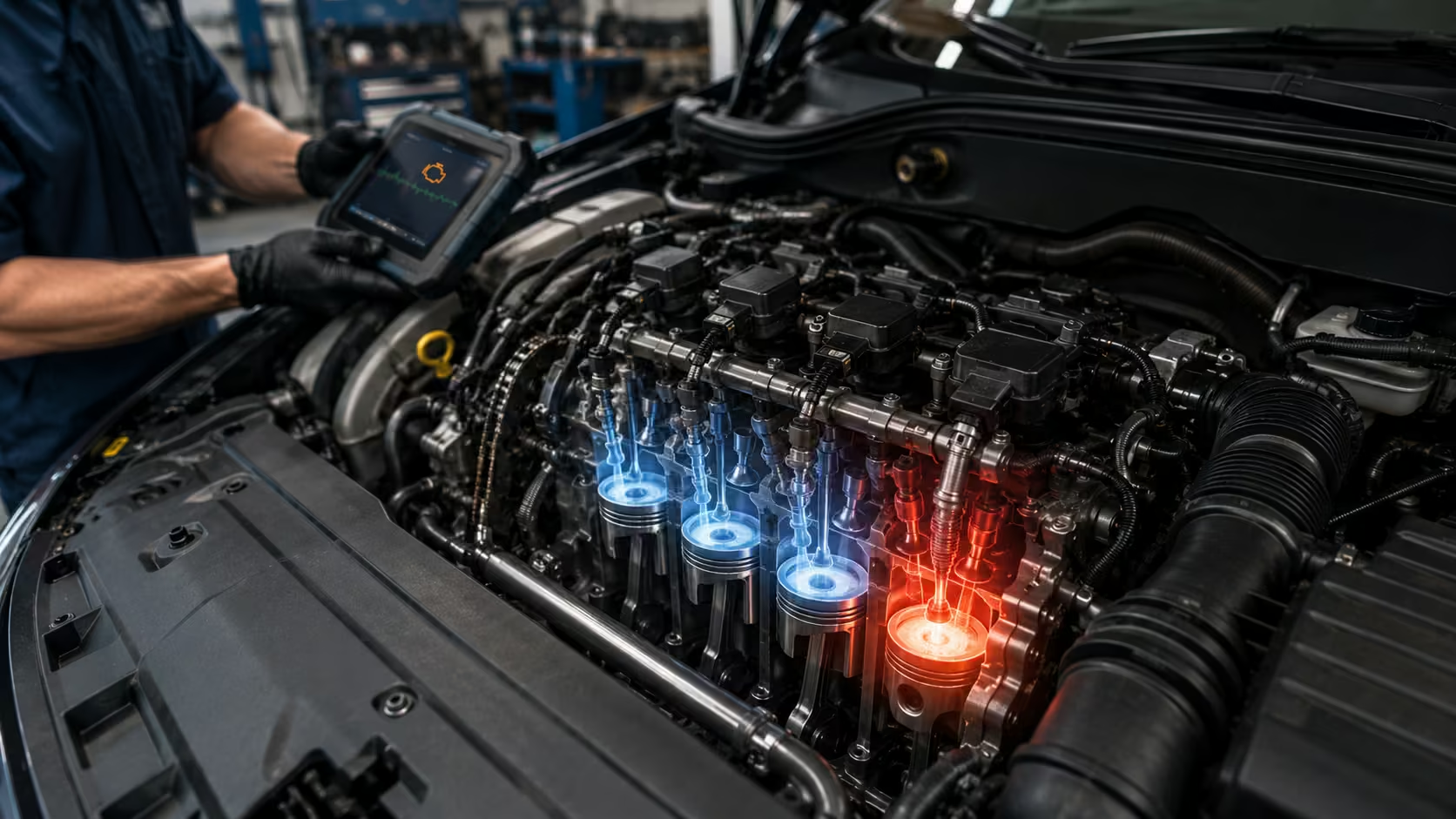
Each cylinder needs three things in the right measure at the right moment: air, fuel, and either a spark or enough compression heat to ignite the mixture. A misfire is what happens when that combustion event fails or goes incomplete, so the cylinder produces little or no power on that stroke while the rest of the engine carries on.
The uneven delivery is why you feel it rather than merely hear it. An engine designed to fire evenly is suddenly firing unevenly, and that imbalance travels through the mounts into the body of the car. It also explains why misfires are so much more obvious at idle, where there are fewer combustion events per second to smooth things over, and under heavy load, where the demand on the ignition and fuel systems is greatest.
What an Engine Misfire Feels Like
At idle, the classic sign is a vibration through the seat and the steering wheel with the car stationary, often with the rev counter needle twitching slightly rather than sitting steady. The engine note loses its evenness and develops a beat, and in bad cases the whole car rocks gently at the lights.
On the move it presents differently. Acceleration produces a stumble or a hesitation, sometimes a jerking sensation as though the car is being lightly tapped from behind, and the engine feels short of its usual pull. Some misfires appear only under load, going up a hill or overtaking, because that is when the ignition system is asked to fire against the highest cylinder pressures. Others appear only cold, or only once warm, and every one of those patterns is a clue worth reporting.
A Flashing Engine Light Means Stop Driving
This is the most important paragraph on the page. A steady engine management light with a misfire means a fault has been recorded and the car should be looked at soon. A flashing or blinking engine light means the misfire is severe enough that unburnt fuel is being pushed straight into the exhaust, and that fuel ignites inside the catalytic converter.
Converters are not built to burn fuel, and the temperatures involved can destroy one within minutes of driving. That turns a spark plug or coil repair into a spark plug, coil and catalytic converter repair, which is a completely different invoice. If the light is flashing, the correct move is to pull over somewhere safe, switch off, and have the car collected rather than nursed home.
Ignition Faults Are the Most Common Cause on Petrol Engines
On a petrol car, ignition is where most misfires live. Spark plug electrodes erode gradually across a great many kilometres until the spark stops being dependable, particularly under load, and plugs fouled by oil or fuel stop firing consistently well before that. Ignition coils are the other half, and they tend to fail under exactly the conditions that stress them most, which is why so many coil related misfires show up under acceleration or in wet weather.
Coil and plug faults are also the reason a misfire so often arrives with other symptoms attached, since many engine management systems will reduce power or restrict the throttle when misfires are detected. On Volkswagen group vehicles that frequently appears as an EPC light alongside the engine light, which is the car protecting itself rather than a second unrelated fault.
Fuel Delivery Problems and Injector Faults
A cylinder that receives too little fuel, too much, or a poorly atomised spray misfires just as readily as one with no spark. Blocked or leaking injectors are the usual mechanism, along with fuel pressure that has dropped below what the engine needs. On diesels this becomes the leading cause rather than a secondary one, since there are no spark plugs involved at all, and the way diesel injectors fail has its own set of symptoms worth reading if that is what you drive.
Air Leaks and Vacuum Faults
Air entering the engine without passing the sensors that measure it upsets the mixture, and if a leak sits close to one cylinder’s intake port, that cylinder runs lean enough to misfire while its neighbours stay acceptable. Perished intake hoses, failed manifold gaskets and cracked vacuum lines are the usual sources, and they tend to be worse at idle where manifold vacuum is highest.
These misfires have habits that give them away. Warmth often improves them as metal expands and closes the gap slightly, an audible hiss from under the bonnet sometimes accompanies them, and the roughness commonly disappears altogether once the car is moving and manifold conditions change. Replacement parts rarely help, since what has failed is a split or a perished seal rather than a component that stopped working.
Compression Loss and the Mechanical Causes
The most serious family of causes involves the cylinder no longer holding pressure. Burnt or poorly seating valves, worn rings and bores, a head gasket failure between a cylinder and a coolant passage, or a timing belt or chain that has jumped a tooth all mean the cylinder cannot compress its mixture properly, and no amount of spark or fuel compensates for that.
These misfires tend to be persistent rather than intermittent, present at all temperatures and loads, and they usually come with other evidence such as coolant loss, oil consumption or a distinct change in the way the engine sounds. Measuring cylinder pressure directly settles it, which is why a misfire that survives new plugs, coils and injectors needs a gauge rather than another parts order.
How the Faulty Cylinder Is Identified
Everything above is guesswork until the cylinder is named, and modern engines make that straightforward. The engine computer counts misfire events per cylinder and stores them, so a scan usually reports exactly where the problem sits rather than merely that a problem exists. Random misfires across several cylinders point somewhere different to a fault repeating on one, which itself narrows the causes considerably.
From there the classic workshop confirmation is the swap test. Move the coil from the misfiring cylinder to a healthy one, clear the codes and run the engine again. If the misfire follows the coil, the coil is the fault. If it stays where it was, the coil is fine and the cause is fuel, air or compression in that cylinder. The same logic applies to injectors, and it converts an expensive guess into a free answer in about twenty minutes.
Why Misfires Get Worse If Left Alone
Misfires rarely stay the same size. Raw fuel strips the protective film from the bore in the affected cylinder, hastening ring and cylinder wear there, and the same fuel travelling into the exhaust ages the catalytic converter even when the light is not flashing. On diesels, unburnt fuel loads the particulate filter far faster than it was designed for. What starts as one component quietly turns into a fuelling problem with expensive exhaust consequences, which is the argument for acting while it is still a stumble.
Getting a Misfire Traced to the Right Cylinder
Note when it happens, cold or warm, idling or under load, and whether the engine light is steady or flashing, because those three answers shape everything that follows. A to Z Automotive Services pulls the cylinder specific misfire counts from the car itself before anything is replaced, so book the scan ahead of the parts. Most finish at a single coil or plug, and knowing which one separates a modest bill from replacing a full set on a hunch.
Frequently Asked Questions
Can I drive with a misfire?
Briefly and gently, provided the engine light is steady rather than flashing. A flashing light during a misfire changes the answer completely, because raw fuel is being pushed into the catalytic converter and that component can be ruined in a short drive. Steady light, drive it to the workshop. Flashing light, stop.
Why does my misfire only happen when the engine is cold?
Cold running uses a richer mixture and demands more of the ignition system, so a marginal spark plug or a coil that is breaking down under load will fail then and behave once everything is warm. Misfires that appear only cold usually point at ignition components on their way out rather than at anything mechanical.
Does a misfire always trigger the engine light?
Not always. A mild misfire can sit below the threshold the monitoring system uses, so the car feels slightly rough without ever lighting the dash. The fault data often still records it, which is why a scan is worth doing even when nothing has illuminated.
Will new spark plugs fix a misfire?
Sometimes, and it is a reasonable first step on a petrol car overdue for them. What makes it a gamble rather than a repair is that coils, injectors, vacuum leaks and compression loss produce an identical symptom, so plugs fitted without identifying the cylinder are as likely to change nothing as to fix it.