A steering wheel that shakes at high speed but feels fine below it is almost always a wheel balance issue, while a shake that is constant and slowly getting worse usually points to something more structural, like a bent rim or worn suspension component. Where and how the shake shows up tells you most of the story.
A shake that only appears once you are up around highway speed is one of the more common reasons cars come through the workshop, and in most cases it comes down to one of four things. Working out which one usually starts with paying attention to exactly when and how the shake shows up.
Call Now
Unbalanced Tyres and Wheel Weights
A wheel that has come out of balance is the most common reason for a shake that appears specifically at speed. Every wheel and tyre assembly is balanced with small weights attached to the rim during fitting, correcting for the fact that no tyre is perfectly uniform in weight all the way around. Over time these weights can work loose and fall off, particularly after hitting a pothole or kerb hard enough to jolt them free, and once that happens the wheel spins slightly unevenly.
The characteristic sign of an unbalanced wheel is that the shake builds within a fairly specific speed range, often somewhere between 80 and 110 km/h, and eases off again above or below that range. This happens because the imbalance only becomes noticeable once the wheel is spinning fast enough for the uneven weight to create real vibration. Rebalancing is usually a quick job, and if this is the sole cause, it resolves the shake completely.
Bent or Damaged Wheel Rims
A wheel rim does not need to look obviously damaged to be the cause of a shake at speed. Hitting a deep pothole hard, especially at speed, can bend the rim slightly out of round without leaving any visible dent or crack, and the tyre mounted on it can still hold air and look completely normal. What has changed is that the wheel is no longer perfectly circular as it rotates, and that irregularity shows up as a shake once you are travelling fast enough for it to matter.
This is a step up from a simple balance issue, because rebalancing a bent rim does not fix the underlying problem. The wheel needs to be properly inspected and, depending on the severity of the bend, either straightened by a specialist or replaced outright. Continuing to drive on a bent rim, particularly at speed, puts additional strain on the tyre and the suspension components around it.
Warped Brake Rotors and Pulsing Under Braking
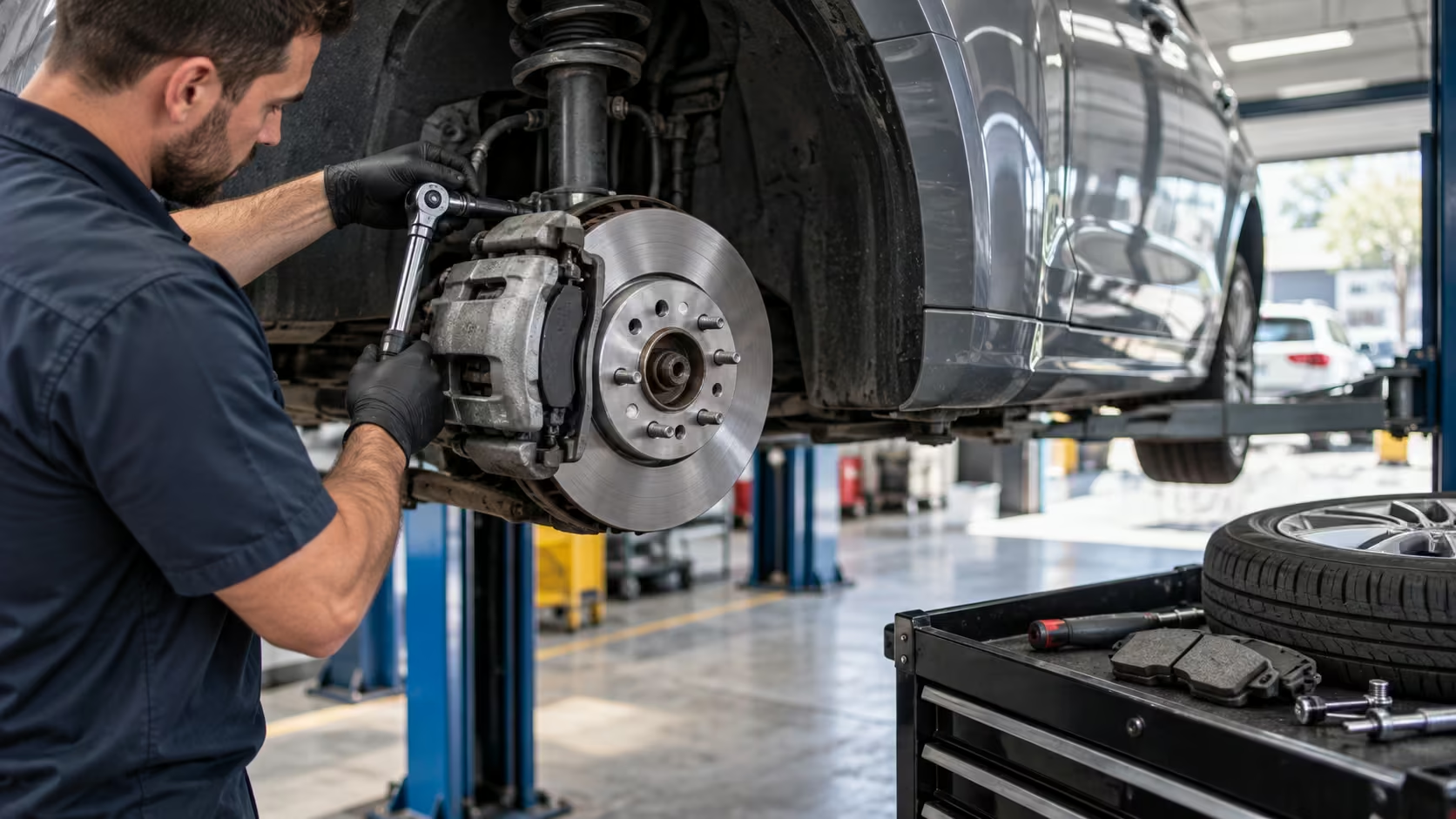
Not every shake at speed is a wheel problem. If the vibration you are feeling is specifically tied to braking, rather than present at speed regardless of whether you are on the brake, a warped rotor is the more likely explanation. Rotors can warp from heat, and heat is generated any time you brake, but it becomes a problem when a rotor is subjected to sudden, intense heat cycling, such as heavy braking on a long descent or repeated hard stops in traffic.
The result is a rotor surface that is no longer perfectly flat, and as the pad grips an uneven surface with every rotation, that translates into a pulsing feeling through the pedal and often through the steering wheel as well. Steering, suspension and brakes are all checked together during a standard roadworthy inspection, which is another reason this combination of symptoms is worth sorting sooner rather than later.
Worn Suspension and Steering Components
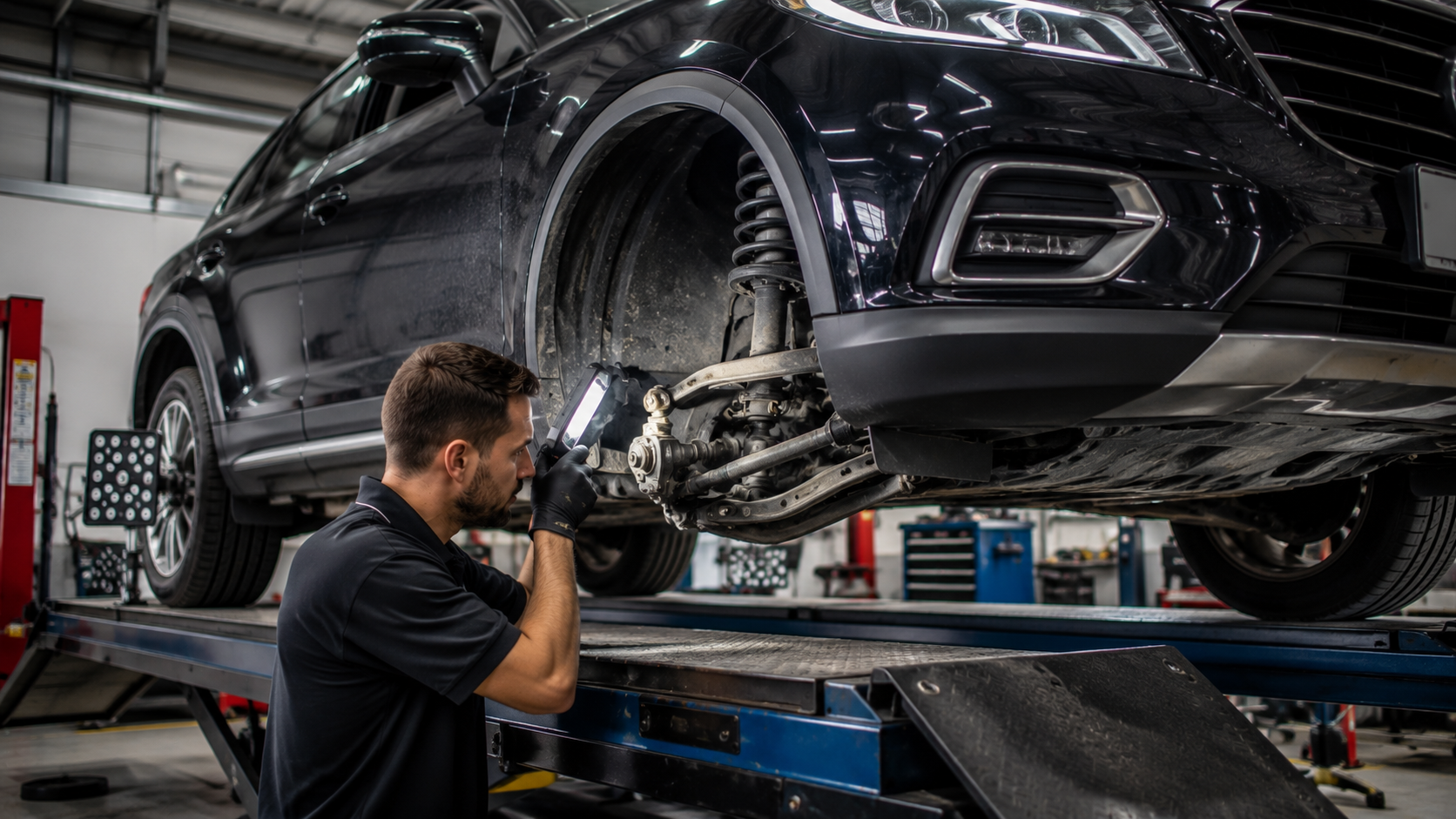
A shake that develops gradually over weeks or months, rather than appearing suddenly, points more toward wearing suspension or steering components than a one off balance or impact issue. Wheel bearings, tie rod ends, and control arm bushings all wear with age and kilometres, and as they develop play, that looseness can translate into a vibration that becomes more noticeable the faster you are travelling.
This type of wear usually does not arrive alone. It tends to come with other symptoms, such as a looser or vaguer feeling through the steering wheel generally, or a knock or clunk when driving over bumps and uneven surfaces. Staying on top of how often these checks should happen usually catches this kind of wear well before it turns into a shake at speed.
Wheel Alignment, Balancing and Diagnostic Costs
A wheel balance on its own is one of the more affordable jobs a workshop does, and if that is the sole cause, it usually resolves the issue in one visit. Once a bent rim, a warped rotor, or worn suspension components are involved, the cost climbs from there depending on parts and labour, and prestige and European vehicles tend to sit at the higher end of that range. A proper diagnostic check is the fastest way to know exactly which of these you are dealing with, rather than paying for a balance and finding the shake is still there afterward.
Book a Diagnostic Check
If your steering wheel is shaking at highway speeds, don’t ignore it before your next long trip. Book an inspection with A to Z Automotive Services and we’ll identify the exact cause, explain what needs attention, and recommend the most appropriate repair.
Frequently Asked Questions
Why does the shaking only happen at certain speeds?
An unbalanced wheel sends out vibrations that match the speed it’s turning, so it tends to hit a peak in a narrow band of speeds and then can get better again above or below it. That’s one of the clearest signs it’s a balance problem rather than something more structural.
Is it safe to keep driving with a shaking steering wheel?
Yes. Usually a short trip at a lower speed. If you have a bent rim or a worn suspension component it can get worse if you do a lot of sustained higher speed driving and we would not recommend a longer highway run until it has been checked out.
Will a wheel alignment fix a steering shake?
Not by itself. An alignment will fix pulling to one side and uneven tyre wear that develops over time, but a real wobble that appears when you’re going fast is usually a balance, rotor or suspension issue that an alignment won’t solve.
Does tyre pressure make a difference to steering shake?
It can add to it, especially if one tyre is a lot under inflated compared to the others, so it’s always worth checking first. But in itself it is rarely the whole explanation for a shake peculiar to higher speeds.