Both outer edges worn means under inflation, a worn centre strip means over inflation, one edge worn points at camber or alignment, feathered tread edges mean toe misalignment, and a scalloped or cupped surface points at worn suspension. The pattern identifies the cause more precisely than any other clue on the car.
Tyres keep an honest record of everything the suspension and geometry have been doing, and they write it in a language that takes about five minutes to learn. It is worth learning, because the pattern tells you whether you are looking at a two dollar pressure problem, an alignment, or a suspension repair, and those three answers have very different price tags attached.
Call Now
Both Outer Edges Worn Means Under Inflation
A tyre carrying less air than it should bulges in the middle and rides on its shoulders, so the two outer edges wear away while the centre of the tread stays comparatively deep. Run a hand across the tread and you can feel the crown standing proud of the edges. It is the most common wear pattern on the road and the most preventable.
Under inflation costs more than tread. It increases rolling resistance and fuel consumption, makes the steering heavier and the car vaguer, and builds heat in the sidewall, which is the mechanism behind most catastrophic tyre failures at speed. Checking pressures monthly against the placard figure, usually inside the driver’s door frame rather than on the tyre itself, eliminates the whole category.
Centre Tread Worn Means Over Inflation
The opposite pattern comes from too much air. An over inflated tyre balloons in the middle so the centre of the tread carries a disproportionate share of the load and wears out while both shoulders still look nearly new. The contact patch is smaller than intended, which reduces grip and lengthens braking distances even though the tyre looks perfectly healthy at the edges.
This one usually comes from good intentions, since over inflating slightly is often done deliberately for fuel economy or after a service where pressures were set high. The placard figure exists because the manufacturer tested the car with it, and departing from it trades a marginal economy gain for grip, ride quality and tyre life.
One Edge Worn Points at Camber or Alignment
Wear concentrated on the inner or outer edge of a tyre, with the rest of the tread in good condition, means the wheel is not sitting square to the road. Camber is the angle at which the wheel leans in or out when viewed from the front, and a wheel leaning even slightly puts one edge under far more load than the other. Kerb strikes, potholes and worn suspension components all knock it out. If the car has also started drifting or pulling to one side, the two symptoms usually share a single cause and it is worth mentioning both when booking.
It is worth noting that a small amount of inner edge wear is normal on many modern vehicles, particularly at the rear, because manufacturers build in slight negative camber deliberately for stability. What matters is the degree and whether it is even between the two sides. Pronounced wear on one side only is a geometry problem asking to be measured.
Feathered or Saw Tooth Tread Means Toe Misalignment
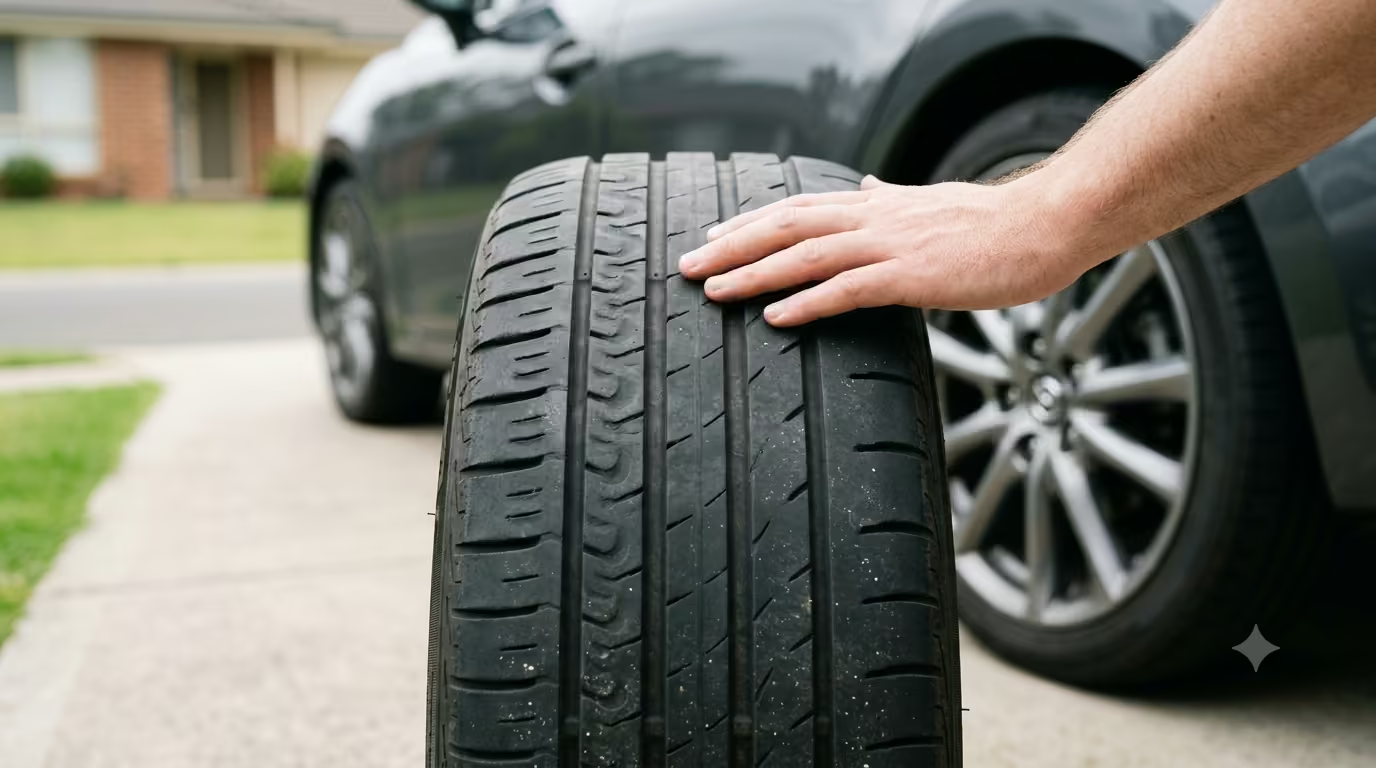
Run your hand across the tread one way, then sweep it back in the opposite direction. If it feels smooth in one direction and sharp or ridged in the other, with each tread block worn to a ramp shape, that is feathering, and it means the wheels are toeing in or out rather than pointing straight ahead. The tyre is being dragged sideways slightly with every revolution.
Feathering is the wear pattern owners are least likely to spot visually, because from a metre away the tread looks even, and it is the one your hand finds instantly. It also tends to arrive with a hum or roar that people blame on road surface, and it will consume a set of tyres remarkably quickly if the geometry is left uncorrected.
Cupping and Scalloping Point at Suspension Wear
Cupping shows up as alternating high and low patches spaced around the circumference of the tyre, a wave pattern rather than a side to side one, and it usually comes with a rhythmic thumping or droning noise that rises and falls with speed. The cause is not geometry at all. It is a tyre losing contact and regaining it many times a second instead of remaining pressed to the road, which is what worn dampers do to a car, and it can also come from severe imbalance or badly worn bushings and joints.
This is the pattern that matters most for the money, because it is the one people most often try to solve with new tyres. Fit fresh rubber to a car whose suspension is letting the wheel bounce and the new tyres develop exactly the same cupping within a year, usually with the owner blaming the tyre brand.
Patchy Wear and Flat Spots
Isolated bald patches or flat spots in an otherwise healthy tread have their own causes. Heavy braking that locks a wheel, most likely on a vehicle without functioning anti lock braking, scrubs a flat spot in one place. A wheel that is significantly out of balance can wear in irregular patches. And a car left standing in one position for months develops flat spots where the weight has been sitting.
The distinguishing feature of these is that they are localised rather than following a pattern around or across the tyre. A single flat area with normal wear elsewhere points at an event rather than a persistent fault, which is useful, because it often means the car itself is healthy and only the tyre needs replacing.
How to Read Your Own Tyres Safely
Do this with the car on level ground and the engine off. Look across the full width of each tread, comparing inner edge, centre and outer edge, then run a hand across in both directions to find feathering, and finally around the circumference to feel for cupping. Turn the steering to full lock to get a proper view of the inner shoulders of the front tyres, which is where a great deal of wear hides.
Check all four, because comparing them is where the information is. Wear on one side of the car only, or wear that differs front to rear, tells you considerably more than any single tyre in isolation. Note what you find and take a photo, since a workshop can act on that faster than on a description.
Why New Tyres Alone Rarely Fix the Problem
Every pattern above except plain pressure error has a cause that outlives the tyre it destroyed. Replacing worn rubber without correcting geometry or suspension simply buys a fresh canvas for the same picture, and the second set wears out on the same schedule as the first. The sequence that saves money is to identify the pattern, correct the cause, then fit and align the new tyres so the wear starts even and stays that way.
Getting the Cause Identified Not Just the Tyres Replaced
Bring the photos and mention which corner is worst, because the pattern usually names its own cause before the car is on the hoist. A to Z Automotive Services checks geometry and suspension condition before recommending rubber, so book a check when the wear first appears rather than when the tread runs out. If the answer is that your pressures have been low for six months and the tyres have plenty of life left, that is the answer you will get.
Frequently Asked Questions
How often should tyres be rotated?
Every ten thousand kilometres or so is the usual guidance, often aligned with a service so it costs nothing extra in labour. Rotation evens out the different rates at which driven, steered and trailing wheels wear, which extends the life of the whole set rather than just moving the problem around.
Will an alignment fix cupped tyres?
No, because cupping is caused by the wheel bouncing rather than by wheel angles. Alignment corrects geometry, and a cupped tyre points at suspension components that are no longer controlling movement. Aligning a car with worn dampers simply produces a well aligned car that keeps destroying tyres.
Can I replace just one tyre?
You can, and it is better to pair it with the tyre on the other side of the same axle where possible, matching type and tread depth. Mismatched grip across an axle affects braking and stability, and on all wheel drive vehicles significant differences in rolling circumference can strain the driveline.
What is the legal minimum tread depth?
One point five millimetres across the tread in Australia, and the moulded wear indicators in the grooves show when a tyre has reached it. Worth knowing that wet weather grip falls off well before that point, so the legal minimum is a limit rather than a target.