
If you’ve ever Googled this and found yourself more confused than when you began, you’re not alone. Well it depends on your car really. For most Australian drivers though, the starting point is the same.
Consult your owners manual. That’s where your manufacturer details the precise service schedule for your car. If you’ve lost it or never opened it, the general rule most workshops and motoring bodies work from is every 10,000 to 15,000km or every six to 12 months, whichever comes first.
The ‘whichever comes first’ part is significant. A service is still due even if your car has not covered many kilometres when the time interval has expired. Car sits in the driveway . Engine oil breaks down over time . Brake fluid absorbs moisture from the air . Seals and components age .
Car Service Every 10,000 km or 15,000 km: What Is the Difference?
Both are common in Australia and which one applies to you depends on the make and model of your vehicle.
Traditionally many Japanese models, Toyota, Mazda, Mitsubishi, Subaru have used 10,000 km intervals with 6 month timeframes on older vehicles. Many newer models and European vehicles VW, BMW, Mercedes, Audi, Volvo are designed for longer synthetic oil intervals of 15,000km or more, often with 12 month time frames.
The difference is mainly due to oil specification. Modern full-flow filtration and vehicles engineered for synthetic oil allow you to go longer between changes without sacrificing protection. Cars using regular or semi-synthetic oil usually need more frequent servicing.
Your owner’s manual will tell you the distance and time interval as well as the oil specification needed. Don’t just follow the interval blindly; if you use the wrong oil type for a long interval, it can cause premature engine wear.
How Driving Conditions Affect Your Car Service Interval
Yes. Manufacturers typically offer two varieties: normal driving conditions and severe driving conditions. Severe driving conditions:
- Many short trips <10 km (engine not fully hot, oil gets condensation)
- Stop-start city driving with lots of idling
- Towing or hauling heavy loads regularly
- Driving on dusty or off-road conditions
If your driving is severe, your manufacturer may recommend more frequent changes, perhaps every 5,000 to 7,500 km. If this is you, consult the severe driving section of your owner’s manual.
What Happens If You Skip a Car Service?
This is where most drivers miss the danger. There are costs to skipping a service that are more than the engine.
Overdue engine oil loses its viscosity and its ability to properly lubricate moving parts. The end result is more friction, more heat, more rapid wear on costly-to-replace components such as the timing chains, the camshafts, the bearings.
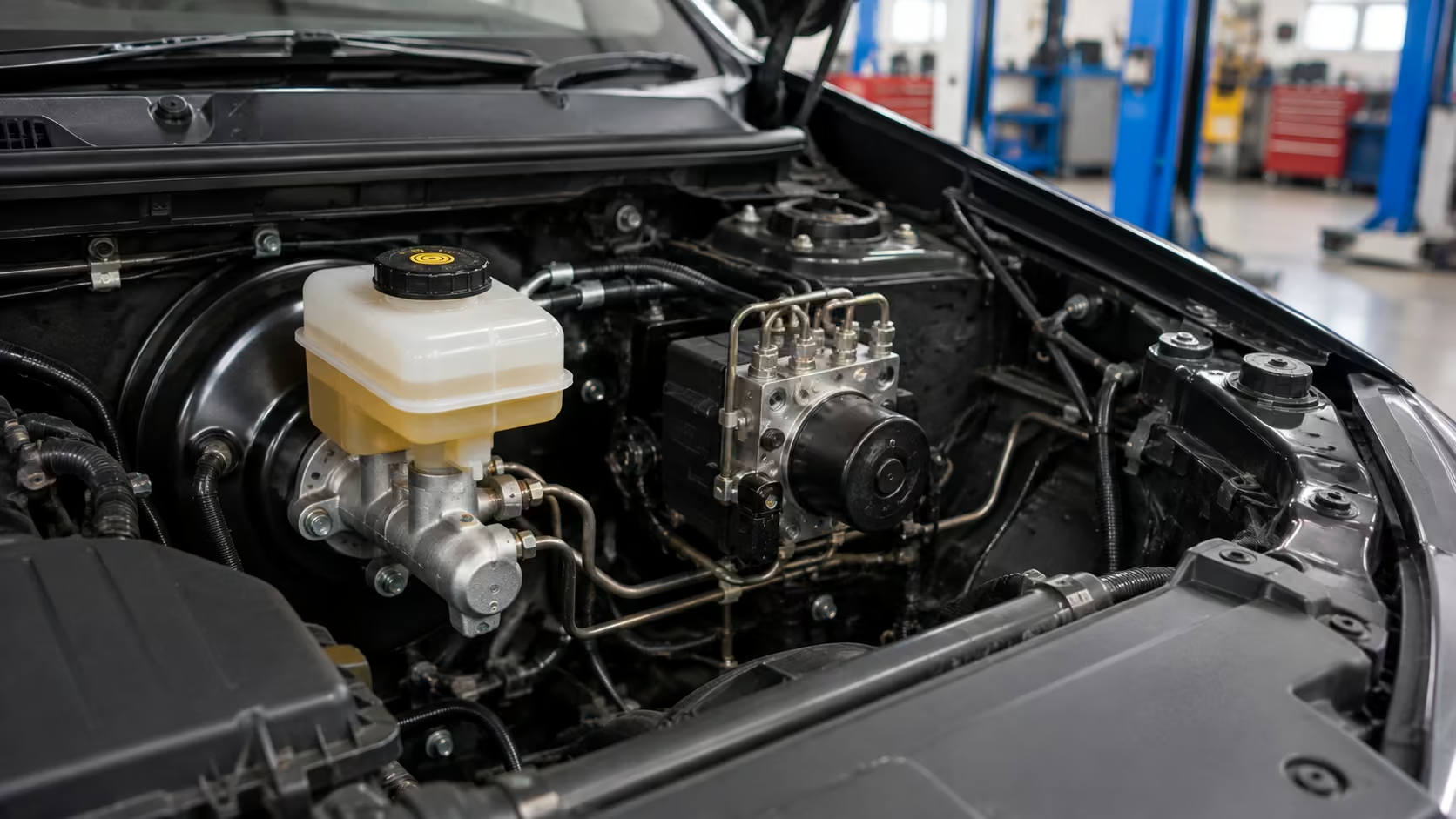
Brake fluid is hygroscopic and absorbs water from the atmosphere. Water in your brake fluid lowers the boiling point of the fluid and can cause brake fade, reduced or lost stopping power, in high stress braking situations. This is a safety issue, not just a maintenance issue.
Aside from the mechanical risks, extending your service intervals has two other real world effects:
- It can impact your new car warranty. Manufacturers demand services at scheduled intervals in order to maintain the warranty.
- It lowers the resale value of your car. A full service history is one of the first things a buyer or dealer will be looking for.
How Do You Know When Your Car Needs a Service?
Most modern vehicles will feature a service light on the dashboard. It happens when the car is at its scheduled service point. Don’t ignore it – it’s not a warning that something has failed, it’s a reminder that your next service is due.
If your car doesn’t have a service light, the easiest thing to do is note down your odometer reading from the last time it was serviced and set a reminder when you are nearing the interval. Many workshops also stick a sticker on your windscreen with the next due date and kilometre reading.
Signs that a service may be overdue include:
- Oily dipstick, dark or dirty
- Engine running rough or sluggish
- Fumes from the engine compartment
- Brake pedal that feels spongy or needs more pressure
Logbook Service and Service Intervals: What You Need to Know
If your car is still under manufacturer’s warranty then your service needs to be done to the logbook schedule, not just a general service. The logbook service is performed to manufacturer specifications with the right parts and fluids and with the logbook stamped to keep your warranty record intact. You can find out more about how these two types of service compare in our guide to logbook service vs regular service.
Importantly under Australian Consumer Law, you do not need to return to the dealership for a logbook service. An independent mechanic will provide the same warranty protection by doing the service to manufacturer specifications and correctly stamping your logbook. The ACCC has been very clear on this.
Frequently Asked Questions
How often should I get my car serviced in Australia?
Most modern vehicles require servicing every 10,000 to 15,000 km or every 6 to 12 months, whichever comes first. The exact interval depends on your vehicle make and model check your owner’s manual for the manufacturer’s recommended schedule.
Is it every 10,000 km or 6 months?
For many Japanese and older models, the interval is 10,000 km or 6 months. Newer vehicles and many European models are often set to 15,000 km or 12 months, particularly those using full synthetic oil. The ‘whichever comes first’ rule applies in both cases time matters even if the kilometres aren’t there.
What happens if you go too long without a car service?
Oil degrades, brake fluid absorbs moisture, and engine components wear faster. Beyond the mechanical risks, skipping services can void your manufacturer’s warranty and reduce your vehicle’s resale value.
How do I know when my car needs a service?
Most modern cars have a dashboard service indicator. If your car doesn’t have one, track your odometer from your last service date and monitor your manual’s recommended interval. Signs of an overdue service include dirty oil on the dipstick, rough running, or unusual engine smells.