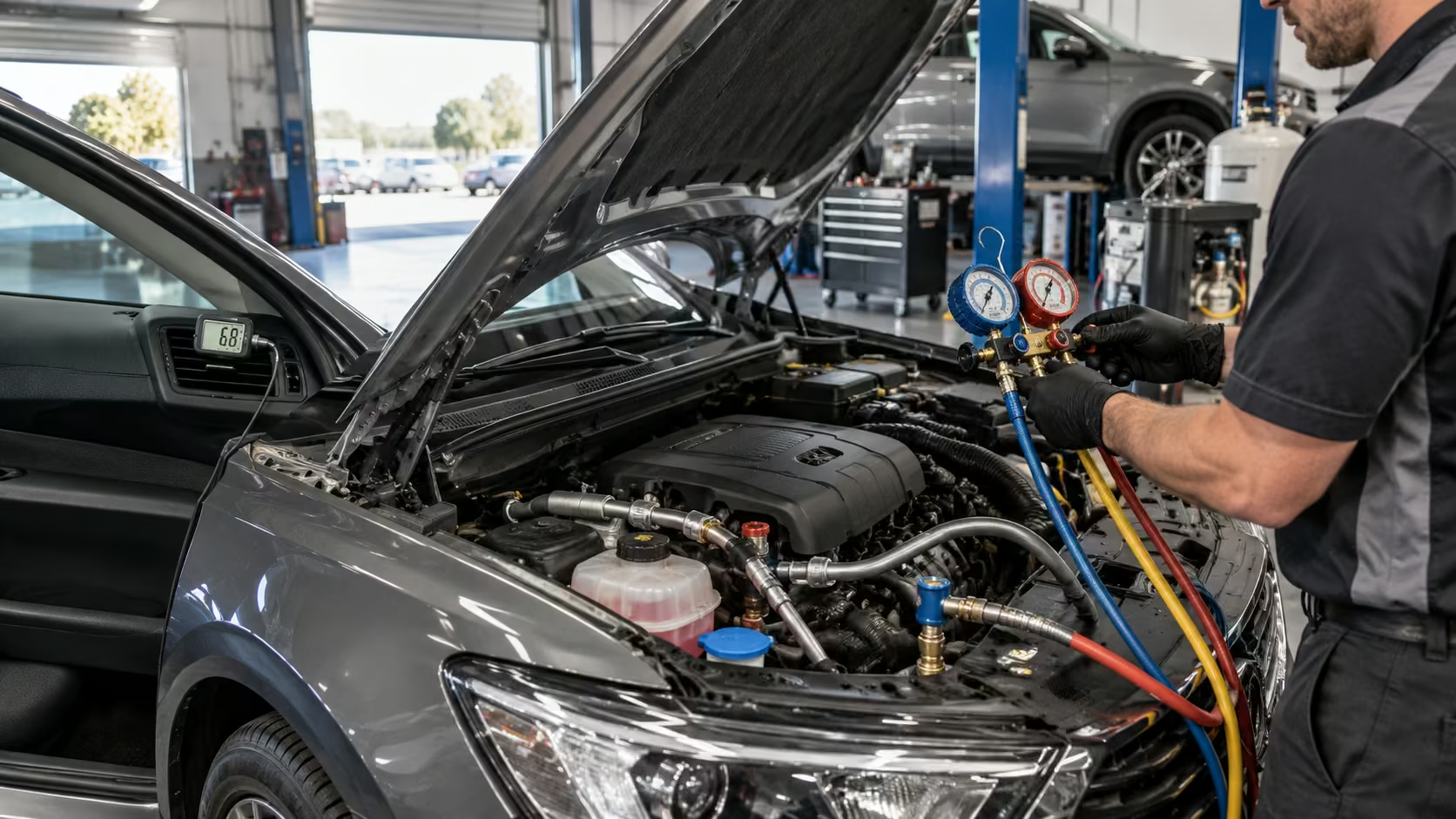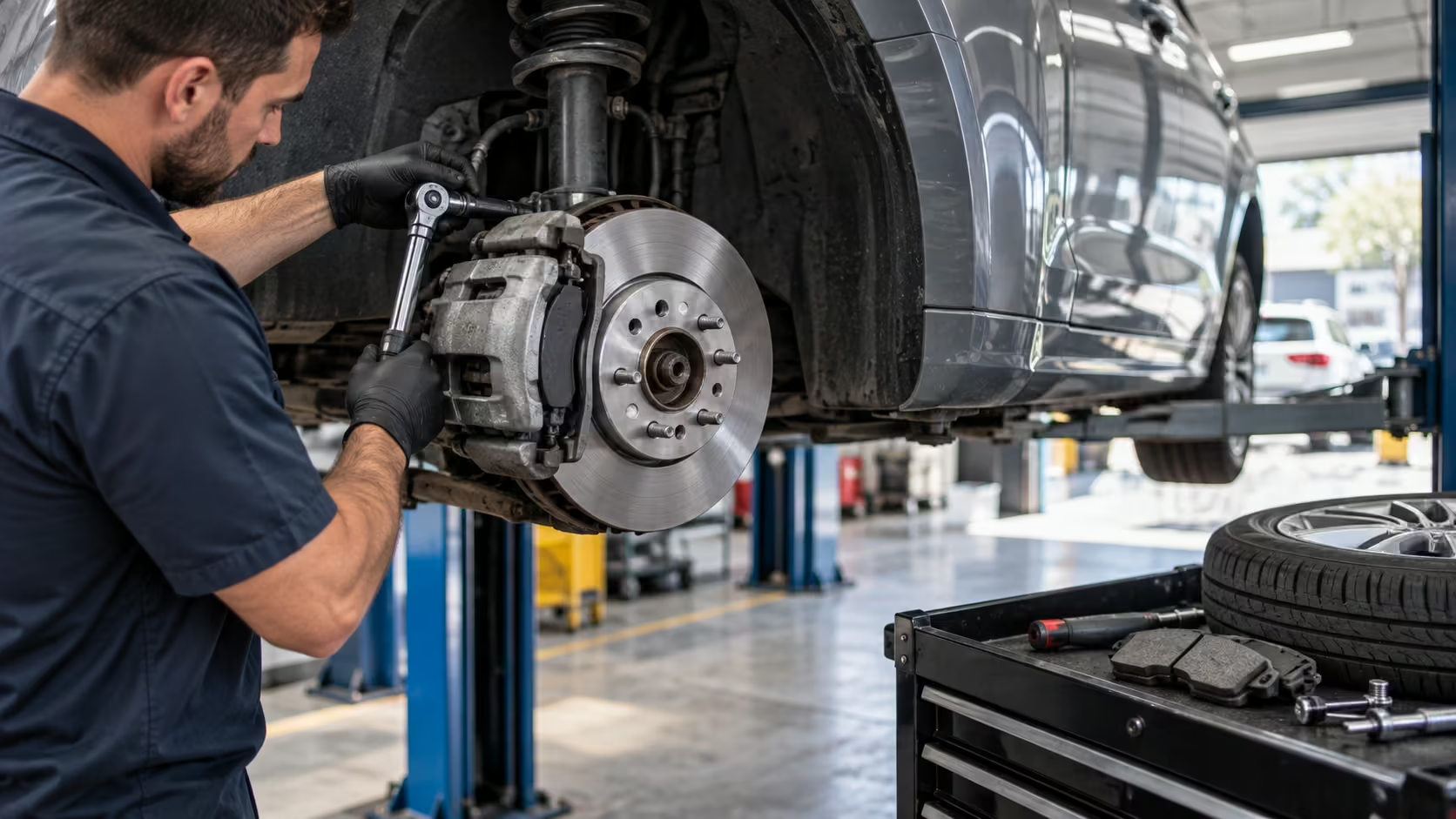
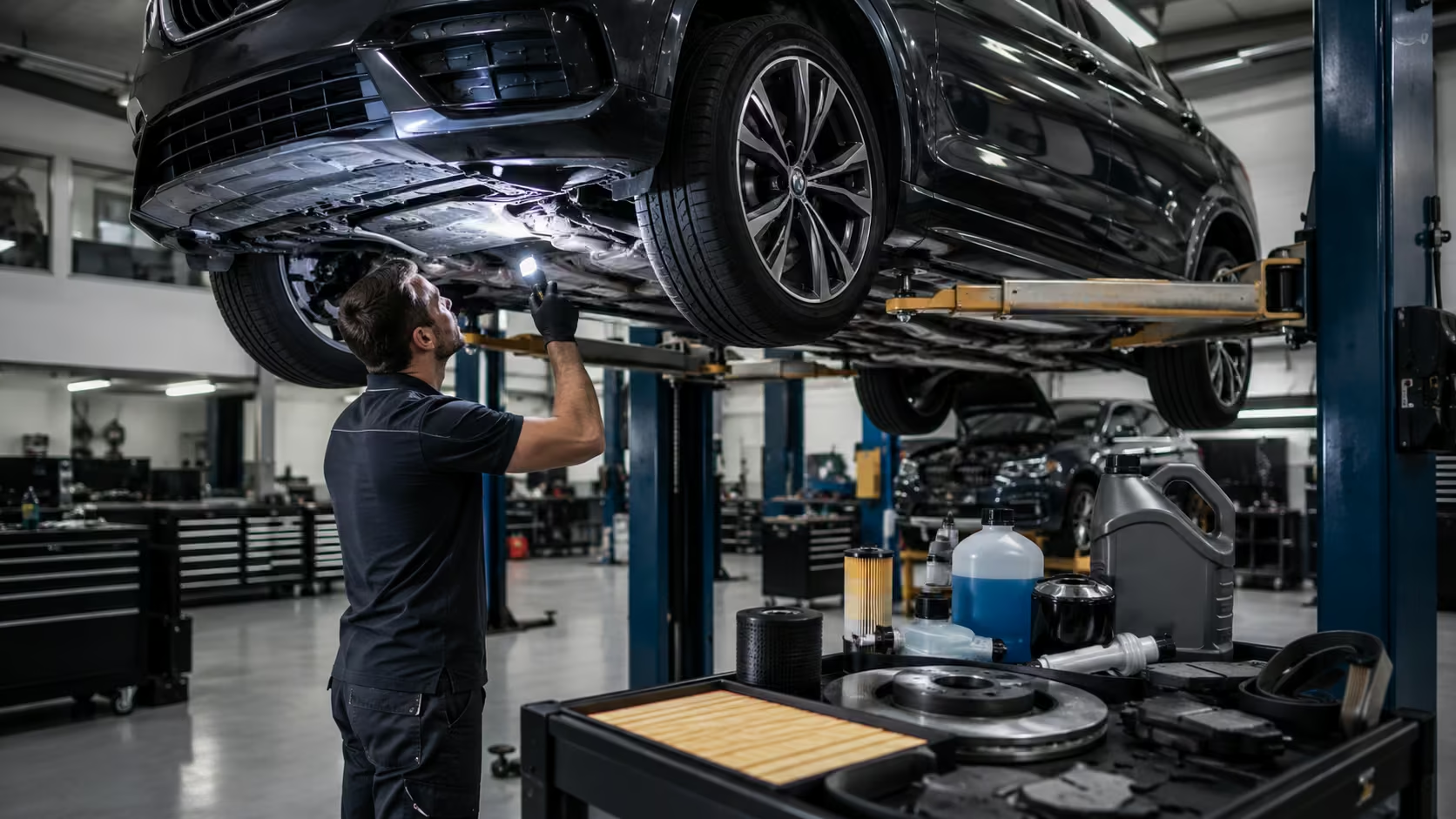
Most manufacturers recommend servicing every 12 months or 10,000-15,000 kilometres, whichever comes first. Breakdowns rarely occur by chance. They almost always are caused by a missed or delayed service item. The service interval question is worth getting right as it will tell you which components are most likely to bring you to a roadside breakdown.
Most of the breakdown jobs we get at A to Z Automotive Services in Newcastle are for vehicles that had an overdue service item. The pattern is consistent enough that we can almost determine the reason for the fault by the age of the vehicle, the mileage and how long since the last service. A vehicle that has not been serviced in 18 months and covered 20,000 kilometres has a very different risk profile to one that was serviced on schedule six months ago.
Call Now
The Standard Service Interval and Why Time Matters as Much as Distance
In Australia, the majority of passenger cars are recommended to be serviced every 12 months or every 10,000 to 15,000 kilometres, whichever occurs first. For drivers who don’t cover high annual mileage, the most important part is the ‘whichever comes first’ clause.
If you’re not sure which maintenance schedule is right for your car, our guide to car service intervals in Australia explains how manufacturers work out recommended servicing periods.
Engine oil degrades due to heat cycling, oxidation and contamination by combustion byproducts. These processes take place regardless of whether the vehicle is covering distance. Even if an engine has sat mostly unused for 11 months, its oil has been exposed to changes in temperature, moisture and residue from when it was started and warmed up. The oil in an engine can become seriously degraded relative to its kilometre reading, after a year. This is particularly true in vehicles that do a lot of short trips where the engine never reaches operating temperature and combustion water vapour never fully evaporates from the oil.
Other than oil, time-based service items include brake fluid, which absorbs moisture from the air through the brake lines and loses its boiling point over time regardless of distance driven, coolant condition, which degrades chemically over years regardless of kilometres, and drive belt condition, which cracks and hardens through heat cycling, rather than simply through wear.
What Gets Missed When Service Is Delayed and Why It Causes Breakdowns
A few weeks’ delay in a service is unlikely to be a problem. A service that’s delayed several months usually means at least one inspection item that would have been caught and noted isn’t caught. The problem is that most service items deteriorate gradually. A spark plug that is due for a replacement does not fail all of a sudden at the time it should have been replaced. It degrades slowly and affects other systems.
A misfire spark plug loads the catalytic converter more because unburned fuel enters the exhaust. When the oil filter becomes restrictive, the engine then runs with less oil flow under load. A drive belt that is forming surface cracks continues to function until the day it does not. All of these can be found upon a service inspection. None of them gives a warning light until it has reached a more serious stage.
This is where the difference between a logbook service and a general service comes in. A logbook service is carried out to a manufacturer specified checklist which may include items that a general service may not. Our guide explains when each type is appropriate, how to choose the right type of service for your vehicle and your warranty status.
The Components Most Commonly Behind Roadside Breakdowns
Data on the most common causes of breakdowns attended in Australia is published by NRMA and other roadside assistance providers. “The usual culprit is battery failure, then tyre issues and then mechanical faults which are generally service related.” The following are the most common service related faults which lead to breakdowns.
Drive belts and serpentine belts
The serpentine belt drives the alternator, power steering pump, air conditioning compressor, and water pump in certain vehicles. It’s a rubber part that breaks down from heat and age. Each service includes an inspection of the belt for cracks, fraying or glazing before belt failure occurs. Driving a belt usually results in an immediate loss of power steering assistance , battery charging , and in some cars overheating if the water pump is driven by a belt . These faults are easily prevented by inspection and timely replacement of the part.
Battery condition
Vehicle batteries generally have a three to five year service life, but the heat in Australia can significantly reduce this. The battery tested at service may be less capacity, but still start the vehicle under normal conditions. In this condition a battery may not start the vehicle on a cold morning, after the vehicle has sat for a few days or when additional electrical load is placed on it. During a service, a battery test takes a few minutes and gives a clear picture of remaining capacity.
A bad battery will usually show tell-tale signs before it dies on you. Knowing these first signs can prevent an unexpected breakdown on the road.
Coolant condition and cooling system components
If a car is overheating, it’s typically because it’s low on coolant from a leak, it’s using degraded coolant that no longer inhibits corrosion, or there’s a problem with the thermostat or water pump. All of this is identified in a service. You can test the coolant condition, check the levels, evaluate the operation of the thermostat on a road test and visually inspect the condition of the hoses. A modern European car with an aluminium cylinder head can suffer from warping due to an overheating incident, turning a service item into a major engine repair.
During scheduled service, inspections of the cooling system can often find small coolant leaks before they develop into overheating problems.
Spark plugs and ignition components
Worn spark plugs cause misfires, rough running and reduced fuel economy prior to causing a breakdown. Many drivers think that with the longer service intervals of modern iridium or platinum tipped spark plugs they don’t need replacing. The manufacturer intervals for spark plug replacement vary from 30,000 kilometres on older petrol vehicles to 100,000 kilometres or more on modern vehicles with precious metal electrode plugs. By doing the maintenance when the manufacturer says to, instead of some random time, is how you avoid having that eventual misfire happen at an inconvenient time.
European Vehicle Service Intervals and Why They Differ From General Guidelines
European manufacturers, notably BMW, Mercedes, Audi, Volkswagen and Volvo, use condition-based or variable service interval systems that adjust the service interval depending on the driving pattern and oil condition monitoring, rather than a fixed distance.
European cars often need brand-specific service techniques, specialised diagnostic equipment, and mechanics who know the service requirements of each car brand.
The Condition Based Service (CBS) system from BMW keeps a separate track of every service item and notifies the driver when service is required. It means that there will be different items due at different times, and the overall service interval may be longer than the standard 12-month or 15,000-kilometre guideline on a vehicle used mainly for motorway driving. VW Group cars are serviced either at Fixed Service intervals (every 15,000 kilometres) or LongLife Service intervals (variable, up to 30,000 kilometres, but only with LongLife-approved oil). Most models are specified for an annual service at 26,000 kilometres.
The different intervals are specified for the particular engine and driving conditions, and should be observed, and not arbitrarily shortened. However, they should not be stretched beyond the system’s recommendation, because the condition-based monitoring is tuned to the specific wear patterns of the vehicle. If the CBS system on a vehicle tells you that a service is due, then a service is due, even if you have not reached a round kilometre number.
For details of how we schedule and complete manufacturer specified maintenance at our Cardiff workshop see our logbook service page. We observe the correct service regime for every European brand we service, and we reset the service interval display correctly after service.
The Low-Mileage Driver: Why Annual Servicing Still Applies
The most frequent complaint against annual servicing is from drivers who drive very low annual mileage, sometimes just 3,000 to 5,000 kilometres per year. The logic is clear, if the manufacturer interval is 15,000 kilometres and you are only doing 5,000, surely you can extend the service to every three years?
The answer is no and the reason is due to the time based degradation discussed above. Oil that has been in an engine for three years is not the same as new oil, no matter how few kilometres it has driven. Exposure to atmospheric moisture for three years lowers the boiling point of brake fluid to well below the manufacturer’s specification. A drive belt that has heat cycled for three years in Australian summer and winter may have internal cracking that is not visible externally, but represents a failure risk.
Low-mileage drivers also tend to take more short trips, so the engine spends proportionally more time running at sub-optimal temperature and the oil never reaches the temperature required to burn off combustion water vapour. These trips use more oil than motorway driving, although they travel fewer kilometres.
Annual servicing is the way to go for low mileage drivers. What may change is the type of service, with a general service being more appropriate than a full log book service for a car well out of its warranty period with low annual usage. A mechanic who is familiar with your car and how you use it can advise you on this.
What a Proper Service Checks Beyond the Oil Change
Oil and filter changes are the most visible part of any service, but inspection is just as important in preventing breakdowns. An oil change that does not include a comprehensive vehicle inspection is not fully serving the vehicle.
A proper service will include: checking of all fluid levels and conditions, brake pad thickness and rotor wear, tyre tread depth and tyre age, all lights and electrical systems, battery state of health, drive belt condition, air filter condition, cabin filter condition, and visual inspection of the undercarriage for leaks, corrosion or wear. On vehicles equipped with service reminder systems, the system is reset after the service is done.
We carry out logbook and general servicing at our Cardiff workshop, in accordance with manufacturer specifications for each vehicle we service. See our diagnostic service page on how we scan when fault codes are present or suspected. For how a diagnostic check identifies developing faults before they become breakdowns. Book direct with us or through atozauto.com.au.
Frequently Asked Questions
How often do I actually need to service my car in Australia?
Most passenger vehicles should be serviced every 12 months or 10,000–15,000 kilometres, whichever comes first. Some European vehicles use condition-based servicing systems that calculate service intervals based on driving habits. Always follow your manufacturer’s recommended schedule.
Can I skip a service if my car seems to be running fine?
No. Many service-related problems, including degraded engine oil, worn drive belts, weak batteries and contaminated brake fluid, develop before any warning signs appear. Regular servicing identifies these issues early and helps prevent unexpected breakdowns.
What is the most important service item for preventing breakdowns?
Battery condition is the leading cause of roadside breakdowns in Australia. Regular servicing also checks drive belts, cooling systems, engine oil and other components that commonly fail when maintenance is delayed.
Does servicing my car at an independent workshop instead of the dealer affect anything?
No. Under Australian Consumer Law, an independent workshop can service your vehicle without affecting the manufacturer’s warranty, provided the correct parts, fluids and servicing procedures are used and your service records are maintained.
How do I know if my European car is on a fixed or variable service interval?
Most European vehicles display their next service requirement through the dashboard service reminder. BMW, Volkswagen, Audi, Mercedes-Benz and other manufacturers may use condition-based servicing systems that adjust intervals according to driving conditions. A specialist workshop can confirm your vehicle’s service schedule.
What happens if I delay my car service?
Delaying a scheduled service increases the risk of worn engine oil, battery failure, coolant problems, drive belt wear and other issues developing into costly repairs or roadside breakdowns. Following the recommended service interval helps identify these problems before they become serious.