It is not often that a coolant leak will give you one obvious warning. Most develop as a combination of symptoms easily mistaken for unrelated issues. Knowing what each sign means helps you to spot a small leak before it causes engine damage.
Coolant is more than just engine anti over-heating. It controls the operating temperature, protects the internal components from corrosion, lubricates the water pump and on turbocharged engines it also helps to cool the turbocharger after the engine has been switched off. Any one of these functions is compromised by a coolant leak and the consequences multiply rapidly once the level drops below a critical point. Warning signs depend on where the leak is and how long it has been developing. No one should be left to watch any of those.
Call Now
The Sweet Smell That Drivers Frequently Overlook
Most coolants use ethylene glycol as the main active ingredient and has a sweet, chemical smell. It is detectable at low concentrations and has been described as somewhat similar to maple syrup or warm sugar. Many drivers hear it for weeks before they can relate it to the car.
The smell is strongest at the source of the leak. If you notice a sweet smell in the engine bay, especially after the engine has been running and then switched off, it indicates that there is an external leak from a hose, expansion tank, coolant pipe fitting or the radiator itself. The heat vaporises residual coolant off a hot surface and you smell that.
A sweeter warning is a sweet smell in the cabin through the ventilation system. The heater core is the small heat exchanger , inside the dash , that provides cabin heat . Hot coolant runs through it . If the heater core leaks or a heater core connection fails, coolant vapour will be sucked into the cabin by the fan. This is a bigger problem to fix than a leak in an outside hose because the heater core is inside the dash and the fix is more complicated. Strong indicator is that the windscreen fogs up from the inside as well as the sweet smell.
A Temperature Gauge That Runs Higher Than Normal
Most drivers look at the temperature gauge as a binary switch. Either it’s in the normal range or it’s in the red. But when coolant loss is gradual, the gauge tells a more complicated story.
When the coolant level drops, the gauge will usually start to sit slightly higher than normal at operating temperature, but not in the red zone. The more coolant that is present in the system, the more effectively the system can absorb and transfer heat. That in turn causes the engine to run hotter than normal.
If the gauge steadily climbs when you’re under load – say, when you’re towing, going uphill, or stuck in slow traffic – that’s a sign the leak is active, sucking coolant right there on the road. While most European vehicles’ engine management systems will trigger a temperature warning light before the gauge hits the red zone, the gauge behaviour prior to that point is a more useful early indicator. Never ignore engine temperature warnings; they often give you a warning before serious engine damage occurs.
Another pattern is a gauge that jumps up momentarily and then falls back down on its own. This is normally an air pocket in the cooling system , not just a simple loss of coolant volume . Air pockets form when coolant is added incorrectly without bleeding the system, or when air gets into the system through a previous leak. The air produces a localised hot spot that causes the temperature spike before the coolant redistributes around it. It is not self-correcting and it will happen again.
White or Grey Smoke From the Exhaust After Warm-Up
The first thing is to differentiate between white smoke and water vapour. Cold morning and the exhaust water vapour is perfectly normal. It is the condensation in the exhaust system burning off as the engine warms up. It goes away in 1 to 2 minutes after the engine has reached operating temperature.
Another thing is white or grey smoke which continues to be produced after the engine has warmed up or which appears for the first time on a hot day when there is no possibility of condensation. Persistent white smoke from the exhaust after warm-up shows that coolant is leaking into the combustion chamber and burning with the fuel. The coolant boils in the cylinder and blows out as white vapour.
The most likely reason is head gasket failure. The head gasket seals off the combustion chambers and the passages for the coolant that run through the cylinder head. If it does not, the coolant enters the combustion side. On European engines with aluminium heads this can also happen with or after a head that has warped slightly from an overheat event. At this point, the repair is much more complex than any coolant leak repair at an earlier stage.
The smell of the smoke and the exhaust note confirm the cause . If the coolant is burning in the combustion chamber then the exhaust will have a distinctly sweet smell that is different from the acrid smell of oil burning. If you see blue-grey smoke and it smells oily, that’s an oil consumption problem, not a coolant problem. The combination to act on immediately is white smoke with a sweet smell.
Coolant Puddles Under the Car and What the Location Tells You
A puddle under a parked car can mean several things, and not all of them are serious. Clear water from the air conditioning condenser drain is odourless and entirely normal. You will also often notice water coming from the exhaust tip, especially after a cold start.
The coolant is a different colour and consistency. Depending on the formulation it can be green, orange, blue, pink or yellow. It feels somewhat viscous, almost oily between the fingers and has the sweet smell described above. If there’s colour and that smell, it’s coolant.
Where the puddle is under the car is a good clue to what is wrong. If you see a puddle of water forming directly under the front of the engine bay, especially under the radiator, you may have a problem with the radiator, the lower radiator hose, or the overflow and expansion tank. If there is a puddle further back, below the main engine block, it could be the water pump, a coolant hose connector, the thermostat housing or a coolant pipe running along or through the engine.
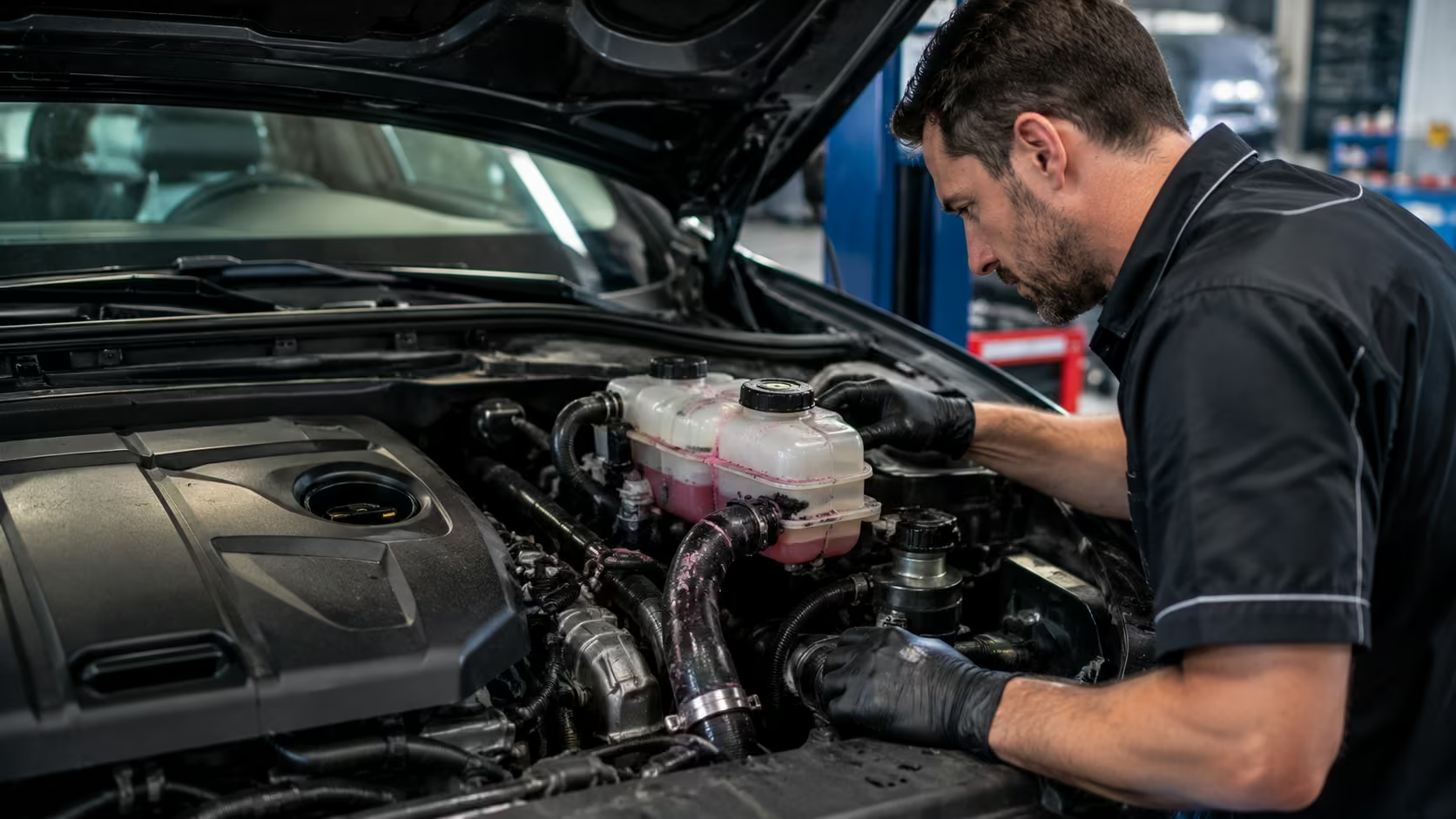
A damp patch not a visible puddle equally deserves to be taken seriously. Plastic components on European vehicles, such as expansion tanks and coolant pipe connectors, develop hairline cracks which cause a weeping leak instead of a drip. On a warm engine surface the coolant evaporates quickly leaving a white residue or dry stain instead of a wet puddle. Often, this is the first sign that your expansion tank is going bad.
A Falling Coolant Level With No Visible Leak Outside
This is the warning sign that is most often ignored and the most dangerous to overlook. Under normal operating conditions, coolant does not evaporate in any appreciable quantities. If the level in the expansion tank is dropping between checks and there is not a puddle under the car, then the coolant is going somewhere that is not visable externally.
The two possibilities are an internal leak into the combustion chamber which causes the white exhaust smoke described above and an internal leak into the engine oil. The second scenario is the more immediately damaging of the pair. Coolant that gets into the oil system will mix with the oil and break down its lubricating ability. The mixture is milky or foamy and can be seen on the underside of the oil filler cap or on the dipstick. When oil is mixed with coolant, engine bearings and other lubricated surfaces begin to wear very quickly.
The most common response is to top up the coolant level and continue to drive when no external leak can be seen but this is merely masking the symptom and not curing the cause. Any top-up postpones the investigation, and the underlying fault continues to grow. If the car takes another top-up in a short time of the first top-up, it needs a check, not a top-up.
Why European Engines Have Less Tolerance for Coolant Loss
Modern European engines have tighter thermal tolerances than previous designs and the materials used in their construction react differently to heat stress than those used in previous vehicles. If you go for a workshop that has experience of European cooling systems, they will be able to diagnose a fault much more accurately.
All European manufacturers now use aluminium cylinder heads as standard throughout their current engine ranges. Under normal operating conditions, aluminium is lighter than cast iron and transfers heat more efficiently, contributing to the performance and efficiency characteristics of these engines. It’s also more susceptible to warping at extended high temperatures. A cast iron cylinder head can withstand more heat stress before permanent deformation. Turbocharged European engines have aluminium heads, and a smaller margin between normal operating temperature and when they start to warp .
Turbocharged engines add another level of sensitivity. The turbocharger generates a lot of heat while it is running, and needs a flow of coolant to control its temperature after the engine is turned off. On vehicles with an electric coolant pump, after a hard run the coolant circulates through the turbo and continues to absorb residual heat in the turbo for several minutes after shutdown. Post shutdown cooling is impaired if the coolant level is low . Examples of consequences specific to certain European models that a specialist workshop is better placed to assess than a general mechanic are bearing wear in the turbocharger and the specific head gasket vulnerability of the Land Rover Ingenium diesel engine under cooling system pressure loss. European vehicles often need more specialised diagnosis of cooling systems than many conventional vehicles.
The Consequence Chain When a Coolant Leak Is Left Unattended
Fixing a coolant leak is almost always the cheapest the sooner it is fixed. This chain of consequences is the same pattern for all types of engines.
A hairline crack in a plastic expansion tank, or a weeping hose connection is an easy fix. Changing a coolant hose or thermostat housing is a moderate job. Replacing a water pump is a little more involved, but still possible. The cooling system is repaired in each of these stages and the engine is not affected.
If the coolant leak has been long enough to cause the engine to overheat, the scope of the repair changes dramatically. A single overheat on a modern European engine can cause the aluminium cylinder head to warp enough to require machining or replacement. If this has caused the head gasket to blow, the repair now involves replacing the head gasket, resurfacing or replacing the head and a thorough inspection of the block face. If the engine has been operated on contaminated oil, bearing inspection is added to that scope.
Replacing a coolant hose versus repairing a cylinder head is the difference between a manageable maintenance cost and a major engine repair bill. The best way to keep a coolant fault within a reasonable cost bracket is to have the warning signs checked out early before they have time to develop to the next stage. See our cooling system repair service to learn how we locate and resolve the source of a cooling system problem. See our logbook service for why the cooling system integrity is checked at each scheduled service visit. And if a warning has already been issued, a thorough scan of all the systems of the vehicle will show if the fault is limited to the cooling system alone.
Each coolant leak is unique. Some just need a hose or expansion tank replaced while others could be a sign of more serious internal engine problems. At A to Z Automotive Services, we believe in diagnosing the exact source of coolant loss before recommending a repair on any cooling system.
Frequently Asked Questions
Can I top up the coolant myself between workshop visits?
Yes, you can top up the coolant temporarily if the level is low, but it does not fix the underlying leak. Always use the correct coolant specification for your vehicle and arrange an inspection if the level continues to drop after topping up.
Does the type of coolant matter for European vehicles?
Yes. European manufacturers specify coolant formulations designed for their engine materials and cooling systems. Using the wrong coolant can reduce corrosion protection, damage cooling system components, and contribute to future cooling system faults.
How long can I safely drive with a minor coolant leak?
There is no guaranteed safe distance. A small leak can become a major overheating problem without warning. If you notice coolant loss, monitor the temperature gauge closely and have the vehicle inspected as soon as possible rather than continuing to drive normally.
Can a coolant leak cause other components to fail beyond the engine?
Yes. Coolant leaks can affect belts, electrical connectors, sensors, alternators, and other nearby components. If left unresolved, a coolant leak can also lead to overheating, which significantly increases the risk of major engine damage.
Is a coolant flush the same as a coolant top-up?
No. A coolant top-up simply restores the fluid level, while a coolant flush removes old coolant and replaces it with fresh coolant at the correct specification. A flush helps maintain corrosion protection and cooling system performance over time.