A knocking noise over speed bumps is most often a worn anti roll bar link, a perished suspension bushing, a failing ball joint or a worn strut mount. A sharp single knock from one corner usually means a link or a joint, while a duller clunk felt through the car points at bushings or worn dampers.
Speed bumps and driveway crossings are where suspension wear announces itself, because they load and unload the joints quickly and in a way ordinary road surfaces do not. The noise arrives long before anything becomes dangerous, which makes it one of the more useful warnings a car gives, provided somebody listens to what kind of knock it actually is.
Call Now
Anti Roll Bar Links Cause Most Suspension Knocks
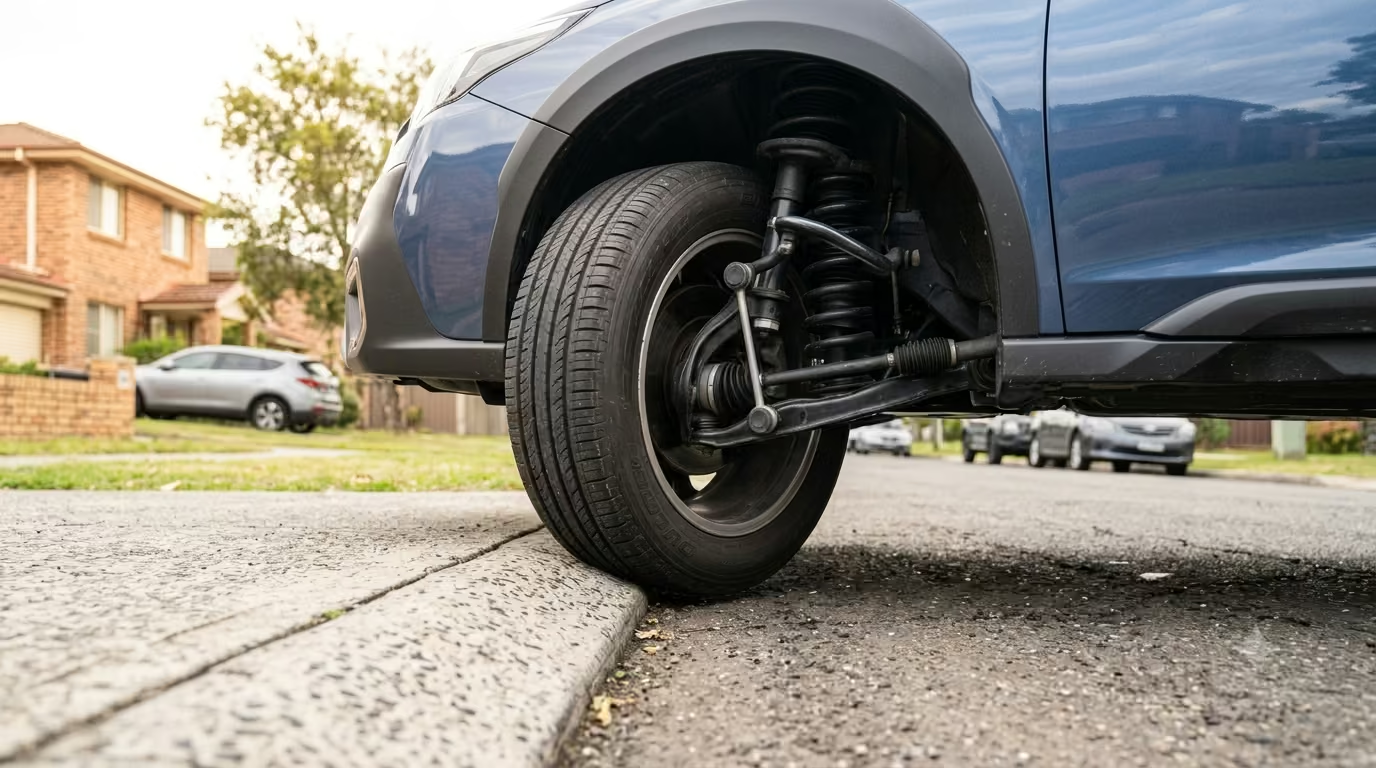
If a workshop had to bet on a bump knock without looking, this is where the money would go. The anti roll bar spans the car, tying the left of the suspension to the right, and small links join it to the suspension at each end. Those links carry ball joints at their tips, they are lightly built by design, and they take a sharp jolt every time one wheel rises and the other does not, which is exactly what a speed bump produces.
Worn links give a distinct noise: a sharp metallic knock or rattle from one front corner, worst over small sharp bumps and expansion joints rather than long undulations, and often audible at walking pace pulling into a driveway. The good news is that they are among the least expensive suspension components on the car, and replacing them is quick, so this is one of the happier answers to a knocking noise.
Perished Suspension Bushings and the Duller Clunk
Control arms and the anti roll bar itself mount to the car through rubber bushings that isolate vibration and allow controlled movement. Rubber hardens, cracks and shrinks with age, heat and salt, and once a bushing has perished, the metal it was cushioning starts moving against its mounting under load.
The noise is different to a link: duller, deeper, more of a clunk than a rattle, and often felt through the floor or the steering wheel as much as heard. Bushing wear also changes how the car behaves, with vaguer steering response and a car that feels less settled through corners, which is why a bushing knock is worth taking seriously even though the noise itself sounds less dramatic than a metallic rattle.
Ball Joints and Why They Matter Most
Ball joints connect the suspension arms to the steering knuckle and allow the wheel to move up, down and steer at the same time. They wear internally, developing play that produces a knock over bumps, often accompanied by a clunk when moving off or braking as the joint takes up its slack in the other direction.
This is the cause that changes the urgency of the whole subject. Where a worn link is a noise and a perished bushing is a handling complaint, a badly worn ball joint can separate, and a separated ball joint means the wheel is no longer properly attached to the suspension. That is rare and it is not something to gamble on, which is why a knock that has been ignored for months deserves an inspection rather than another month of tolerance.
Strut Mounts and Top Bearings
At the top of each front strut sits a mount that carries the suspension load and lets the strut rotate as you steer. When the rubber degrades or the bearing wears, it knocks over bumps and often produces a creak or clunk when turning at low speed as well. That second symptom is where this overlaps a different noise entirely, since noises that appear specifically when turning the wheel have their own separate suspect list, and telling a bump knock from a steering knock is most of the diagnosis.
Worn Shock Absorbers Knocking Internally
A shock absorber that has failed internally, or lost its damping fluid past a seal, can knock as its piston reaches the end of its travel with nothing controlling it. The knock tends to be a single dull thump on compression, and it rarely arrives alone, because a car with dampers worn far enough to knock is usually showing the other signs of worn shocks through the way it rides and settles as well.
Loose Heat Shields and Exhaust Mounts
Before spending money on suspension, rule out the least expensive answer available. Exhaust heat shields are thin metal panels spot welded or clipped along the underside of the car, and once corrosion loosens them they rattle and knock over bumps convincingly enough to send owners straight to a suspension quote. Perished exhaust rubbers do something similar, letting the system swing and contact the body.
The distinguishing feature is that these noises are usually more of a rattle or a tinny buzz than a solid knock, and they often respond to engine vibration at idle rather than only to bumps. They are also frequently fixable in minutes with a clamp or a new rubber, which argues for eliminating them at the start rather than the end.
How Suspension Knocks Are Traced
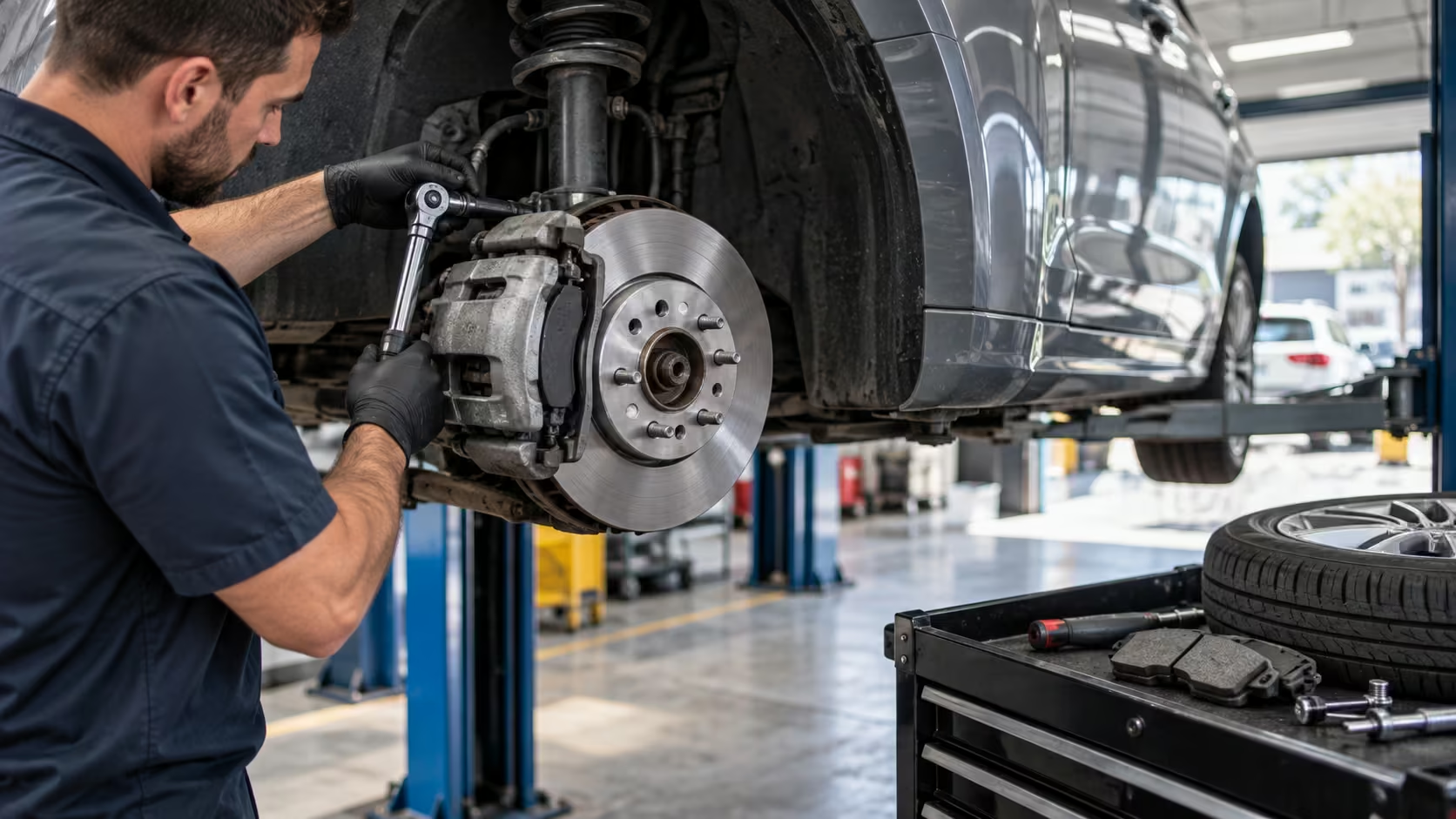
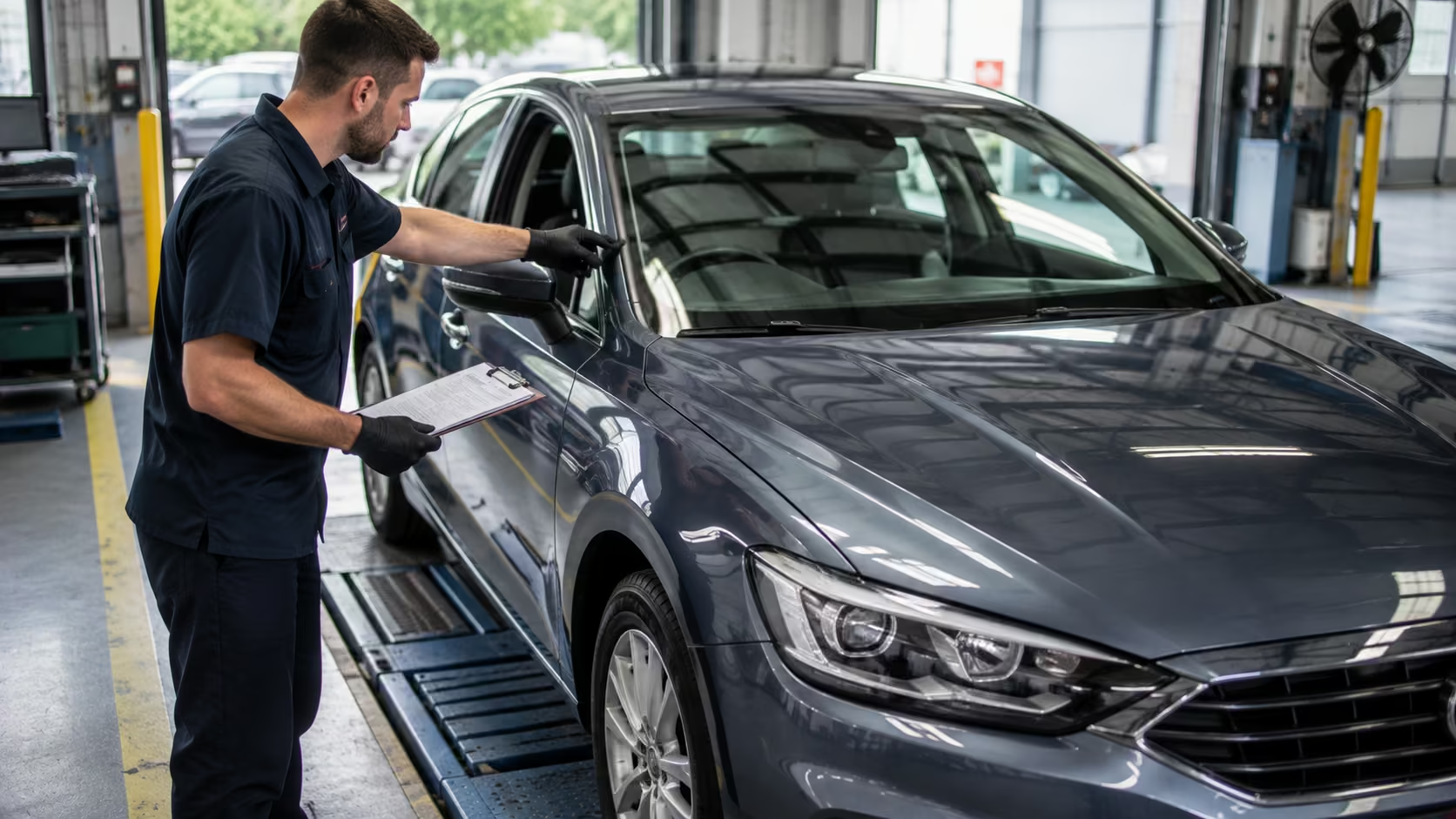
Finding a knock is a physical job rather than an electronic one. The car goes on a hoist, the suspension is loaded and levered at each joint to find play, links and bushings are checked by hand, and a road test over known surfaces confirms which corner is talking. Suspension and steering condition is also assessed during any thorough vehicle inspection, which is why these faults are often found before an owner has consciously registered the noise.
Getting a Knock Identified Early
Note which corner it comes from, whether it happens on sharp bumps or long dips, and whether it also appears when turning or braking. Those details genuinely shorten the search. A to Z Automotive Services levers each joint on the hoist to find where the play actually is, so have the noise chased while it is still a noise. A good share finish at a pair of inexpensive links or a loose heat shield, and quoting a suspension overhaul for a rattling piece of tin is not how this workshop stays busy.
Frequently Asked Questions
Will a suspension knock fail a safety inspection?
It can, depending on what is causing it. Worn ball joints and excessive play in steering or suspension joints are inspection failures because they are safety items. A rattling heat shield is not. That difference is one good reason to identify the noise before inspection time rather than after.
Can I find the knock myself?
Sometimes. With the car parked, push down firmly on each corner and listen, and grab each anti roll bar link and try to move it. Play or noise you can reproduce by hand is a strong clue. What you cannot do safely from a driveway is check joints that only load up under the car’s own weight, which is what a hoist inspection is for.
Do anti roll bar links have to be replaced in pairs?
It is the sensible default even when only one has failed, because the other has done identical work for identical time and is usually not far behind. They are among the cheaper suspension parts, and doing one side twice costs more in labour than doing both at once.
Why is the knock worse in cold weather?
Rubber bushings stiffen as temperatures drop, so a perished bushing that has some give left in it during the day can knock more sharply on a cold morning. A noise that is loud early and quieter later usually points at rubber rather than metal.