The score is something special. You leave a driveway, or take a roundabout under power, and one front corner of the car responds with a rapid click, click, click that speeds up with the wheels and vanishes the instant you straighten up. It’s one of the most reliably diagnosable noises a car can make, and drivers describe it as a playing card in bicycle spokes. Reliably, because it is telling you exactly which part is worn, and approximately how long you have to deal with it, in most cases.
If you hear a clicking noise when you turn the steering wheel, it is usually a sign that the CV joint is worn out. The most common cause of this is a split CV boot that has allowed the grease to escape. Other causes can include worn wheel bearings, strut mounts, or loose brake hardware. The fix if caught early is a boot replacement not the whole axle.
Call Now
CV Joint Wear Behind Most Clicking Noises When Turning
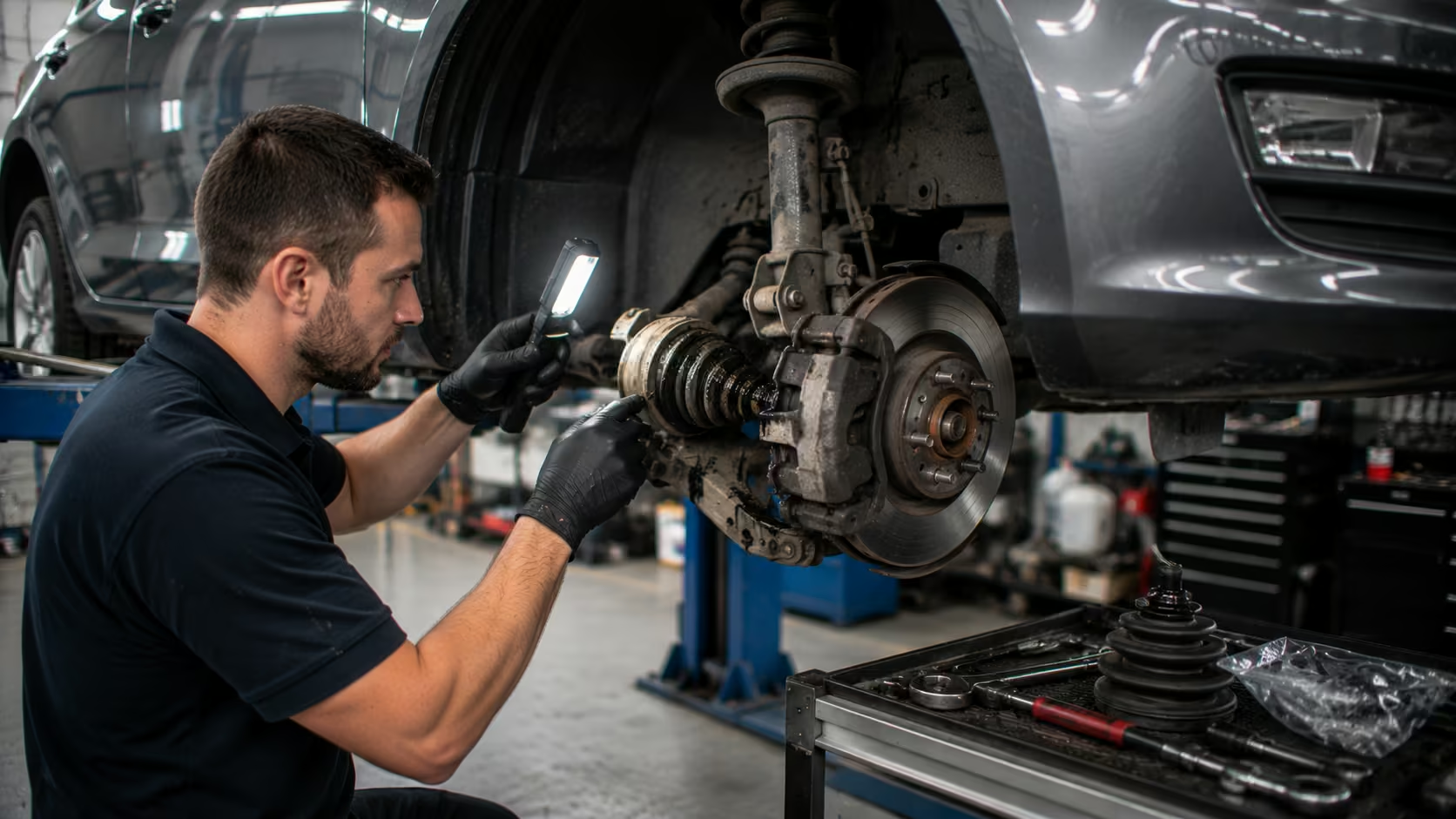
The front drive shafts have constant velocity joints at each end . The shafts can deliver power while the wheels steer and suspension moves . Each joint is filled with grease, sealed in a ribbed rubber boot. The boot is the weak link. Once it splits grease flings out and the road grit works in and the hardened balls and tracks inside start to wear. The clicking you hear on turns is those worn components taking up play under load. It is loudest in corners under acceleration, it correlates with the wheel speed and it is usually from one identifiable corner. A click on the right hand usually means the left hand joint is worn, and vice versa, because the outside joint is carrying more load through a corner.
Other Causes of a Clicking Noise When Turning the Steering Wheel
It’s not all CV joints that click, and it’s worth knowing the differences before you sign off on a repair.
- A worn wheel bearing will usually hum or growl, and change tone with steering input, not click, although a badly worn bearing can tick at low speed.
- Worn strut top mounts click or clunk once when winding on lock at parking speed, especially first thing in the morning, rather than clicking rapidly on the move
- Loose brake hardware can tick once per wheel revolution as the pads move in their carriers
- A loose wheel trim, or a stone in the tyre tread, makes a rhythmic tick that has fooled plenty of people
The CV joint signature is still the speeding-up click, fast during a driven turn. If your noise is not quite that, the fix may be much easier.
Checking a CV Boot at Home Before the Damage Spreads
This fault can be detected early with a torch and 30 seconds per side. Turn the steering to full lock, look behind the front wheel and locate the ribbed rubber boot on the drive shaft. You’re looking for splits, for perished folds, or the tell-tale spray of dark grease flicked across the inner wheel arch and suspension. The cheap way to do this repair is to use a split boot with a quiet joint. The grease leaks out long before the clicking begins. Checking the boots at each oil change can mean the difference between changing a rubber sleeve and changing an axle.
CV Joint Repair Options and What Affects the Cost
It contains three levels. If the joint is still quiet, a boot kit may be possible, which involves cleaning the joint out, repacking it with fresh grease and resealing it. A replacement joint is available for some vehicles but many modern cars do not sell the outer joint separately. Once clicking is established, it’s a complete replacement drive shaft, quality aftermarket, genuine or professionally reconditioned, that’s the standard fix. It’s a routine job for a workshop that does driveline repairs every day. Cost is much more dependent on the vehicle than the labour. At the cheaper end you’ll find a standard Japanese hatchback, while European and all wheel drive vehicles carry more expensive parts and sometimes double the amount of joints to consider. Whatever the vehicle, a clicking joint never fixes itself, and the last failure mode is the joint coming totally loose, leaving the car revving but not going anywhere.
Clicking Noise Repairs for Cardiff and Newcastle Drivers
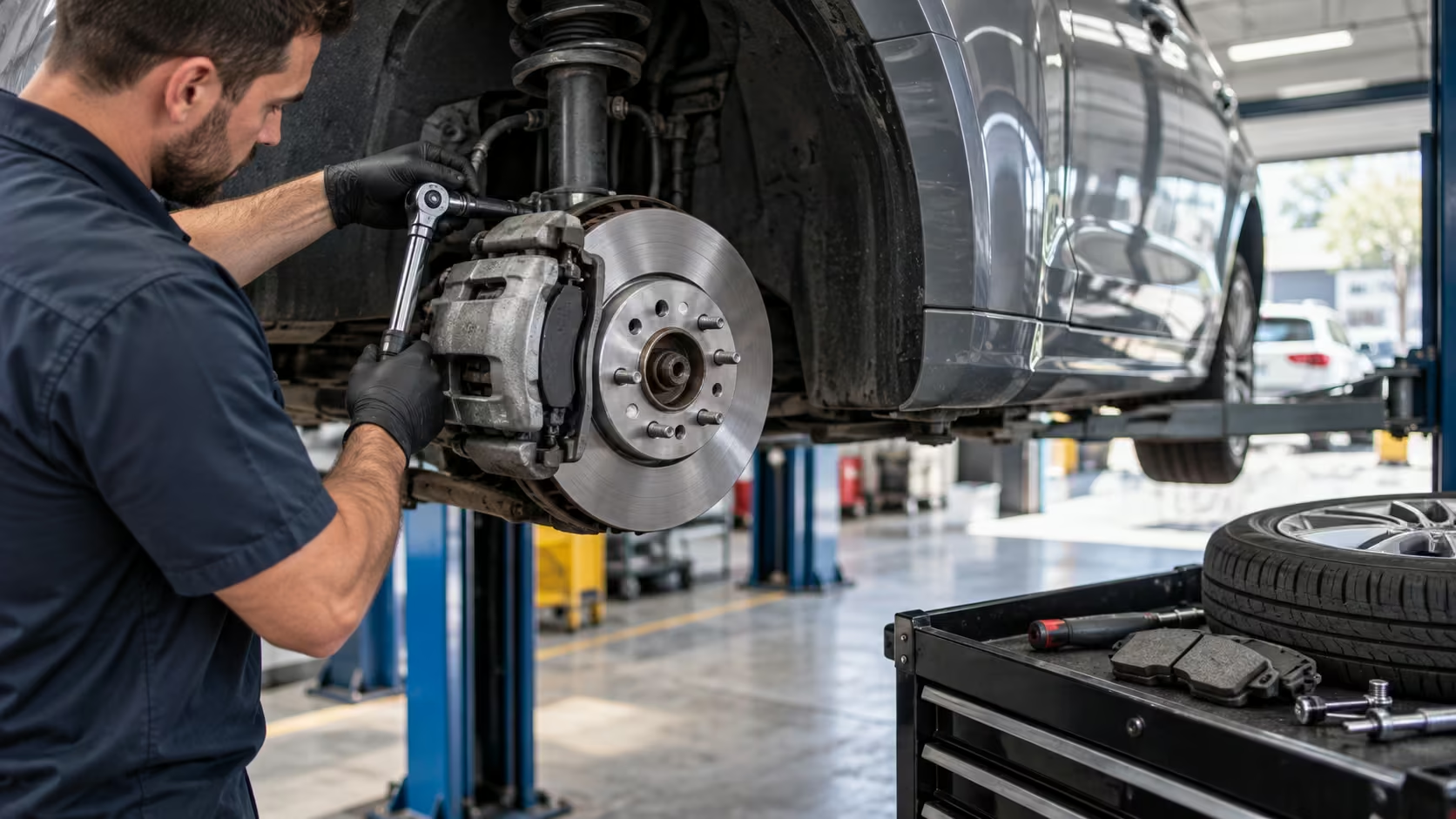
Since 2009, A to Z Automotive Services has completed CV boot, joint and shaft replacements on more than 31,500 cars from the workshop at 74 Mitchell Rd, Cardiff. We road test to confirm the corner, check the boots and joints on the hoist and quote the repair tier that matches the actual wear rather than default to the dearest. If you turn and hear clicking sounds, bring your car in for an under-car inspection this week. If caught early it is one of the most satisfying cheap fixes in the trade. Tow truck. Left late.
Frequently Asked Questions
Why does my car click when reversing and turning?
Reversing on full lock puts the outer CV joints at their most acute angle under load so a worn joint often clicks in reverse before it clicks going forward. If the noise occurs while reversing out of the driveway but not yet on roundabouts, it should be regarded as the early chapter of a fault rather than a new problem.
Can a clicking CV joint fail suddenly?
It can at the very end of its life span. A clicking joint may seize or separate after months, and a car with a bad outer joint will rev but not move. Failure does not just happen in the early clicking stage and that is precisely why the noise deserves a booking, not a notch up on the stereo.
Is it the CV joint if the clicking happens driving straight?
Not usually. Straight line clicking at wheel speed suggests the inner joint, a wheel bearing, brake hardware or something caught in the tyre. Usually you will hear or feel a shudder or clunk under acceleration from an inner CV joint rather than the classic turning click. There are more suspects so straight line noises need a hoist inspection.
How long can I drive with a clicking CV joint?
There is no safe number of weeks as the wear rate depends on how much grease is left and how much grit has already got in. Some joints will click for a year, others will let go within a fortnight. The only thing for sure is that while you wait the price moves in one direction only, from a boot kit, to a shaft, to a tow.