A good car air conditioning repair mechanic will do two things a cheap regas service won’t do – test for leaks before adding refrigerant and hold an ARCTick licence as required by Australian law. If you know the difference between a good AC repair and a quick fix, you’ll never pay twice for the same problem.
The most common AC scenario we see at A to Z Automotive Services Newcastle is a customer who had their system recharged somewhere else and then lost its cooling again within a season. Usually the previous service just put refrigerant into the leaking system without first finding or fixing the leak. The gas leaked out , the cooling did n’t work again , and the customer paid twice for a problem that required a different approach the first time . The quickest way to avoid that pattern is to know what good AC repair means.
Getting your car serviced at the recommended intervals can also detect small air conditioning problems before they become costly repairs.
If you already notice a reduced cooling performance, check out our guide to the warning signs that tell you the AC system needs attention, and the symptoms to look for before the system stops working completely.
Call Now
Why the Cheapest AC Regas Is Rarely the Right Repair
A regas is the addition of fresh refrigerant to a system that has lost its ability to cool . Technically called a refrigerant recharge . It is a valid service when the refrigerant has been depleted by normal permeation over time. This happens very slowly over the life of the system. A leak is how the refrigerant is lost quickly and this is not a proper service.
The problem is, both situations present with the same symptom: the AC blows warm air. A workshop that diagnoses solely by symptom and immediately adds gas will temporarily restore cooling, leak or no leak. If there is a leak the gas exits the system via the same route by which it had entered. The refrigerator’s down again. Then the driver comes back, another regas is done, and the cycle starts again.
When there is a leak, the driver is paying for refrigerant that will not stay in the system. This also means that the compressor is running with inadequate refrigerant and lubricant circulating through the compressor. The compressor uses part of the refrigerant for lubrication. A low charge system runs the compressor in conditions it was not designed to run in. Repeated low charge operation will lead to compressor failure. Replacing the compressor is much more expensive than detecting the leak and replacing the seal.
ARCTick Licensing and Why It Is Not Optional for Refrigerant Work
In Australia, you need an ARCTick licence issued by the Australian Refrigeration Council to legally handle refrigerants in a vehicle air conditioning system. This is not an industry guideline or recommendation. It is a requirement of the Ozone Protection and Synthetic Greenhouse Gas Management Act.
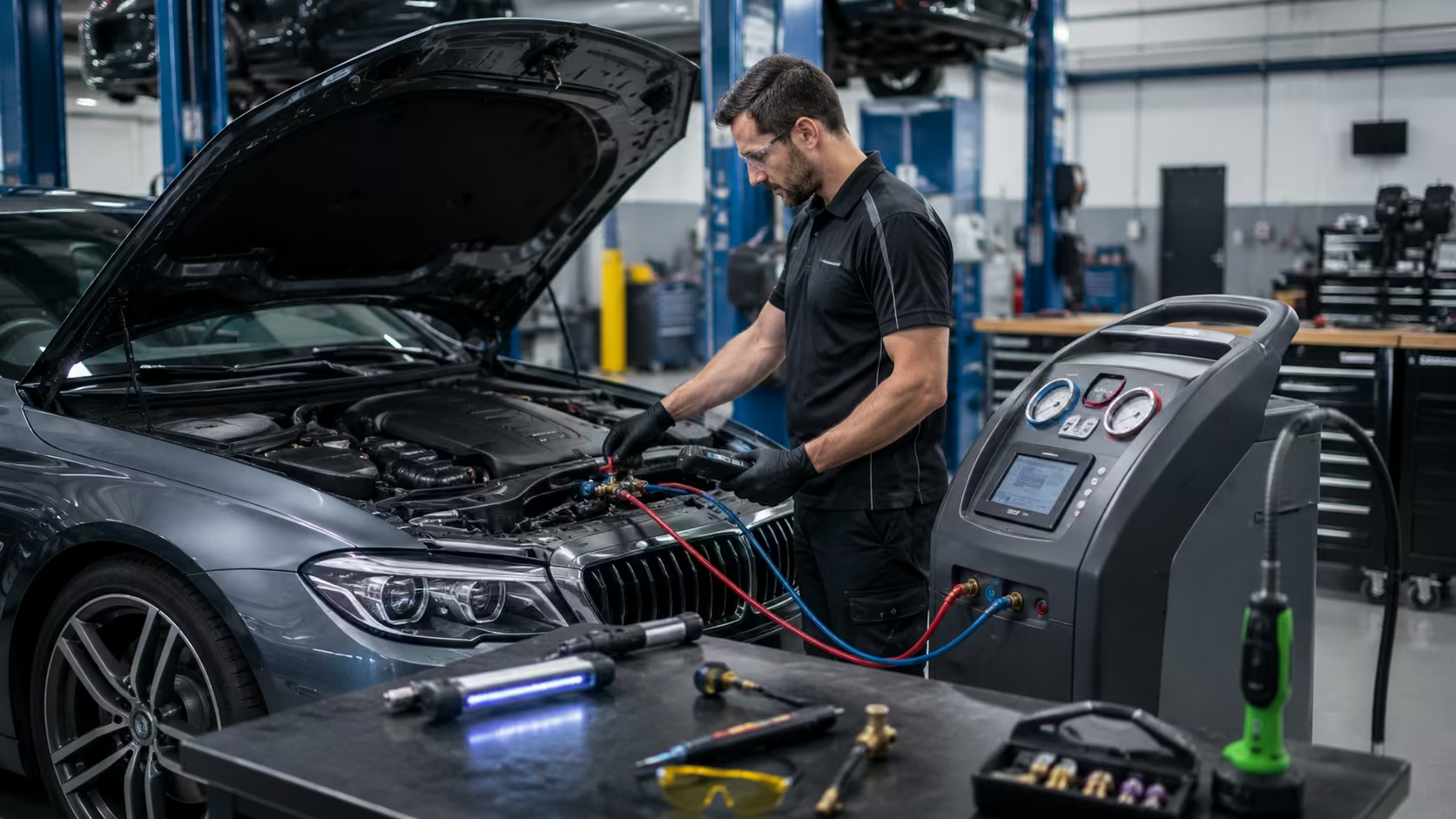
Technicians must demonstrate their ability to handle refrigerant correctly including safe recovery of the old refrigerant before adding new gas to achieve the ARCTick licence. Modern vehicle refrigerants (R134a and the newer R1234yf found in post-2017 European vehicles) are potent greenhouse gases so it is illegal to release refrigerant into the atmosphere. A compliant workshop will recover the old refrigerant using an approved recovery machine, weigh the recovered quantity to check for losses and then recharge to the manufacturer’s specified weight – not when the pressure gauge reads a certain value.
A workshop without an ARCTick licence is not legally permitted to do refrigerant work on your vehicle. If you’re unsure you can ask to see the licence before you book. The Australian Refrigeration Council has a public register of licence holders. This is one of the most obvious signs that the AC workshop is working properly.
The same goes for choosing any workshop, and knowing what to look for in a trustworthy mechanic will save you from substandard repairs.
What a Proper AC Diagnosis Covers Before Anything Is Added
A good mechanic does not add more refrigerant until they know why the last charge was lost or if the system performance problem is even refrigerant related in the first place. There are AC failures that cause warm air with no freon loss. Adding freon in those systems does nothing.
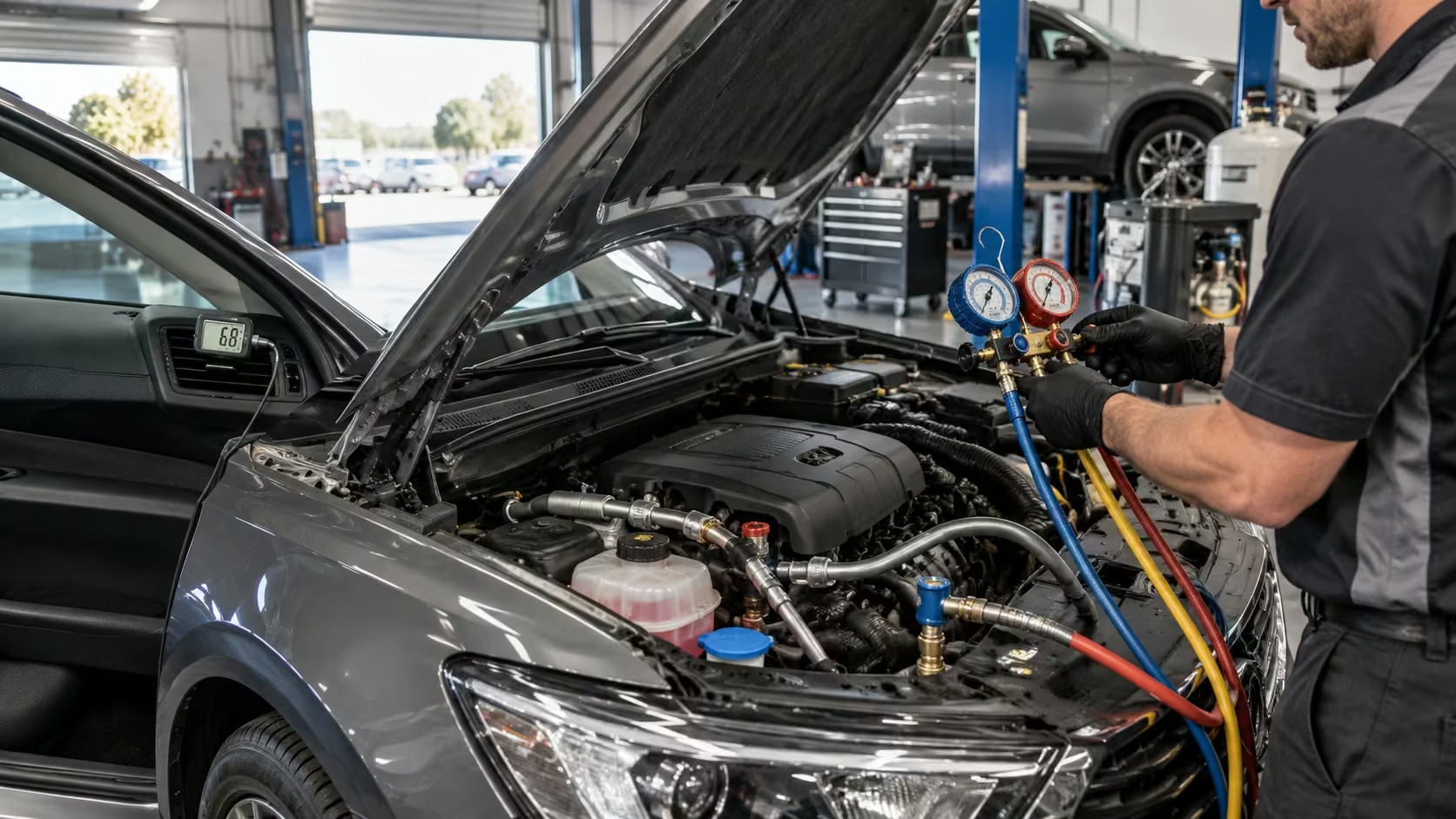
A good A/C diagnosis starts with a pressure test on the high and low side of the system. If the pressure readings are outside the expected range, it is an indication of undercharge, overcharge, blockage or compressor fault. A visual inspection with a UV light is done to check for traces of dye at the points of the leak. These are most commonly at the hose connections, the condenser (usually at the front of the vehicle behind the grille), the evaporator (which is inside the dashboard), and the compressor shaft seal.
When the leak has been repaired or the system has been tested and found free of leaks, all the refrigerant is recovered, the system is evacuated for a minimum period of time to remove moisture and to confirm the absence of any further leaks by pressure drop, and new refrigerant is added by weight to the manufacturer’s specification. Finally, a performance test is performed to confirm that vent temperature is at the expected output and that compressor clutch engagement and cycling is correct.
You can see the full scope of what our complete AC service and repair process entails on our AC service page.
Signs the Workshop Is Treating the Symptom Not the Cause
These are specific to AC work and are good to know before booking any service:
- The workshop quote a regas but do not mention a pressure test or leak inspection
- The regas takes less than 20 minutes to complete. A compliant recovery, hoover and recharge to spec takes longer than that
- There is no record of how much refrigerant was recovered compared to how much was recharged.
The workshop cannot determine what type of refrigerant your vehicle actually uses. European vehicles are increasingly using R1234yf from 2017 onwards, which requires different equipment and is more expensive per kilogram than R134a.
The recurring AC fault within 1-2 seasons of previous service.
Our guide highlights the warning signs that tell you when your AC system needs attention before it stops cooling altogether.
European Vehicle AC Systems and Why They Need Specialist Handling
Since about 2017, European vehicles including BMW, Mercedes, Audi, Volkswagen, Land Rover, Jaguar and Volvo models sold in Australia are increasingly using R1234yf refrigerant instead of the older R134a standard. Automakers began using R1234yf in new vehicles because it has a lower global warming potential than R134a. It is also mildly flammable; therefore the handling procedures and the recovery equipment are different from R134a.
European cars often use different refrigerants, compressors and climate control systems, so it is equally important to choose technicians who know European vehicles.
Not all workshops have the equipment to recover R1234yf, and the refrigerant itself costs at least twice as much per kilogram as R134a. If a shop does not have the right equipment for your car, they might try to use R134a instead (which is wrong) or they might not be able to service the system at all. If it’s a European car, you’ll want to make sure the workshop is equipped and able to handle refrigerants beforehand.
European AC systems also have model specific compressors, expansion valves and evaporators that can’t always be swapped with aftermarket ones without issues with performance. A specialist garage that knows the systems of BMW, Mercedes, Audi or Land Rover will know which parts are interchangeable and which are not, and which failure patterns are common on specific models.
If there are faults with the climate control, especially with BMW models, you will often need manufacturer specific diagnostics.
A to Z Automotive Services provide AC diagnostics, leak detection, repair and regas on all European and prestige vehicles at our Newcastle workshop. We are ARCTick certified and are equipped for R134a and R1234yf systems. If you are unsure of the refrigerant used in your vehicle please call us prior to booking and we will confirm from the vehicle details. Please see our diagnostic service for a full system check that we run before any repair is authorised. Book by visiting atozauto.com.au or by calling us direct.
Frequently Asked Questions
How often does a car AC need a regas?
Most vehicles require an AC regas every 2–3 years under normal conditions. If cooling performance drops much sooner, the system is more likely to have a refrigerant leak that should be repaired before another regas is carried out.
Can I tell if my AC has a leak without going to a workshop?
Sometimes. Oily residue around AC components, reduced cooling performance or unusual smells may indicate a leak. However, many leaks are too small to see without professional pressure testing and UV leak detection equipment.
What is the difference between R134a and R1234yf?
R134a is commonly used in older vehicles, while R1234yf is fitted to many newer European vehicles. They require different servicing equipment and must never be mixed or substituted.
Will a cheap regas damage my car?
A cheap regas on a leaking system may not cause immediate damage, but it won’t fix the underlying fault. Continued operation with low refrigerant can reduce compressor lubrication and increase the risk of compressor failure.
How long does a proper AC service take?
A complete AC service usually takes 60–90 minutes, including pressure testing, leak inspection, refrigerant recovery, vacuum testing, recharging to the correct specification and final performance testing.