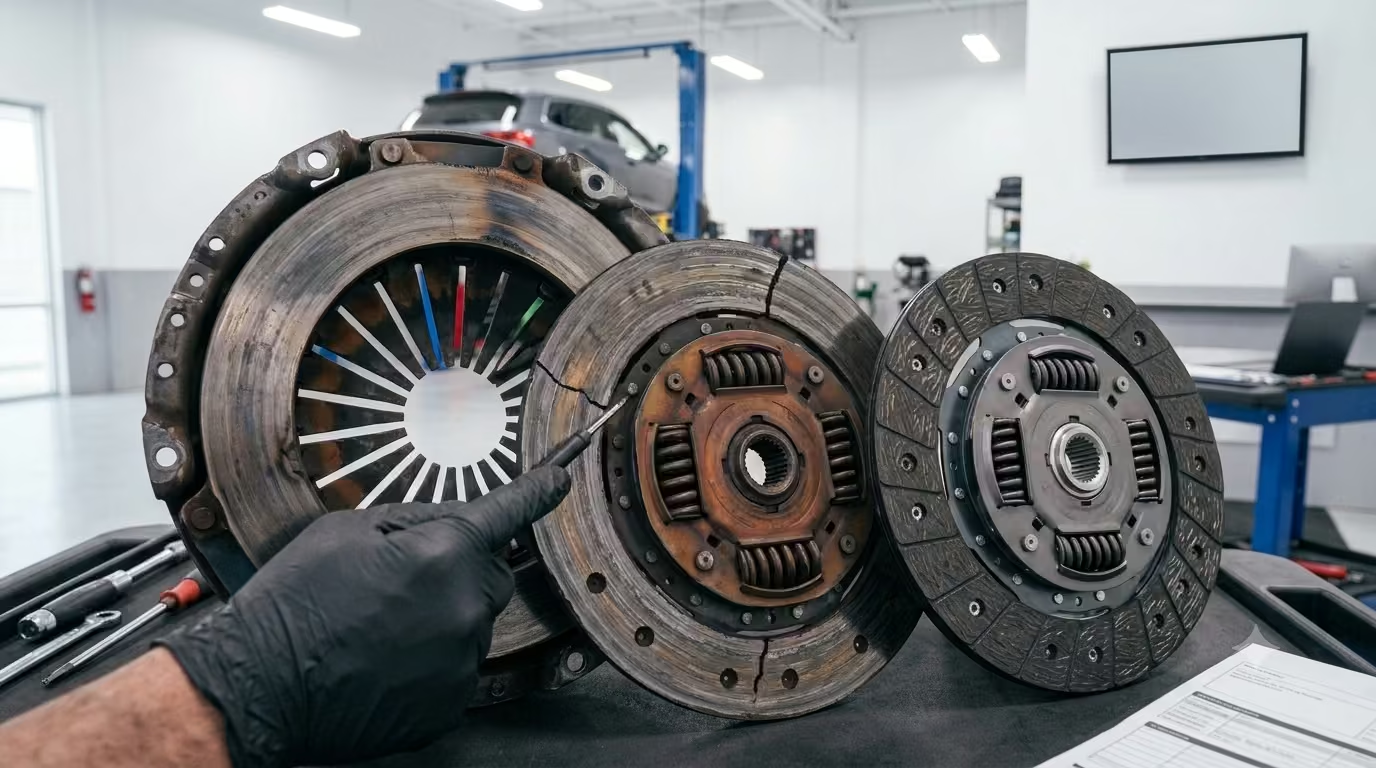
A slipping clutch shows itself as engine revs climbing without the car accelerating to match, most obviously in higher gears or under hard acceleration. It happens when the clutch disc can no longer grip fully between the flywheel and pressure plate, usually from worn friction material, oil contamination, or a weakened pressure plate.
The clutch spends its whole life clamped between two spinning surfaces, gripping hard enough to transmit everything the engine produces. When that grip starts to go, the engine begins winning the argument. Power gets made, revs go up, and some of it simply never reaches the wheels. That is slip, and once it starts, it has never once fixed itself.
Call Now
What Clutch Slipping Feels Like Behind the Wheel
The classic sign is a mismatch between the tacho and the speedo. You put your foot down, the revs jump, and the car gathers speed more lazily than the engine note suggests it should. Early on this only happens under real load, accelerating hard in a high gear, climbing a decent hill, or overtaking, because those are the moments the clutch is being asked for maximum grip. Around town in the lower gears, everything can still feel completely normal.
The second sign arrives on the nose rather than through the pedals. A slipping clutch generates serious heat, and overheated friction material has a sharp, acrid burnt smell that most drivers describe as something between burnt toast and hot brakes. If you catch that smell after a hill start with a load on, or after towing, the clutch is telling you where it is at.
The third sign creeps in so slowly most owners only recognise it looking back: the biting point moves. A clutch that used to engage low in the pedal travel now grabs right near the top, because the disc has thinned and the whole engagement geometry has shifted with it. A biting point that has migrated noticeably upward over months is wear you can feel with your left foot.
Worn Clutch Friction Material
The most common cause is the simplest one. The clutch disc carries friction material, and every single take off, gear change, and hill start wears a little of it away. That is not a defect, it is the design, the material is sacrificial in the same way brake pads are. Somewhere between sixty thousand and beyond two hundred thousand kilometres, depending entirely on how and where the car is driven, it reaches the point where there is not enough left to hold the engine’s torque, and slip begins.
What makes worn material worse than it sounds is the feedback loop it starts. A clutch that slips generates heat, heat glazes and hardens the remaining friction surface, and a glazed surface grips even less. This is why slip never plateaus. The first flare of revs on a steep hill becomes slip on moderate hills within months, then slip on flat ground acceleration, and the decline steepens the whole way down.
Oil Contamination From a Leaking Seal
A clutch with plenty of material left can still slip badly if oil gets onto the friction surface. The usual culprits are the engine’s rear main seal or the gearbox input shaft seal, both of which sit close to the clutch and both of which weep with age. Even a light film of oil on the disc cuts its grip dramatically, in the same way an oily rag ruins your grip on anything.
This cause matters to identify correctly because of what it means for the repair. Fitting a new clutch behind a leaking seal is throwing money away, since the new disc gets contaminated the same way the old one did. The seal has to be replaced at the same time, and the good news is that with the gearbox already out for the clutch, that is the cheapest moment it will ever be to do it.
Pressure Plate and Diaphragm Spring Faults
The disc only grips because the pressure plate clamps it against the flywheel, and the clamping force comes from a large diaphragm spring inside the pressure plate assembly. Springs weaken with age and heat cycles, and a pressure plate that has been cooked by previous slip or hard use can lose enough clamping force that even a healthy disc cannot be held firmly.
From the driver’s seat this feels identical to a worn disc, which is why the diagnosis matters more than the symptom. It is also why a proper clutch replacement is done as a kit, disc, pressure plate, and release bearing together, rather than swapping the disc alone and hoping the thirty year old spring behind it still has its strength.
Clutch Slip or Automatic Transmission Slip
Worth being clear on, because the word slip covers two different problems depending on what you drive. Everything in this post applies to manual vehicles, where slip means the physical clutch disc losing grip. Automatics can slip too, revs flaring between gears or on take off, but the causes there live inside the transmission itself, in its fluid, clutch packs, and torque converter, and the diagnosis runs down a completely different path. If your automatic is flaring revs, that is a transmission issue rather than a clutch in the manual sense.
Driving Habits That Wear a Clutch Faster
Two clutches in identical cars can live wildly different lengths of life, and the difference is almost always the left foot. Resting your foot on the pedal while driving keeps the clutch partially disengaged and lightly slipping for every kilometre it continues. Holding the car on a hill with the clutch instead of the brake does the same thing, concentrated into the moments that generate the most heat. Neither habit feels like abuse while you are doing it, which is exactly why they quietly halve clutch life.
Load is the other multiplier. Regular towing, a permanently loaded ute, or a daily commute through stop start traffic all raise the work the clutch does on every engagement. None of that is avoidable if it is how the vehicle earns its keep, it just means the clutch is a consumable on a shorter schedule, and the early symptoms above are worth taking seriously sooner.
Clutch Replacement Cost and What Drives It
Clutch replacement is a labour heavy job, because the gearbox has to come out to reach it, and that is true whether the car is a small hatch or a European wagon. Parts add the second variable. Many modern vehicles, particularly European models and diesels, run a dual mass flywheel that often needs replacing along with the clutch kit, and that single part can double the bill. It is also the reason quotes vary so much between vehicles that seem similar on paper. The gearbox and clutch work we do always starts with confirming what actually caused the slip, so the seal, the flywheel, or the habit behind it gets addressed instead of just the disc.
Get the Clutch Checked Early
A clutch that has started slipping has already made its decision, the only real question left is whether the flywheel and your travel plans go down with it. Caught early, it is a planned job at a fair price. Caught late, it is a tow truck. Have A to Z Automotive Services take a look while it is still the first kind. And if the slip turns out to be a weeping seal or a driving habit rather than the clutch itself, that is exactly what you will be told, because fitting a clutch that was not needed helps nobody, least of all the person paying for it.
Frequently Asked Questions
Can a slipping clutch be adjusted instead of replaced?
Only on older vehicles with cable operated clutches, where adjusting the free play sometimes buys time. Nearly all modern clutches are hydraulic and self adjusting, so once genuine slip has started, replacement is the fix.
Why does the clutch slip more in fifth or sixth gear?
In the higher gears the gearbox multiplies engine torque the least, so the clutch is effectively holding the engine against its heaviest load. A clutch on its way out shows itself there first, often while everything still feels normal around town.
Will a slipping clutch fail suddenly and leave me stranded?
It usually declines gradually, but not evenly. Once the facing material starts overheating the wear accelerates sharply, and the end stage can arrive quickly, with the car revving freely but barely moving.
Does towing wear a clutch out faster?
Yes, noticeably. Towing raises the load the clutch has to transmit every time you pull away, and slow speed manoeuvring with a trailer involves exactly the kind of partial engagement that generates the most heat.