If an engine is losing oil and not dripping on the driveway, it is usually burning it internally . This can be from worn piston rings , valve stem seals , or turbocharger seals , or it can be sucked into the intake through the crankcase ventilation system . The other common answer is small external leaks that evaporate on hot components, before dripping.
It’s a very confusing situation. The dipstick keeps dropping, the level needs topping every couple of weeks and the drive is spotless. The oil is going somewhere impossible and owners end up thinking this is normal and workshops just shrug it off. Oil is never gone. It goes by one of a few routes and figuring out which one is a methodical job, rather than a mystery.
Call Now
How Much Oil Consumption Is Normal
Start here, since a good many of these worries end at this question. Engines are designed to use some oil a little leaking past the rings and valve guides and burning with the fuel. Manufacturers publish what they consider acceptable. Those published figures are often considerably higher than owners expect. On some engines, especially European performance and turbocharged designs, rates of around a litre per thousand to fifteen hundred kilometres are considered within spec.
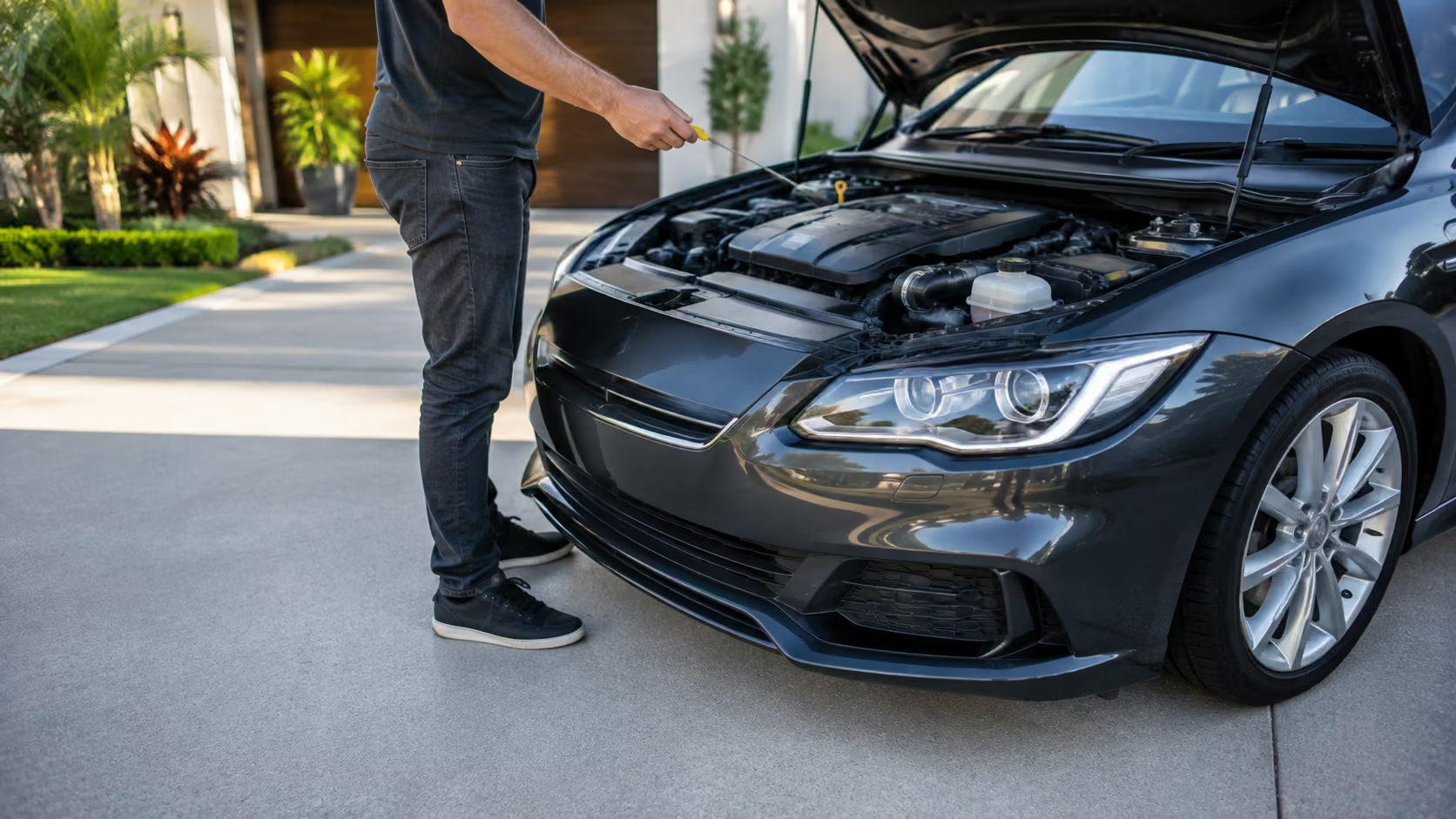
The useful measure is not whether your car is using oil, but whether the rate of use has changed. If an engine has always needed a top-up between services and still does, it is acting consistently. One that used nothing for years and now wants half a litre a month has developed something. The finding is the change rather than the consumption. Worth keeping track of properly: write down the kilometres every time you put oil in and how much. Two data points turn an anxiety into a rate.
Burning Oil Past Rings Valve Seals and Turbo Seals
The commonest destination is the combustion chamber. Worn piston rings and cylinder bores let oil past from below, hardened valve stem seals let it seep in from above, and on turbocharged engines the turbo’s own seals can feed oil straight into the intake or exhaust stream. Each of these has a different signature in when and how the exhaust changes colour, and that timing is what separates them when smoke is actually visible.
The complication, and the reason this post exists, is that plenty of oil burning produces no visible smoke at all. A working catalytic converter cleans up a modest amount before it reaches the tailpipe, so an engine can consume steadily while the exhaust stays clear. A clean tailpipe rules out nothing. It simply means the consumption is below the level that shows.
The PCV System Pulling Oil Into the Intake
The path most owners have never heard of runs through the crankcase ventilation system. Combustion pressure inevitably leaks past the rings into the crankcase, and rather than vent that pressure to the atmosphere, modern engines route it back into the intake to be burnt. Built into that path is a separator designed to catch oil mist and return it to the sump.
When the valve sticks or the separator clogs, two things go wrong. Oil mist that should have been caught gets drawn into the intake and burnt, and crankcase pressure rises, which then pushes oil past seals that were perfectly capable of holding normal pressure. It is the cause worth ruling out early for the best possible reason: it is usually among the cheapest to fix, and a blocked ventilation system left alone will eventually blow out a crankshaft seal and create the visible leak you did not have before.
Small Leaks That Never Reach the Ground
Not every invisible loss is internal. Oil escaping onto a hot engine can burn off or evaporate before a drop ever falls, particularly from a valve cover gasket weeping onto an exhaust manifold, or a turbo oil line seeping onto something hot. The evidence is a burning smell after a drive and a slow accumulation of baked oil residue rather than a puddle.
Oil can also leave without touching the ground in other ways. A failing turbo can feed the intake, an engine can lose oil into the cooling system through a failed oil cooler, showing up as an odd film in the coolant rather than on the driveway, and a rear main seal can weep into the bellhousing where the gearbox hides it entirely. All of these are external leaks by nature and invisible by location.
How a Workshop Finds Where the Oil Is Going
The investigation runs in a sensible order and each step rules something out. Confirm the rate first, since a documented figure separates a real fault from an anxious dipstick. Add ultraviolet dye to the oil and run the car, which makes any external escape glow under a lamp and finds the leaks that evaporate before dripping. Check crankcase ventilation function, because it is cheap and it causes more of these than owners expect. Then, if the oil is genuinely going into the engine, a compression and leak down test separates rings from valve guides, and a camera lowered into each cylinder inspects the bore surfaces directly, much the same way how bore damage is confirmed on engines prone to it.
What Happens If Oil Consumption Is Ignored
The risk extends past the engine itself. Burnt oil leaves deposits on the catalytic converter, and in a diesel it contributes ash to the particulate filter that no regeneration cycle will ever clear, so a consumption fault allowed to run turns into an exhaust bill alongside the engine one. Owners who address the cause late routinely pay for both.
The second risk is simpler and worse. An engine that uses oil quietly between long service intervals can run genuinely low without the driver noticing, and low oil means low pressure and rapid bearing wear. If a car is known to consume, the dipstick becomes a monthly habit rather than a yearly one, whatever the service schedule says.
Getting the Consumption Measured Rather Than Guessed
Bring the numbers if you have them, kilometres and litres, because a measured rate turns this from a debate into a diagnosis. A to Z Automotive Services works the dye, the ventilation check and the compression testing in an order chosen to find cheap causes before expensive ones, so have it looked at while the rate is still modest. Plenty of these end at a ventilation valve or a gasket, and if yours turns out to be an engine simply behaving the way its manufacturer says it should, you will hear that too.
Frequently Asked Questions
How much oil consumption is actually normal?
More than most owners expect. Plenty of manufacturers, particularly European ones, publish acceptable rates in the region of a litre per thousand to fifteen hundred kilometres for certain engines, which shocks people who have owned cars that used nothing. The rate that matters is your car’s own baseline and whether it has changed.
Can an engine use oil without producing blue smoke?
Easily, and it is one of the reasons this puzzle persists. A catalytic converter cleans up a modest amount of burnt oil before it reaches the tailpipe, so an engine can consume steadily with nothing visible behind it. The dipstick is the more honest witness than the exhaust.
Will thicker oil stop the consumption?
It sometimes slows it, and it treats the symptom rather than the cause. Moving away from the manufacturer’s specified grade also carries its own risks on modern engines, so it is a decision to make deliberately with the engine’s condition understood, not a default fix poured in to quieten a dipstick.
Is it cheaper to just keep topping up?
For a mild, stable rate on an older engine, monitoring and topping up is a legitimate strategy and plenty of cars live that way for years. It stops being sensible when the rate is climbing, because a rising rate means whatever is causing it is progressing, and because oil consumed at volume takes catalytic converters and particulate filters down with it.