A mild whistle that rises and falls with acceleration is normal turbo behaviour on many cars. A siren like whine that has grown louder over weeks points at worn bearings, a whistle accompanied by power loss usually means a boost leak, and a metallic rattle or grinding means the turbo needs immediate attention.
Turbochargers are noisy by design. They spin at speeds no other component in the car approaches, moving a great deal of air while they do it, and the sounds that come with that are part of owning a turbocharged vehicle. The useful skill is telling the noises that are the turbo working from the noises that are the turbo failing, and there are clear differences between them.
Call Now
The Whistle That Is Perfectly Normal
A turbo compresses intake air with a wheel spinning at extraordinary speed, and moving that much air through a housing produces a whoosh or whistle that rises with engine load and fades as you lift off. Plenty of cars do this from new. Some do it more than others depending on intake design and how much sound insulation sits between the engine and the cabin, and a few enthusiasts deliberately fit intakes that make it louder.
So the first question is not whether your car whistles, it is whether the whistle is new. A noise the car has always made, unchanged in pitch and volume and unaccompanied by any change in performance, is almost certainly just your turbo doing its job. The noises worth chasing are the ones that arrived recently, or that have been growing steadily, or that come with something else changing at the same time.
A Rising Siren Whine Means Worn Bearings
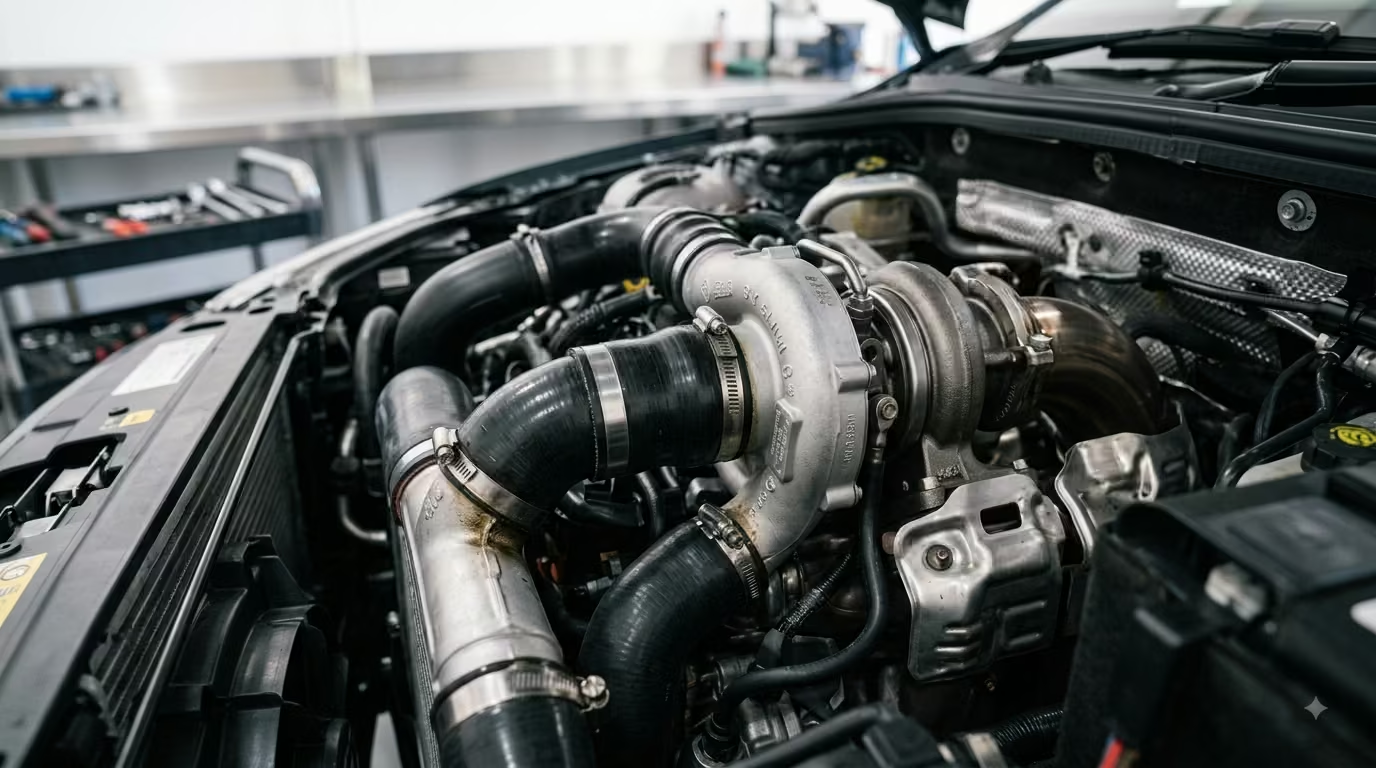
The classic failing turbo noise is often described as a siren or a dentist drill: a high pitched whine that climbs in pitch with boost and has become noticeably louder over recent weeks or months. It comes from the bearings that support the shaft between the turbine and compressor wheels, spinning on a film of engine oil, and as that support degrades the shaft is no longer running perfectly true.
This one deserves early attention for a specific reason. A shaft with growing play eventually lets the compressor or turbine wheel touch its housing, and once that happens the failure stops being contained. Fragments of aluminium can travel downstream into the intercooler and the engine itself, which turns a turbo repair into an engine repair. Caught while it is still just a noise, a reconditioned or replacement unit is a straightforward job. Caught after contact, it rarely stays that way.
A Whistle With Power Loss Usually Means a Boost Leak
If the whistle arrived at the same time as the car going flat, look away from the turbo first. Everything between the turbo and the engine is carrying pressurised air, through hoses, pipes and an intercooler, held together by clamps and joints that age. A split hose or a loose clamp lets that pressurised air escape, and escaping air through a small gap makes its own sharp whistle or hiss.
The distinguishing features are useful. Boost leak noise tends to be sharper and more of a hiss than the smooth whine of a bearing, it is loudest under acceleration when pressure is highest, and it comes with the car feeling noticeably down on power because the air the turbo compressed never reached the engine. Fault codes reporting boost pressure below target usually accompany it. As endings to a turbo noise complaint go this is among the kindest, and it is worth eliminating before anyone prices a turbocharger.
Fluttering or Chattering When You Lift Off
A distinct chattering or fluttering as you close the throttle after boosting has its own explanation. When the throttle shuts, the pressurised air already in the system has nowhere to go and pushes back against a compressor wheel still spinning hard, and the resulting turbulence produces that unmistakable stutter. Cars are fitted with a diverter or blow off valve to release that pressure smoothly and prevent it.
On a standard car, hearing it means that valve is not doing its job, either because it has failed or because a leak elsewhere is preventing it working properly, and it is worth checking rather than enjoying. On modified cars it is frequently deliberate, since some aftermarket valves vent to atmosphere and make the noise on purpose. Knowing which category your car falls into decides whether this is a fault or a feature.
Rattling Grinding or Metallic Noises
These are the sounds to stop for. A rattle or metallic grinding from the turbo suggests either that the shaft has developed serious play and components are contacting each other, or that something has entered the turbo and damaged the wheels. Foreign object damage is a real cause, whether from a deteriorating air filter, debris in the intake, or fragments from a failure elsewhere in the engine.
Continuing to drive with a turbo making mechanical contact noises is how a contained problem becomes a widespread one, since anything shed by those wheels travels downstream. If a turbo has started rattling or grinding rather than whining, the sensible move is to stop driving it and have it looked at rather than finishing the week and seeing how it goes.
Why Turbos Fail and How Oil Decides Their Life
Almost every turbo failure traces back to oil in some way. The bearings live on a constant supply of clean oil, so a blocked or restricted feed line starves them, contaminated oil grinds them, and stretched service intervals age the oil until it stops protecting them properly. The other classic killer is heat soak after shutdown, where a turbo is switched off while glowing hot and the oil sitting in the bearing housing bakes into hard carbon deposits that restrict flow next time. It is also why the oil specification a manufacturer lists is not a suggestion on a turbocharged engine, where the fluid is doing considerably more than lubricating.
Noises That Come With Blue Smoke or Oil Loss
A turbo with worn seals passes oil through to the intake side or out into the exhaust, and the evidence shows up away from the noise itself: blue tinged smoke, particularly on boost or immediately after a hard drive, and an oil level that keeps dropping with nothing on the driveway. When those appear alongside a whine, the two symptoms are describing the same failing component, and oil disappearing without a visible leak on a turbocharged car makes the turbo an early suspect rather than a late one.
How a Turbo Noise Is Diagnosed
The investigation is more methodical than listening. Shaft play is checked by hand at the turbo itself, feeling for movement in and out and side to side that should not be there. A boost leak test pressurises the intake system and finds escaping air, which either identifies a hose or clamp or confirms the system is sealed. Fault codes reporting boost deviation, and live data comparing requested boost against actual, show whether the turbo is delivering what the engine is asking for. And the oil feed and drain lines get inspected, because a turbo replaced without fixing a restricted oil supply simply repeats the failure on the same timetable.
Getting a Turbo Noise Identified Early
A to Z Automotive Services listens, then tests, because a whistle, a hiss and a siren mean three different repairs at three very different prices. Book it in while the noise is still just a noise, particularly if power has dropped off with it. Plenty of these finish at a split hose and a clamp, and hearing that after bracing for a turbocharger quote is one of the better outcomes in this line of work.
Frequently Asked Questions
Is turbo whistle bad for the engine?
The sound itself does nothing. What matters is whether it is the turbo doing its job or a bearing on its way out, and the distinction is in how the noise has changed. A whistle the car has always made is character. One that has appeared recently or grown louder is worth investigating.
How long should I let a turbo cool before switching off?
A minute or two of idling after sustained hard driving or towing is sensible, and after gentle suburban running it matters far less. The point is to let oil keep circulating while the hottest components come down in temperature, rather than trapping oil in a red hot bearing housing where it bakes.
Can a turbo be repaired or does it need replacing?
Both are possible. Reconditioning is realistic when the housings are undamaged and the fault is bearings and seals, and it is often considerably cheaper than a new unit. Once a compressor wheel has contacted its housing or a shaft has broken, replacement is the practical route.
What is the whistling noise that comes with a loss of power?
That combination points more at a boost leak than at the turbo itself. Pressurised air escaping through a split hose or a loose clamp makes its own high pitched noise, and because that air never reaches the engine, the car feels flat at the same time. It is usually a far cheaper fix than a turbo.