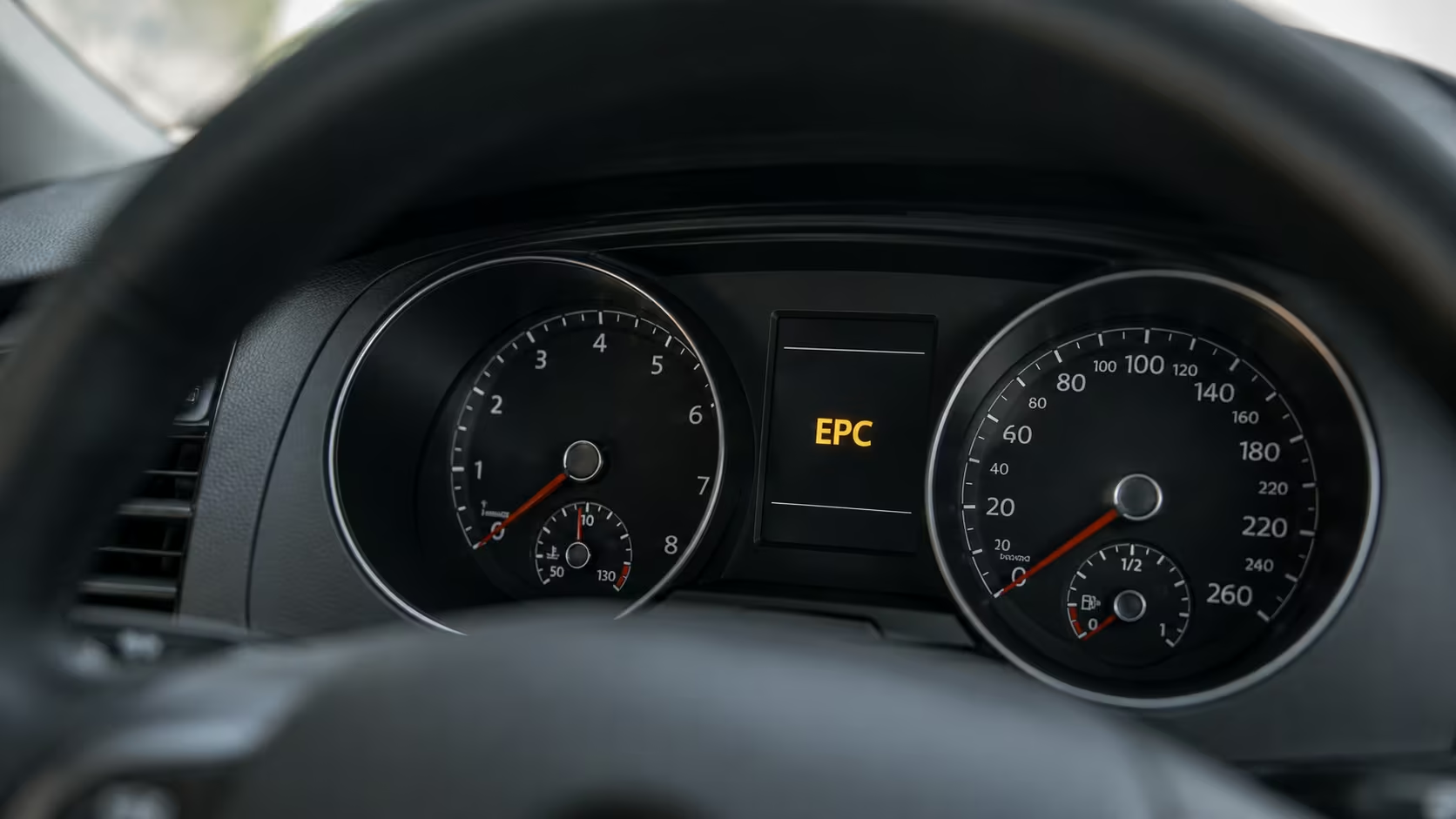
The EPC light stands for Electronic Power Control and signals a fault in your VW’s electronic throttle system, the network linking the accelerator pedal, throttle body and engine computer. Common causes include a failed brake light switch, a dirty throttle body, pedal or throttle sensor faults, misfires and low system voltage.
EPC is the warning that sends Volkswagen owners straight to the internet, because unlike a battery symbol or an oil can, three letters give you nothing to work with. Then the forums deliver forty different answers ranging from a twenty dollar switch to a new engine computer, which helps nobody. The good news is that EPC is not vague at all once you know what it covers, and its causes fall into a short list that a scan sorts out in minutes.
Call Now
What Electronic Power Control Actually Covers
Your accelerator pedal is not connected to the engine by a cable. It has not been for a long time. Pressing it moves a sensor that reports your request to the engine computer, which then decides how far to open an electrically operated throttle. That entire chain, pedal to computer to throttle, plus the sensors confirming everything landed where it was supposed to, is what Volkswagen calls Electronic Power Control.
EPC lights up when any part of that chain reports something implausible, or when another system that is permitted to reduce engine power says it has a problem. That definition is broader than most owners expect, which is exactly why the light gets a reputation for being mysterious. It is not reporting one component. It is reporting that the car no longer fully trusts its own control of engine power, and it responds by protecting itself.
EPC Light and Limp Mode Reduced Power Explained
The protection is limp mode, and if your VW has suddenly lost its enthusiasm, refuses to rev past a certain point, or feels like it is towing something invisible, that is what has happened. The computer has capped power deliberately because it cannot verify the throttle is doing what it is told, and a car that cannot be trusted to accelerate predictably is a car it would rather keep slow.
Limp mode is inconvenient and it is also the system doing its job properly, so it is worth resisting the instinct to treat it as the fault. There is one more behaviour worth naming here because it fools so many owners: switching the car off and starting it again often clears the light and restores full power, sometimes for days. Nothing has been repaired. The system has simply reset itself and will trip again the next time the condition recurs, which is why an EPC light that comes and goes deserves the same attention as one that stays.
Brake Light Switch Failure the Cheapest EPC Cause
Start with the happiest possibility, because it is genuinely common on these cars. The brake light switch, a small component behind the brake pedal, tells the car when you are braking, and the engine computer treats that information as important, because braking is one of the situations where it may need to override the throttle. When the switch fails, the computer loses a signal it considers essential and lights EPC.
The pattern is easy to spot once you know it. Alongside the EPC light, cruise control usually stops working, brake lights may stay on permanently or fail to come on at all, and on some automatics the car refuses to shift out of park because the system cannot confirm your foot is on the brake. Any of those clues appearing with EPC point at a part that is inexpensive and quick to replace, which is a very good outcome for a light that reads like a disaster.
Dirty Throttle Bodies and Failed Throttle Sensors
The throttle body is the next suspect and the most mechanical one. Over years, carbon and oil vapour coat the throttle plate and the bore it sits in, and because the computer is measuring the exact angle of that plate against the airflow it expects, a build up thick enough to change how it seats will eventually produce readings the system rejects. The sensors mounted on the throttle body can also fail electrically on their own.
Throttle related EPC faults have a signature worth knowing: they often appear on a cold start, clear once everything is warm, then return the next cold morning, because clearances and deposits behave differently at temperature. A throttle body clean with a proper adaptation afterward resolves a good share of them. The adaptation matters, since the computer has to relearn where the clean throttle now rests, and skipping that step is how a correctly cleaned throttle body still leaves the light on.
Accelerator Pedal Sensor and Wiring Problems
Down at the pedal end of the chain sits the other half of the story. Its position sensor is doubled up deliberately, two signals sent so the computer can cross check them, because a throttle system that misreads a driver’s intentions is a serious matter. If those two signals disagree, or one drops out, the computer immediately assumes the worst, lights EPC and reduces power.
Pedal sensors fail outright sometimes, but the wiring and connectors between pedal and computer cause plenty of the trouble, particularly on older vehicles where a loom has spent a decade flexing in a footwell that occasionally gets wet. This is also why EPC faults can be genuinely intermittent in a way that frustrates owners: an intermittent connection produces an intermittent fault, and the car is honest about it every time it occurs and silent in between.
Misfires Sensors and Low Voltage Behind EPC
The last group covers everything else permitted to reduce engine power. A misfiring coil pack or spark plug will trigger EPC on many of these models, usually alongside the engine light and a roughness you can feel. Airflow and other engine management sensors can do the same when their readings stop making sense. So can wheel speed and stability system faults, since those systems are allowed to cut power and report failures upstream, which is why EPC often turns up in company with ABS or traction lights rather than alone. And behind all of it sits voltage: a tired battery or weak charging can produce a scatter of unrelated warnings including this one, which vanish entirely once the electrical supply is healthy again.
EPC Light With the Engine Light On What It Points To
The combination on your dash is a useful first filter. EPC by itself, with no engine light, leans toward the throttle system’s own components and the switches and sensors feeding it, the brake light switch and pedal sensor territory. EPC arriving with the engine management light, especially with rough running, leans toward combustion side faults such as misfires and airflow sensors.
It is a lean rather than a rule, and it does not replace a scan, but it is worth noting what your car showed you and mentioning it when you book in. Owners who can say the EPC light appeared with the engine light and a stumble, or that it appeared alone right when cruise control stopped working, hand a workshop a genuinely useful head start.
Which VW Audi Skoda and SEAT Models Show EPC
EPC is a Volkswagen Group convention, so it appears across VW, Audi, Skoda, SEAT and Cupra vehicles, from Golfs and Polos to Passats, Tiguans, Octavias, Leons and the Audi range, petrol and diesel alike, across most of the last two decades. Other manufacturers have their own equivalent throttle system warnings, they just badge them differently, which is why EPC feels alien to anyone arriving from a Japanese or Korean car.
The practical consequence of that shared architecture is a shared diagnostic language. These cars store detailed, brand specific fault information that generic code readers see only a fraction of, and getting the full picture requires equipment that speaks Volkswagen Group properly. It is the difference between being told there is a throttle related fault and being told which sensor, on which circuit, under what conditions.
Why Guessing at EPC Repairs Gets Expensive
Look back at the list and the problem with guesswork is obvious. A brake light switch and an engine computer both light the same three letters, and the money between them is enormous. The forums are full of owners who replaced a throttle body, then a pedal sensor, then coil packs, chasing a fault that a proper read of the car’s own stored data would have identified on day one. Scanning with equipment that reads the manufacturer specific codes turns EPC from a mystery into a named component, and on a system this interconnected that is not a luxury step, it is the only sensible one.
Getting an EPC Light Sorted
Volkswagen Group cars are everyday work for A to Z Automotive Services, scanned with equipment that reads what these cars actually store rather than the generic summary, and if your EPC light is on, flickering, or clearing on restart, the scan comes first and the parts conversation comes second. Quite often the answer is a switch, a clean and an adaptation, and you will be told that plainly, even though the throttle body sitting on the shelf would have been a far more profitable answer to give.
Frequently Asked Questions
Does EPC mean something is wrong with the engine itself?
Usually not the engine’s mechanical parts. EPC covers the electronic control of engine power, the throttle, the pedal, the sensors feeding them and the systems allowed to override them. Plenty of EPC faults sit in components that never touch a piston.
The light went out after I restarted the car. Is it fixed?
No, it is hiding. Restarting resets the system and the light clears until the fault repeats, which is one of the most characteristic behaviours of an EPC problem. The fault code stays in memory either way, so a scan still finds it even when the dash looks innocent.
Can I reset the EPC light by disconnecting the battery?
It may switch the lamp off, and it changes nothing else. The underlying fault is still there, the light returns, and on some models disconnecting the battery loses learned settings that then need re establishing. It treats the messenger, not the message.
Is EPC only found on Volkswagens?
It is a Volkswagen Group design, so it shows up across VW, Audi, Skoda, SEAT and Cupra models. Other manufacturers have equivalent throttle system warnings, they simply use different symbols and wording, which is why EPC feels unfamiliar to owners coming from other brands.