A car that stalls at idle or at traffic lights usually has a problem with the air, fuel, or sensor inputs the engine relies on to keep itself running at low revs. Carbon build up in the throttle body, a vacuum leak, or a weak fuel pump are the most common culprits.
Idle is actually the hardest thing an engine does all day. At speed there is plenty of air and fuel moving through, and small faults get masked. At idle the engine is balancing on the minimum it needs to stay alive, so any fault that leans it out or starves it, even slightly, is enough to kill it. That is why a car can drive perfectly and still die every time it stops.
Throttle Body Carbon Build Up and Idle Control Faults
The throttle body controls how much air the engine receives, and at idle it is working with a very small opening. Over tens of thousands of kilometres, carbon and oil vapour build up around that opening and slowly choke the small amount of air the engine needs to idle. The engine compensates for a while, then one day it cannot, and the revs dip and die when you roll to a stop.
The telltale sign of this cause is a rough or fluctuating idle in the weeks before the stalling starts, with revs that hunt up and down slightly at the lights instead of sitting steady. A throttle body clean and an idle relearn resolves it in many cases, though on some vehicles a failing idle control component is behind it instead, which a scan will separate out.
Vacuum Leaks Letting Unmetered Air Into the Engine
The engine computer measures every bit of air coming in and matches fuel to it. A cracked vacuum hose, a perished intake gasket, or a split in the intake plumbing lets air sneak in past that measurement, and the mixture goes lean. At driving speed the extra air is a small percentage of the total and often goes unnoticed. At idle it can be enough to stall the engine outright.
Vacuum leaks are one of the most common causes we trace stalling back to, and also one of the most commonly missed, because the fault is a physical crack somewhere in the intake system rather than something that always shows neatly on a scan tool. A hissing sound from the engine bay at idle, or an idle that smooths out as the engine warms and components expand, both point this direction.
Weak Fuel Pump or Blocked Fuel Filter
Fuel pumps rarely fail all at once. They fade, and a fading pump shows itself first at idle and low speed, where fuel pressure is already at its lowest. The engine leans out momentarily, stumbles, and dies, usually right as you pull up or just after. A partially blocked fuel filter produces the same effect by restricting flow.
The pattern that points to fuel delivery is stalling combined with longer cranking before restarts, hesitation when accelerating from a stop, or stalling that gets worse when the tank is low. Fuel pressure testing confirms it quickly, which is far cheaper than replacing a pump on a guess.
Faulty Sensors Feeding the Engine Bad Information
Modern engines idle by computer, and the computer is only as good as its inputs. A dirty or failing airflow sensor tells the engine less air is coming in than actually is, a faulty crank angle sensor can momentarily lose track of the engine position, and a failing coolant temperature sensor can have the computer fuelling for a warm engine while it is still cold. Any of these can stall an engine at idle while leaving it seemingly fine at speed.
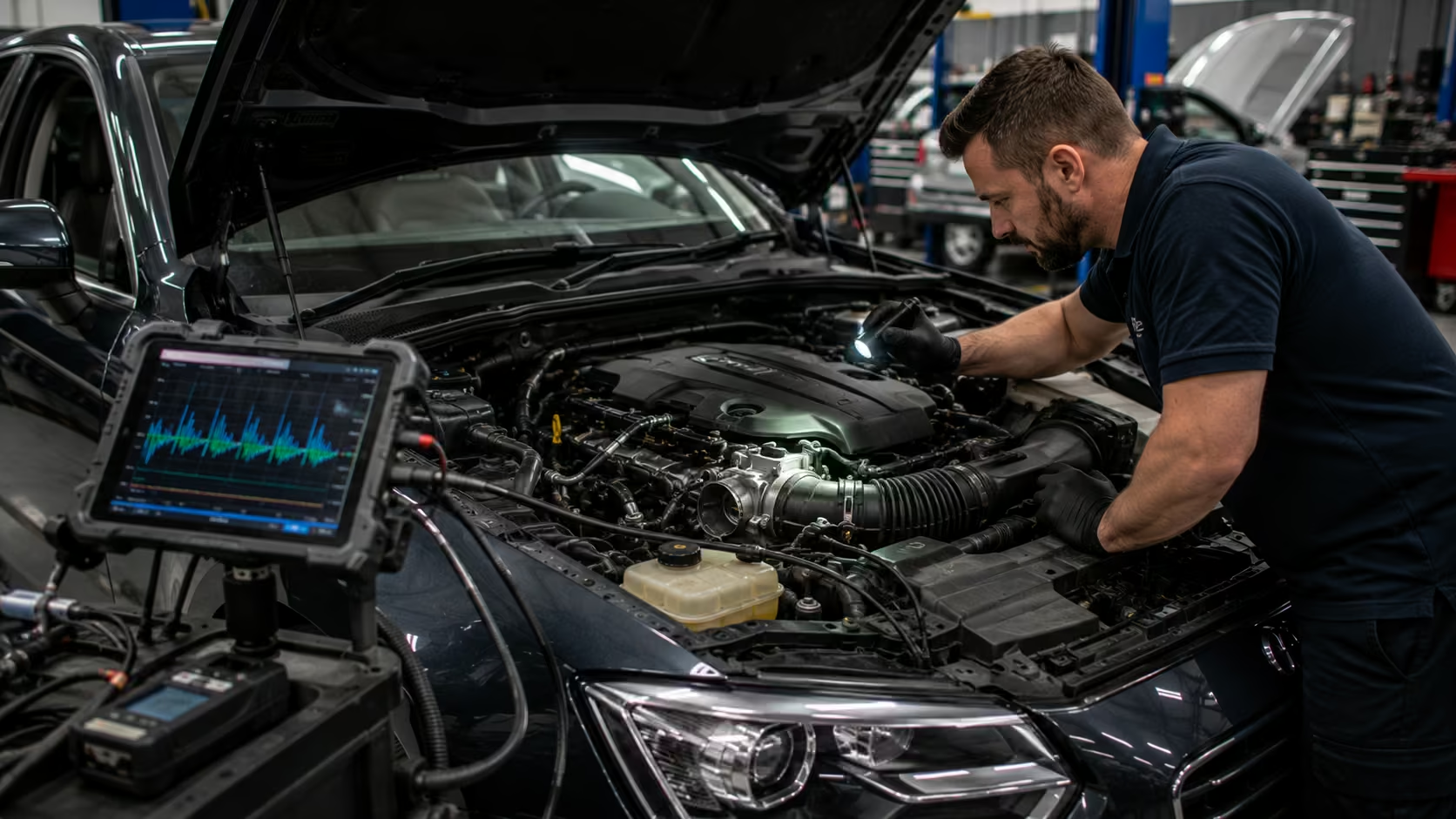
Sensor faults are where guesswork gets expensive, because the symptoms overlap almost completely with the air and fuel causes above. This is exactly the situation diagnostic scanning exists for, reading live sensor data at idle and watching which input misbehaves in the moments before the stall.
Stalling in Automatics From Torque Converter Faults
Automatic transmissions have a component called a torque converter that is supposed to unlock and let the engine idle freely when you stop. When the locking mechanism inside it sticks, it stays engaged as you roll to a stop, and the effect is the same as stopping a manual car without pressing the clutch. The engine gets dragged down and stalls.
The giveaway with this cause is a shudder or a sensation of the car straining against itself just before the stall, usually as you slow to a stop rather than after you have already stopped. It is a transmission fault rather than an engine fault, and it matters to identify correctly because the repair path is completely different.
Why Intermittent Stalling Needs Proper Diagnosis
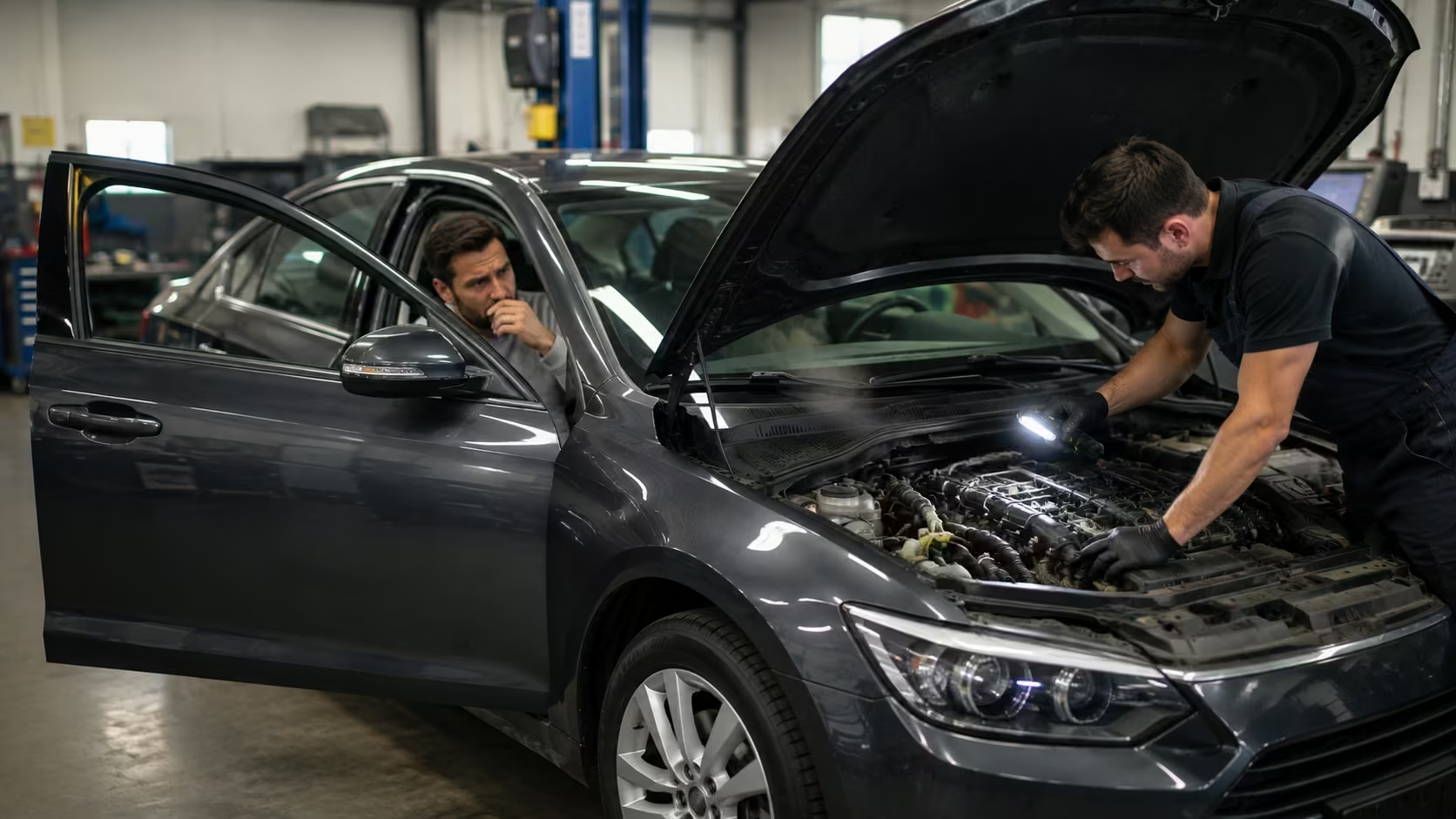
Stalling is one of the most misdiagnosed faults in the industry, because it is intermittent by nature and the engine is usually running perfectly again by the time anyone looks at it. The parts cannon approach, replacing likely suspects one at a time, gets expensive fast. A proper diagnostic session reads live data and stored fault history to catch what actually happened in the seconds before the engine died, which is the difference between fixing it once and paying to fix it three times. It is the same principle that applies when a warning light appears on the dash, the visible symptom is rarely the whole story.
Get the Stalling Sorted Before It Strands You
A stall at the lights is embarrassing. The same fault six months further along can pick a far worse place to stop. A to Z Automotive Services traces stalling back to its actual cause, live data, fault history, the lot, so if your car has started dying at idle, book it in before it graduates from annoying to stranded.
Frequently Asked Questions
Is a car stalling at idle dangerous?
Stalling at a traffic light is usually more inconvenient than dangerous, since the car is stationary. The real risk is the same fault progressing to a stall while moving, or a stall in an intersection, which is why it should not be left unchecked.
Why does my car stall but then restart straight away?
This pattern is common with idle control and sensor faults. The condition that killed the engine at idle, such as unmetered air or a momentary fuel pressure drop, clears the moment the engine is cranked again, so the restart works fine until the next time.
Can bad fuel cause stalling at idle?
Contaminated or poor quality fuel can cause rough running and stalling, though it usually comes with other symptoms like hesitation under acceleration. If the stalling started right after a fill up, mention that when you book the car in.
Does stalling damage the engine?
The stall itself generally does not damage anything. What matters is the underlying cause, since some of them, like fuel delivery faults, get worse over time and can eventually leave you stranded rather than just embarrassed at the lights.